As part of the Saudi Central Bank's (SAMA's) pursuit to build a robust and innovative cross-border payments infrastructure in collaboration with various international financial institutions and central banks, SAMA joined the Bank for International Settlements' (BIS) mBridge project as a participant in the Minimum Viable Product (MVP) platform, SAMA said in a statement on Wednesday.
The MVP platform is a multi-central bank digital currency -- wholesale CBDC -- system that aims to facilitate cross-border payments between commercial banks in different jurisdictions. It is considered the first multi-wCBDC platform to reach the MVP phase of development, SAMA said.
SAMA has been investigating the potential of wholesale CBDC through the analysis of policy-related issues to evaluate the feasibility of using wholesale CBDC to boost the effectiveness of cross-border payment and settlement between commercial banks.
During Saudi Arabia's presidency in October 2020, the Group of Twenty (G20) top economies agreed on a roadmap to enhance global cross-border payments, aiming to facilitate cheaper, faster, more inclusive, and more transparent payment transactions.
The roadmap called for an evaluation of the proposed local designs for the digital currency of several central banks and experimentation with its use in settling cross-border payments.
Strength of Saudi Arabia's External Position Supports Economy Despite Challenges of Warhttps://english.aawsat.com/business/5336917-strength-saudi-arabias-external-position-supports-economy-despite-challenges-war
Strength of Saudi Arabia's External Position Supports Economy Despite Challenges of War
A view of Riyadh, Saudi Arabia. (SPA)
The Saudi economy continues to benefit from the strength of its external position, supported by significant reserves and revenues from its oil and non-oil exports, despite the challenges imposed by the regional war on trade and tourism.
Data from the second quarter of the current year showed a decline in the current account deficit by around 30 percent compared to the same period last year, at a time when personal remittances abroad recorded a record level.
The external position refers to the totality of the Kingdom's economic and financial transactions with the rest of the world, including trade in goods and services, investment flows, financial transfers, and foreign reserves. Its resilience reflects the economy's capability to generate foreign currency, meet its external obligations, and absorb shocks, thereby providing a cushion to confront disruptions in global trade and markets.
These indicators reflect the economy's capability to maintain a significant portion of its external flows under extraordinary regional circumstances, even though the components of the balance of payments were affected to varying degrees. Export revenues remained a primary source of funds entering the Kingdom, and investment returns contributed to supporting the current account, against service payments and outward remittances.
According to data from the Saudi Central Bank, the current account deficit reached around $9.5 billion in the second quarter of 2026, compared to around $13.4 billion in the same period last year. The account had recorded a surplus of $4.1 billion in the first quarter, as oil revenues rose due to higher prices, coinciding with a decline in imports at the beginning of the war.
The current account is one of the primary components of the balance of payments, measuring the revenues the Kingdom generates through exports of goods and services and investment income, against what it pays to purchase goods and services and transfer funds abroad. Therefore, reading its status does not depend on exports alone, but encompasses the totality of current financial flows between the Saudi economy and the world.
As for the financial account, it monitors the movement of investments and capital between the Kingdom and the world, including foreign investments within the Saudi economy, investments by Saudi residents abroad, alongside flows of loans, deposits, and other financial instruments.
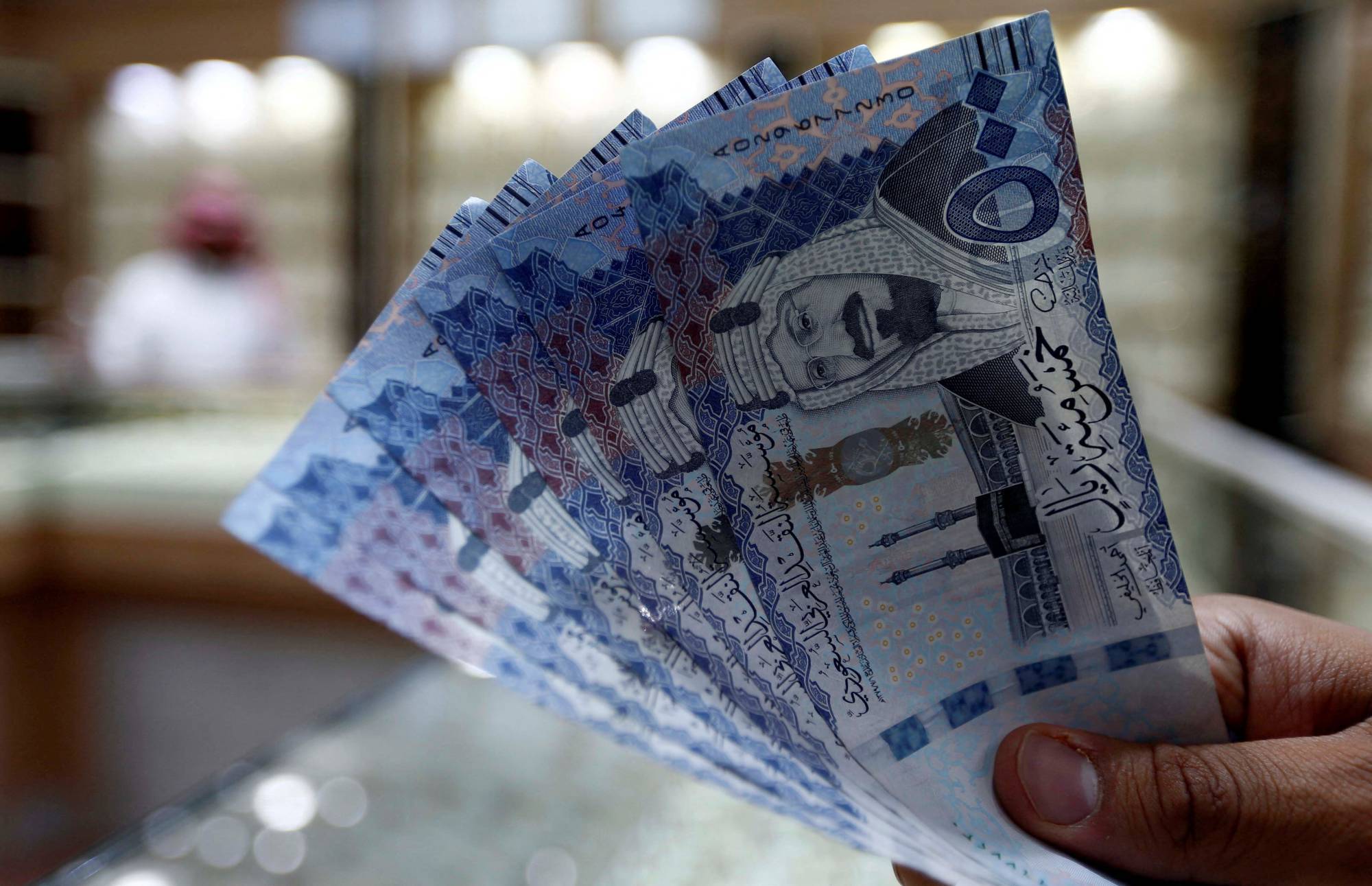
A Saudi money changer displays Saudi Riyal banknotes at a currency exchange shop in Riyadh, Saudi Arabia July 27, 2017. (Reuters)
Exports continue to support flows
Despite the challenges facing trade movements, oil and non-oil exports remained an important source of external revenues. The value of oil exports reached around $54.2 billion in the second quarter, compared to $49.6 billion in the same period last year, while non-oil exports recorded around $21 billion.
These figures demonstrate the export sector's continued ability to provide significant revenues, despite a decline in exports compared to the first quarter, in light of the circumstances surrounding trade and shipping movements because of the war.
The Kingdom achieved a surplus of $21.7 billion in goods trade; however, this surplus shrank to around $5.4 billion when service trade was factored in as well, which recorded a deficit of $16.4 billion due to outward service payments exceeding the revenues generated from them.
Remittances and investment returns
In contrast to payments related to services and outward remittances, the Saudi economy recorded supportive flows from investment returns. The primary income item achieved a surplus of around $4.4 billion in the second quarter, up from $3.5 billion in the same period last year, supported mainly by returns on portfolio investments.
Personal remittances abroad rose to a record level of around $18.2 billion, representing an increase of more than 30 percent year-on-year, to constitute one of the most prominent payment items in the current account.
These figures highlight the multi-faceted nature of the current account components; alongside export revenues, investment returns contribute to supporting external revenues, while being offset by payments for services and personal remittances abroad. Consequently, the account balance is determined by the collective outcome of these components combined, rather than by the trajectory of a single item in isolation from the rest.
Investment flows reflect capital movements
Moving beyond the current account, financial account data reveals another aspect of the Saudi economy's relationship with the world, represented by cross-border capital and investment movements. While the current account records revenues from exports, services, investment income, and remittances, the financial account monitors the purchase and sale of financial assets, direct investment, loans, deposits, and other investment and financing transactions.
Within this framework, Saudi Central Bank data showed shifts in investment flows between the first and second quarters. In the first quarter, Saudi investors sold foreign equities worth around $23 billion and increased their external deposits by around $13 billion, while Saudi entities borrowed about $27 billion from non-residents.
In the second quarter, residents turned to purchasing foreign equities worth around $9 billion, while Saudi entities issued debt instruments valued at around $5 billion.
In regard to direct investment, investment inflows from abroad into the Kingdom continued at levels exceeding $5 billion in the second quarter despite regional challenges, reaching around $5.2 billion compared to $6.2 billion in the first quarter. Direct investments by Saudi residents abroad declined to some $1.1 billion, down from $7.9 billion in the previous quarter, which contributed to a shift in net direct investment to an inflow of around $4 billion, after having recorded an outflow of about $1.7 billion in the first quarter.
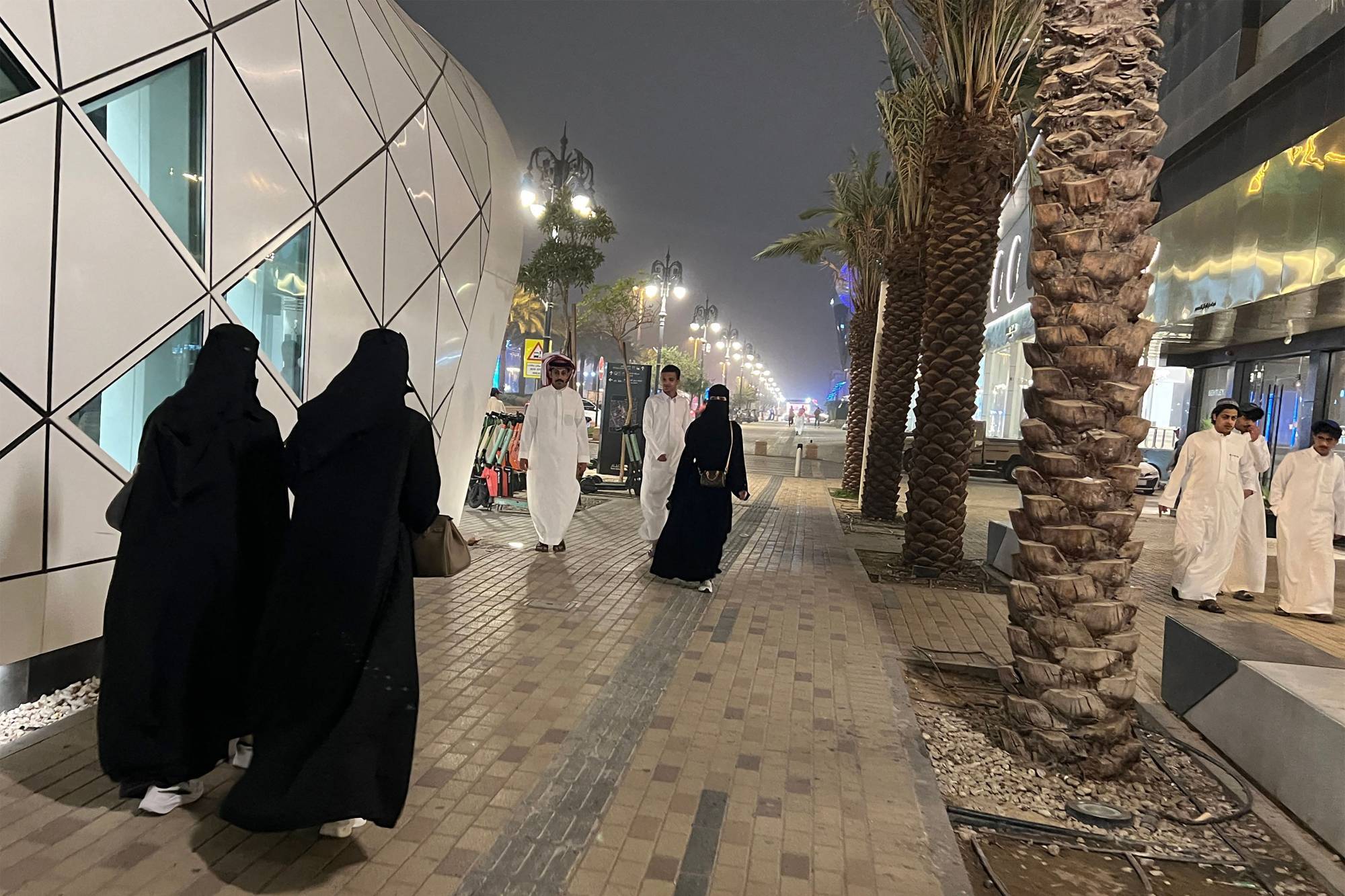
People walk along Riyadh's commercial Tahlia Street late at night on April 4, 2026. (AFP)
Reserves boost capability to confront fluctuations
The strength of the external position remains one of the elements supporting the Saudi economy in confronting regional and international turmoil. Foreign exchange reserves at the Saudi Central Bank reached around $440.7 billion at the end of September, representing a 3.7 percent increase year-on-year, in addition to the substantial foreign assets held by other public sector entities.
These reserves and assets provide an important cushion for dealing with periods of uncertainty, and boost the Kingdom's capability to confront fluctuations in external flows and maintain the stability of its financial position.
The International Monetary Fund's evaluation in the Article IV consultation report issued in July 2026 pointed to the strength of Saudi reserves and their ability to comfortably cover import needs. It also explained that rising domestic investment increases the demand for imports, particularly capital goods, reflecting an aspect of the requirements for economic transformation and project implementation.
While second-quarter data reveals the pressures imposed by regional developments on certain components of the balance of payments, the year-on-year decline in the current account deficit and the continued strength of external reserves underscore the economy's capacity to absorb some of these repercussions.
The sustainability of this position will remain linked to the recovery of trade and travel movements, oil revenue trends, and the continued expansion of non-oil sectors' contribution to exports and the provision of foreign exchange resources.
Saudi Aramco Profits Surge 34.6% in Third Quarterhttps://english.aawsat.com/business/5336909-saudi-aramco-profits-surge-346-third-quarter
The Saudi Aramco logo is seen at an oil facility in Abqaiq, Saudi Arabia, October 12, 2019. (Reuters)
TT
TT
Saudi Aramco Profits Surge 34.6% in Third Quarter
The Saudi Aramco logo is seen at an oil facility in Abqaiq, Saudi Arabia, October 12, 2019. (Reuters)
Saudi Aramco announced on Tuesday that its adjusted net income for the third quarter of 2026 rose by 9 percent year-on-year to reach SAR 117 billion ($31.2 billion), compared to SAR 107.2 billion ($28.6 billion) in the corresponding period last year. The performance was supported by operational excellence, business resilience, and the company's ability to rapidly restore operations in the face of challenges.
Cash flow from operating activities rose to SAR 145.2 billion ($38.7 billion), compared to SAR 135.4 billion ($36.1 billion) in the third quarter of 2025. Meanwhile, free cash flow climbed to SAR 105.8 billion ($28.2 billion), up from SAR 88.4 billion ($23.6 billion) during the same period last year.
The company's gearing ratio decreased to 5.5 percent by the end of September 2026, compared to 6.2 percent at the end of last June, indicating the strength of the company's financial position.
Aramco's Board of Directors announced a base dividend distribution for the third quarter valued at SAR 82.1 billion ($21.9 billion), representing a 3.5 percent increase year-on-year, to be paid during the fourth quarter of this year.
At the segment level, adjusted earnings before interest, income taxes, and Zakat (EBIT) for the Downstream sector recorded a 234 percent increase year-on-year, driven by improved refining margins.
In the Upstream sector, the company announced the commencement of production at the Zuluf crude oil increment project, confirming that its other major projects are progressing according to their specified schedules, including Phase Two of the Jafurah gas field project, the expansion of the Fadhili Gas Plant, and the Dammam field development project.
In an effort to enhance the flexibility of its exports, Aramco said that the East-West Pipeline continued to provide additional options for oil exports, noting that it is seeking additional overseas storage capacity and new export routes with the aim of strengthening its global supply network.
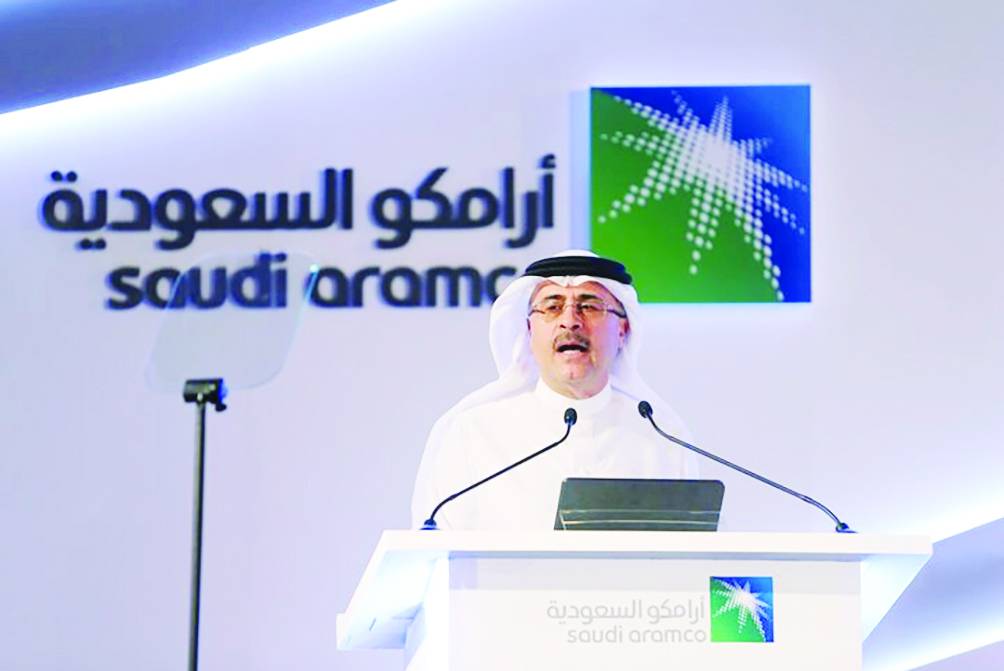
Aramco CEO Amin Nasser speaks at a press conference. (Reuters)
The company also expanded its investments in the artificial intelligence sector by acquiring a 49 percent stake in HUMAIN, which included an asset transfer and cash contributions valued at around SAR 9.9 billion ($2.6 billion).
In another step to diversify its activities, Aramco signed a shareholders' agreement to establish a joint venture for mineral exploration and hard-rock mining, leveraging its expertise in the upstream sector to expand into activities related to the energy and natural resources sector.
Commenting on the results, Aramco President and CEO Amin Nasser said: ““Geopolitical uncertainty and attacks on key energy facilities continued to amplify the global energy supply crisis in the third quarter of 2026, with serious implications for global energy security.”
“Despite challenges, the unwavering dedication of our workforce, our operational excellence, the flexibility of our system, and the strength of a supply network built over decades enabled us to continue delivering reliably to our customers through this extraordinary period,” he added.
“We continue to explore additional overseas storage capacity and alternative export routes to further strengthen our global supply network, and our robust operational and financial performance during this volatile period demonstrates the value of our resilience,” he went on to say.
“Backed by our strong balance sheet, we remain focused on the disciplined execution of priority projects and on leveraging advanced technologies to enhance performance and unlock new opportunities. This is how we will continue to meet the world’s evolving energy needs and deliver value for our shareholders and customers,” he stressed.
Bahrain Announces Investments and Partnerships in Industry, Technology, Tourism and Aviationhttps://english.aawsat.com/business/5336711-bahrain-announces-investments-and-partnerships-industry-technology-tourism-and
Bahrain Announces Investments and Partnerships in Industry, Technology, Tourism and Aviation
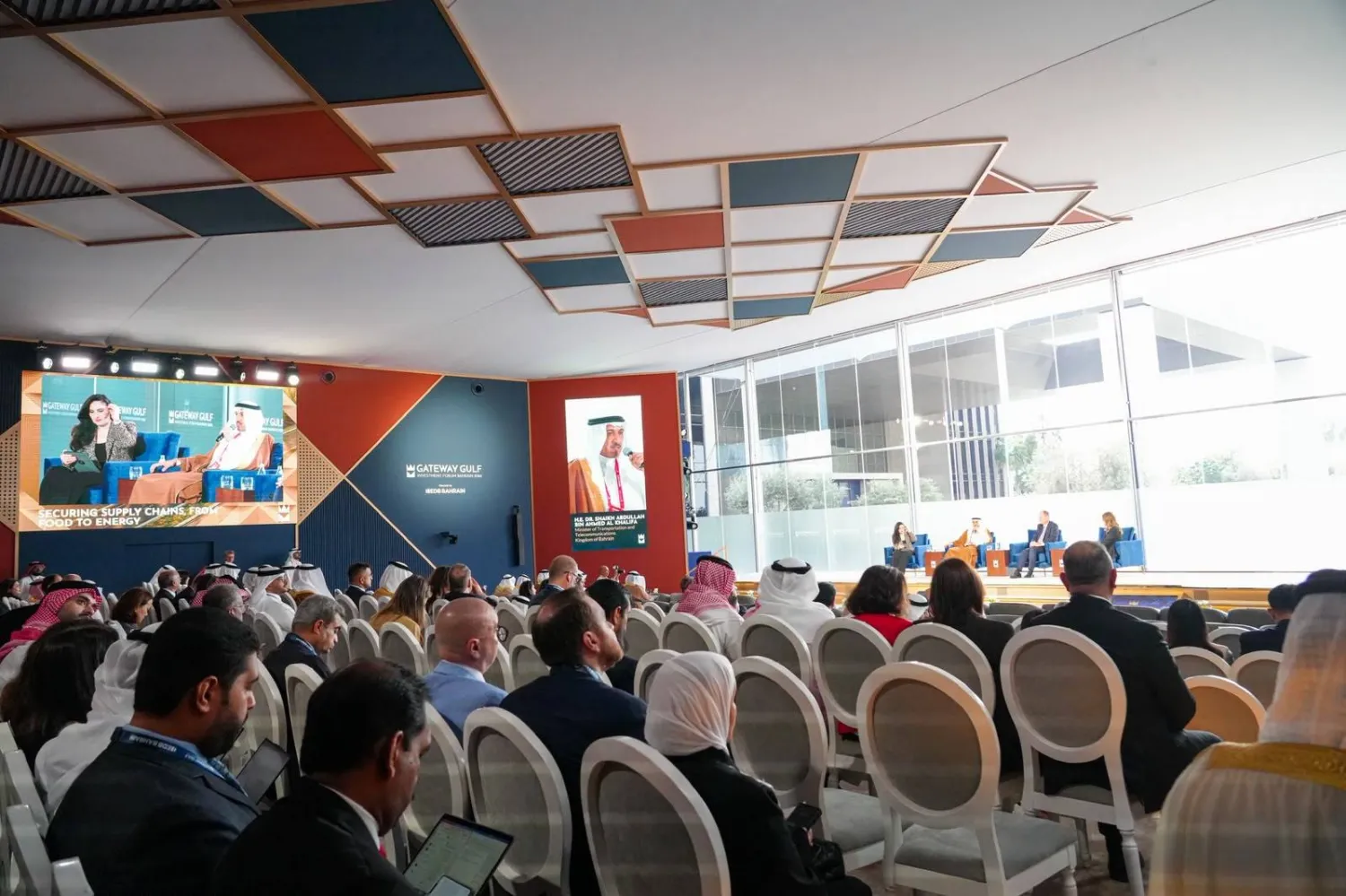
A scene from Gateway Gulf 2026, which concluded on Monday in the Bahraini capital, Manama (BNA)
Gateway Gulf 2026 saw the announcement of a series of investments, agreements and expansion projects across industry, technology, aviation, financial services, healthcare, tourism, education and real estate.
The announcements included plans to establish Bahrain's first electrical power transformer factory, open an office for global payments company Visa, launch a liquidity investment fund, and provide telecommunications services to Gulf Air Group, alongside healthcare and tourism projects expected to create more than 320 jobs.
The announcements came during the fourth edition of the forum, organized by the Bahrain Economic Development Board (Bahrain EDB) on November 1 and 2 under the theme "Redefining Global Partnerships and Driving Sustainable Growth," with the participation of investors, business leaders and policymakers.
Bahrain's First Power Transformer Factory
In the industrial sector, Amiri Industries launched its Amform project to establish Bahrain's first electrical power transformer manufacturing facility on a 23,000-square-meter site in the Hidd area.
The factory will produce medium-voltage distribution transformers to meet domestic demand and reduce reliance on imports, with plans to expand into Gulf Cooperation Council (GCC) markets at a later stage.
Technology and Aviation
In the technology sector, British company Lexness Technologies announced the launch of its operations in Bahrain, which will serve as a base for expansion into Gulf markets, focusing on artificial intelligence, automation, cybersecurity and digital transformation.
Global payments company Visa also announced plans to open an office in Bahrain in 2027 to strengthen its presence in the digital payments market and expand cooperation with financial institutions and businesses.
Batelco, part of Beyon Group, signed a five-year master services agreement with Gulf Air Group to provide telecommunications, networking, cloud services and satellite connectivity solutions as part of the group's digital transformation program.
The agreement includes connecting more than 1,000 employees across multiple locations and improving operational efficiency and customer communications.
Batelco also signed a two-year cooperation agreement with Bariq Al Retaj Real Estate Services to develop telecommunications solutions and smart home and building technologies.
Meanwhile, Beyon Connect signed a memorandum of understanding with Omani company PhazeRo to develop digital identity and electronic Know Your Customer (eKYC) solutions, beginning in Oman while exploring opportunities for expansion across the GCC.
Liquidity and Investment Fund
In financial services, ASB Capital, which manages $10.2 billion in assets, announced the launch of the Shariah-compliant ASB Liquidity Fund.
The fund will invest in short-term deposits, government and bank sukuk, and other eligible instruments across GCC and Middle East and North Africa markets, aiming to preserve capital, provide daily liquidity and manage volatility risks.
Healthcare and Tourism Projects
In the healthcare sector, Bahrain's Labour Fund, Tamkeen, signed an agreement with Mubadala Health Bahrain to establish a multidisciplinary medical facility developed through a partnership between M42 Group and Bahrain-based HealthVision.
The hospital will offer 20 medical specialties and create more than 200 jobs, alongside genetic testing services and AI-enabled precision medicine.
In tourism, Tamkeen signed an agreement to support more than 120 employment opportunities for Bahrainis at the Club Hawaii @ Bahrain Surf Park project, being developed by Edamah in collaboration with GFH Financial Group in the Bilaj Al Jazayer area.
Spanning more than 52,000 square meters, the project will feature a wave lagoon and tourism and entertainment facilities. It is expected to open this year and attract approximately 300,000 visitors annually.
British Investment in Education
In the education sector, Britain's Repton Schools Group announced plans to open a school in Bahrain for students aged three to 18.
The project will occupy a 32,000-square-meter site and offer the British curriculum, including International GCSE qualifications and A-Levels, becoming the 13th school in the group's network.
These projects reflect Bahrain's efforts to attract investment across diverse sectors, expand employment opportunities and strengthen the Bahraini economy's connections with Gulf and international markets.
لم تشترك بعد
انشئ حساباً خاصاً بك لتحصل على أخبار مخصصة لك ولتتمتع بخاصية حفظ المقالات وتتلقى نشراتنا البريدية المتنوعة