


A Look at UNESCO and Its Work as the US Decides Again to Leave the Cultural Agency

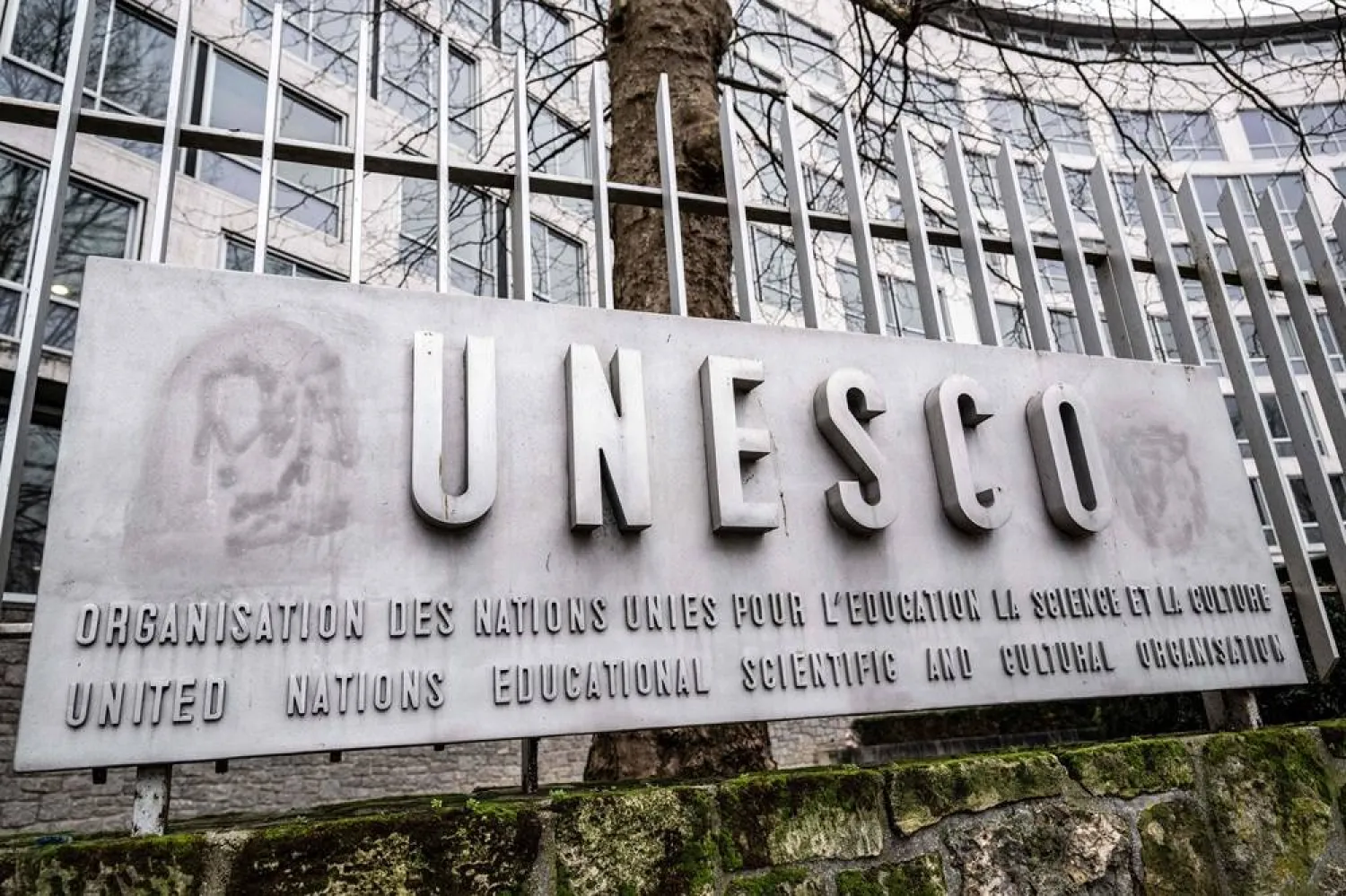
This photograph shows the logo of the United Nations Educational, Scientific and Cultural Organization (UNESCO) headquarters in Paris on January 17, 2025. (AFP)
TT

A Look at UNESCO and Its Work as the US Decides Again to Leave the Cultural Agency

This photograph shows the logo of the United Nations Educational, Scientific and Cultural Organization (UNESCO) headquarters in Paris on January 17, 2025. (AFP)

With the support of international partners and $115 million in funding, the UN cultural agency UNESCO recently helped rebuild the Iraqi city of Mosul after it was devastated by the ISIS group.

The restoration of the historic city's iconic Al-Nouri Mosque and Al-Hadba Minaret was just one of many programs run by the UN Educational, Scientific and Cultural Organization, which is in the spotlight because the United States is leaving it once again, reported the Associated Press.

The decision to pull US funding and participation from UNESCO will deal a blow to its work preserving cultural heritage around the world. US President Donald Trump exited the agency during his first term, accusing it of promoting anti-Israel speech. The administration of US President Joe Biden had rejoined UNESCO in 2023 after citing concerns that China was filling the gap left by the US in UNESCO policymaking.

Here’s a look at the work UNESCO does:

World Heritage Sites UNESCO names World Heritage sites, including landmarks like the Great Wall of China, the Egyptian pyramids, the Taj Mahal and the Statue of Liberty, and gives them special protection under its World Heritage Sites program.

Its World Heritage Committee each year designates sites considered “of outstanding value to humanity” and intervenes when sites are in danger of destruction or damage. The program provides countries with technical assistance and professional training to preserve the sites.

A World Heritage site designation is coveted and seen as a boost to tourism.

Another UNESCO convention created in 2003 protects “intangible” heritage such as folk songs and traditional dances, crafts and cooking in its lists.

Holocaust Education: Like the rest of the UN, UNESCO was created in response to the horrors of World War II, and particularly Nazi crimes. Amid concerns that the agency’s Arab members have used UNESCO to pass anti-Israel resolutions, UNESCO has worked in recent years on Holocaust awareness projects. That includes educational materials and organizing visits to former Nazi concentration camps.

Empowering Girls: UNESCO works to improve literacy, with a special focus on girls in countries hit by war or disasters who get little or no schooling though programs such as the Malala Fund for Girls’ Right to Education. In Tanzania, for instance, over 2,500 girls benefited from the creation of safe spaces in 40 secondary schools. The agency provides teacher training and materials and encourages programs for girls to pursue careers in science.

Climate Change: One of the agency's goals is coordinating climate knowledge and improving international education about how global warming occurs and affects people around the world. Over 30 UNESCO programs are designed to help its members adapt to climate change and favor sustainable development.

Ethics of Artificial Intelligence: UNESCO adopted in 2021 what it calls “the first and only global standard-setting instrument on the ethics of artificial intelligence.” Applying to all 194 member states, the recommendation emphasizes the protection of human rights and dignity, grounded in principles like transparency, fairness, and human oversight of AI systems.

Operating without the US: UNESCO director general Audrey Azoulay said the US decision to leave was expected and that the agency has prepared for it. While the US had previously provided a notable share of the agency’s budget, UNESCO has diversified its funding sources.

“Thanks to the efforts made by the organization since 2018, the decreasing trend in the financial contribution of the US has been offset, so that it now represents 8% of the organization’s total budget compared with 40% for some United Nations entities,” Azoulay said.

She added that the agency's overall budget has increased and that it has the steady support of "a large number of member states and private contributors.”



Saudi Arabia, Syria Underline Depth of their Cultural Ties

Syrian President al-Sharaa receives the Saudi minister of culture and the accompanying delegation at the Conference Palace in Damascus on Thursday. (SPA)
TT

Saudi Arabia, Syria Underline Depth of their Cultural Ties

Syrian President al-Sharaa receives the Saudi minister of culture and the accompanying delegation at the Conference Palace in Damascus on Thursday. (SPA)

Saudi Arabia and Syria underlined the strength of their cultural relationship during high-level meetings held in Damascus on Thursday, on the sidelines of the opening of the Damascus International Book Fair 2026, where the Kingdom is participating as guest of honor.

Syrian President Ahmad al-Sharaa received Saudi Minister of Culture Prince Badr bin Abdullah bin Farhan at the Conference Palace in the capital.

Earlier the same day, Prince Badr met with his Syrian counterpart, Minister of Culture Mohammad Yassin Saleh, during an official visit to attend the fair. T

he Saudi minister congratulated Syria on hosting the exhibition and expressed his wishes for continued prosperity, progress, and stability for the Syrian government and people.

Both meetings highlighted the depth of cultural relations between the two countries, the importance of expanding joint cultural cooperation across various fields, and the alignment of positions on issues of mutual interest in a way that serves both nations.

The Saudi delegation included senior officials and advisers, among them representatives from the Royal Court, the Ministry of Culture, and the King Abdulaziz Public Library, reflecting broad institutional engagement in the visit.

In the evening, Prince Badr attended the opening ceremony of the fair’s special session, held under the patronage and in the presence of al-Sharaa. The event drew wide official and cultural participation, including Arab ministers, political and intellectual figures, and a distinguished group of writers and cultural figures.

In a post on the X platform, Prince Badr thanked “our brothers in Syria for their generous hospitality and their efforts in organizing the Damascus International Book Fair.”

The minister also inaugurated the Kingdom’s pavilion at the fair in the presence of the Syrian minister of culture and the Qatari minister of culture.

Saudi Arabia’s guest-of-honor participation continues until Feb. 16 and reflects its growing prominence and leadership in the Arab and global cultural landscape.

This participation aligns with Saudi Vision 2030, which places culture at the heart of national development, viewing it as a space for dialogue, a bridge for civilizational communication, and a tool for strengthening ties among Arab peoples.

The Saudi Literature, Publishing and Translation Commission is leading the Kingdom’s participation, highlighting the development of the cultural sector and reaffirming the central role of books as carriers of knowledge and awareness.

The Saudi pavilion boasts a comprehensive cultural program featuring intellectual seminars, poetry evenings, a manuscript exhibition, traditional Saudi fashion displays, hospitality corners, archaeological replicas, and performing arts that express the depth of the Kingdom’s cultural heritage.

On the sidelines of the visit, Prince Badr, accompanied by Minister Saleh, toured the National Museum of Damascus, which houses rare artifacts spanning prehistoric eras, ancient Syrian civilizations, classical and Islamic periods, as well as traditional and modern art.


UNESCO Honors Al-Bisht Al-Hasawi as Thousands Flock to Al-Ahsa Festival

Visitors can explore interactive displays, participate in live workshops, and witness the meticulous process of tailoring this iconic symbol of prestige - SPA
TT

UNESCO Honors Al-Bisht Al-Hasawi as Thousands Flock to Al-Ahsa Festival

Visitors can explore interactive displays, participate in live workshops, and witness the meticulous process of tailoring this iconic symbol of prestige - SPA

The third edition of Al-Bisht Al-Hasawi Festival is drawing thousands of regional and international visitors to Ibrahim Palace in historic Al-Hofuf.

Organized by the Heritage Commission, this year’s festival celebrates the inscription of the Bisht on UNESCO’s Representative List of the Intangible Cultural Heritage of Humanity.

The event showcases Al-Ahsa’s centuries-old tradition of hand-weaving and gold embroidery, a craft passed down through generations of local families, SPA reported.

Visitors can explore interactive displays, participate in live workshops, and witness the meticulous process of tailoring this iconic symbol of prestige.

With UNESCO's participation and representatives from six countries, the festival has evolved into a global platform for cultural dialogue, cementing the Bisht’s status as a world-class cultural treasure.


Saudi, Syrian Culture Ministers Tour National Museum of Damascus

The ministers observed the museum’s extensive collections spanning prehistoric eras to modern art. SPA
TT

Saudi, Syrian Culture Ministers Tour National Museum of Damascus

The ministers observed the museum’s extensive collections spanning prehistoric eras to modern art. SPA

Saudi Minister of Culture Prince Badr bin Abdullah bin Farhan and his Syrian counterpart, Mohammed Yassin Saleh, have toured the National Museum of Damascus during the Kingdom’s participation as guest of honor at the 2026 Damascus International Book Fair.

The ministers observed on Thursday the museum’s extensive collections spanning prehistoric eras to modern art.

A particular focus was placed on the Arab-Islamic wing, featuring significant artifacts from the Umayyad period.

The Kingdom's participation as guest of honor at the 2026 Damascus International Book Fair, which runs until February 16, stems from the role culture plays within Saudi Vision 2030.