
Elias Atallah: East German Blanket, Syrian Intel Linked to Gemayel Assassination

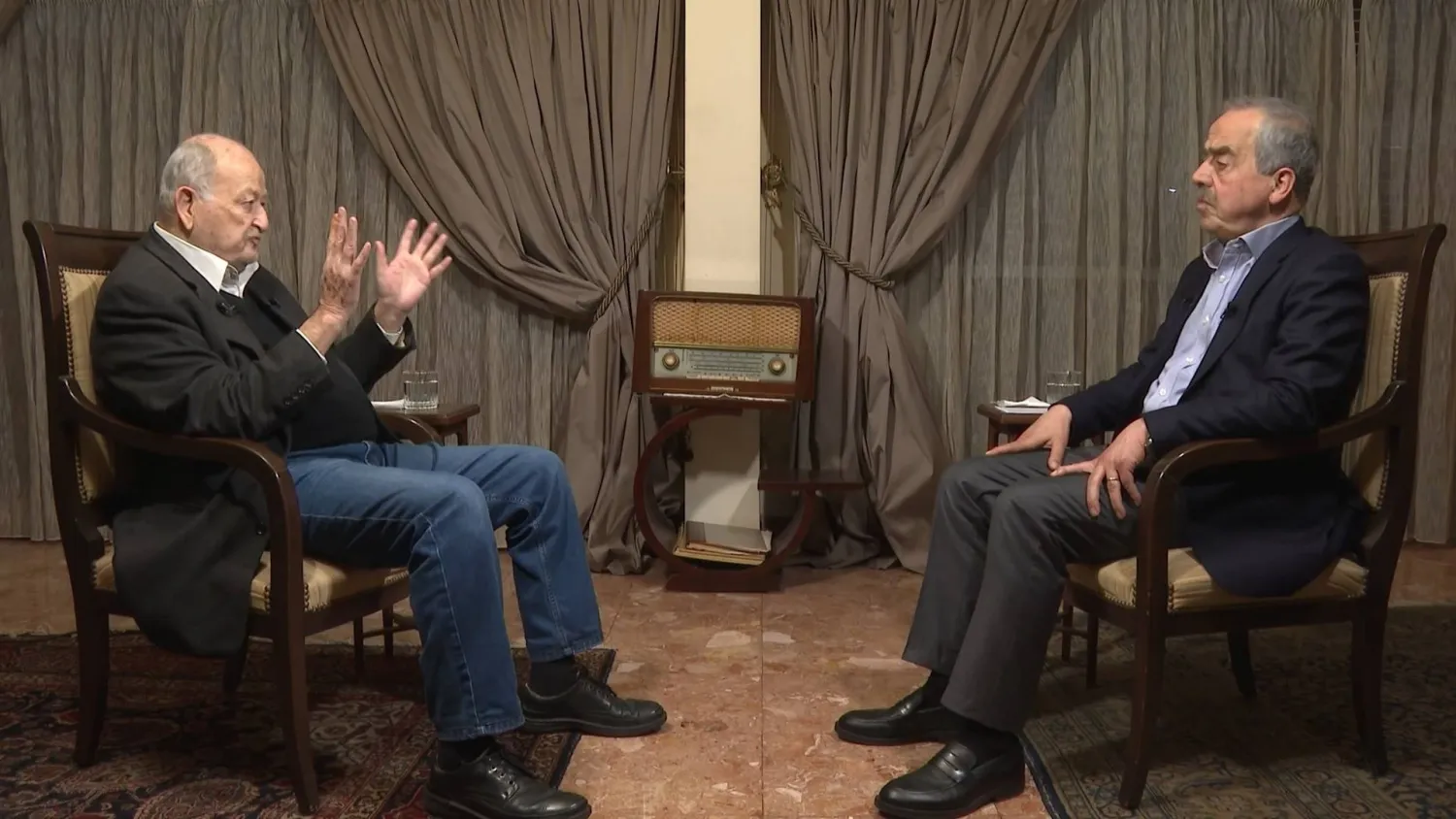
Elias Atallah in an interview with Asharq Al-Awsat’s Editor-in-Chief (Asharq Al-Awsat)
TT

Elias Atallah: East German Blanket, Syrian Intel Linked to Gemayel Assassination

Elias Atallah in an interview with Asharq Al-Awsat’s Editor-in-Chief (Asharq Al-Awsat)

The summer of 1982 left a deep mark on both Lebanon and the Palestinians. It was the summer when Israeli forces, for the first time in the conflict, occupied an Arab capital -Beirut. It was also when Yasser Arafat and his Palestine Liberation Organization fighters were forced into exile by the Israeli invasion.

That summer also saw the election of Bashir Gemayel as president of Lebanon, only to be assassinated before taking office. It was the season the Lebanese National Resistance Front (known by its Arabic acronym Jammoul) was born, only to be crushed by the regime of Syria’s Hafez al-Assad, who, together with Tehran, laid the foundations for Hezbollah and its “Islamic Resistance.”

The summer brought back memories of a conversation years earlier with Mohsen Ibrahim, head of Lebanon’s Communist Action Organization. “Assad believed we committed three crimes that merited the harshest punishment,” Ibrahim recalled. “First, with Kamal Jumblatt, we realized that Assad sought clients, not allies - and we paid the price. Second, with Arafat, we discovered that Assad wanted to seize control of the Palestinian decision-making process to secure his regime’s survival - and the punishment was severe. Third, we launched the Lebanese National Resistance Front and later refused to place it under Syrian control, which unleashed a brutal campaign of assassinations.”

Ibrahim said the full account of that “third crime” lay with Elias Atallah, a senior figure in Lebanon’s Communist Party and former commander of Jammoul’s armed operations.

At a time when debates over Hamas’s weapons in Gaza and Hezbollah’s arsenal in Lebanon are once again in the spotlight, Asharq Al-Awsat revisited the lessons and horrors of the summer of 1982.

Speaking to Atallah, Asharq Al-Awsat unearthed fresh details on Jammoul’s story, a string of security incidents and high-profile assassinations - from Gemayel and Rene Moawad to Rafik Hariri - as well as the shadow role of the Soviet KGB and the dramatic rescue of kidnapped Soviet diplomats after a tense meeting between one of its generals and the late cleric Mohammad Hussein Fadlallah.

Stage Set for War

By May 1982, speculation was mounting in Beirut that Israel was preparing a military operation to push Palestinian rockets out of range of its northern settlements. The prevailing view was that Prime Minister Menachem Begin’s government might advance some 40 kilometers into Lebanon, reaching the Awali River at the gateway to the south.

But Atallah, then a senior commander in the Lebanese Communist Party, believed such a move would fall short. He argued that Palestinian fighters and their allies could simply retreat to Beirut and preserve their strength. For that reason, he did not rule out the possibility of an Israeli drive into the capital itself to upend the balance of power.

Israel soon found its pretext. Sabri al-Banna, known as Abu Nidal, head of the splinter group Fatah-Revolutionary Council, attempted to assassinate Israel’s ambassador to Britain, Shlomo Argov. The following day, on June 4, Israeli warplanes bombed Beirut’s sports complex. Two days later, Defense Minister Ariel Sharon ordered Israeli ground forces into Lebanon.

In an interview with Asharq Al-Awsat, Atallah recounted the birth of Jammoul, its most prominent operations, and the wave of assassinations that struck the Communist Party after it defied Syrian President Hafez al-Assad’s demand to coordinate with Syrian intelligence and merge with Hezbollah.

From his military and security vantage point, Atallah also offered new details on a string of high-profile killings that targeted presidents and political leaders, the factional wars that engulfed Beirut before Syrian troops re-entered the city, and the final days Arafat spent in an underground shelter before departing Beirut. In that bunker, Atallah recalled, Arafat was joined by Lebanese Communist Party chief George Hawi - later himself among the victims of the “shared” assassination campaign that culminated in the killing of former Prime Minister Rafik al-Hariri and others.

Siege of Beirut: Maps and Decisions

On the day after Israel launched its ground invasion, four men stood over a battlefield map in one of 14 Palestinian operations rooms in Beirut: Arafat, his Iraqi ally General Hassan al-Naqib, Hawi, and Atallah.

Arafat, ruler in hand, repeatedly asked where the Israeli advance had reached. He had been assured the army would not push beyond 40 kilometers. But Atallah phoned contacts in his hometown of Ramliyeh, just north of the Awali River, who confirmed Israeli forces had already passed through, driving towards Beirut.

By then, Fatah units had retreated towards Jezzine and the Bekaa Valley. Atallah said the real shock was that Fatah’s chief of staff “turned out to be an Israeli agent.” From that moment, it was clear the decisive battle would be fought in Beirut. Outmatched on every front, Palestinian fighters and their Lebanese allies could not mount serious defenses against the Israeli army’s advance. Soon, West Beirut was encircled. The Communist Party joined the city’s defense, though Arafat and his Fatah movement played the leading role.

Atallah recalled Arafat as the true commander of Beirut’s defense. “He had extraordinary courage, bordering on disregard for his own safety,” he said. “His obsession was for the cause to win. His calculations were never personal. He managed the most difficult moments without flinching. He assigned me to coordinate defense lines with one of his officers. Another crucial figure was Khalil al-Wazir, or Abu Jihad, who spoke little but was highly effective, with stronger military expertise than Arafat.”

Atallah believes Arafat’s assassination was among Israel’s war aims, given his symbolic and practical weight. “He was the man who reawakened the Palestinian cause in 1965, almost as if he reinvented it,” he said. Despite being Israel’s top target, Arafat roamed the besieged city, inspecting frontline positions and lifting morale, defying the relentless Israeli bombardment of Beirut.

Atallah also recalled the so-called “Horse Racing Battle.” Communist Party fighters, he said, single-handedly fought off an Israeli attempt to break into Beirut through the racecourse area to cut off the Fakhani district, where Fatah had its headquarters. “We confirmed the Israelis were preparing to move from the museum district through the racecourse,” Atallah said. “I calculated that our RPG-7s couldn’t reach from Tayouneh to the military court near the museum, so we dug more than 30 individual pits along both sides of the road. When the Israelis advanced, we hit them from both flanks. They lost tanks, and a general leading the assault was killed. What struck me was that after retreating, they never left anything behind on the battlefield.”

From a fifth basement level in Marinian building near the American University Hospital, Atallah and Hawi directed operations. One day, Atallah spotted a familiar keffiyeh at the entrance - it was Arafat. His aide, Fathi, explained: “The old man will sleep here tonight.”

Arafat’s office had just been bombed, Fathi said, and in the chaos a bodyguard tried to assassinate him, but was killed by other protectors. From then on, Arafat spent his final ten days in Beirut shuttling between the bunker and the frontlines, alongside Hawi and Atallah, until his departure into exile.

Arafat and the Rivalries of his Allies

Amid the siege of Beirut, Arafat kept up his contacts, but it did not take him long to realize that no one was coming to his rescue. In one meeting, he and Fatah Central Committee member Hani al-Hassan visited the Soviet embassy. Ambassador Alexander Soldatov was blunt: Moscow would not threaten Israel or its American backers, nor send ships to evacuate the wounded.

“Leave Beirut,” Soldatov told him. When Arafat asked how, the envoy replied: “Leave even on American destroyers, so you won’t be taken in the net as prisoners.” Arafat shot back that “a commander with two bullets in his pistol does not fall captive,” but he understood the message.

As conditions ripened for a negotiated withdrawal, US envoy Philip Habib brokered a deal. Arafat had to secure the backing of the Palestinian factions. Elias Atallah, who knew their secret hideouts, sent messengers. He recalled that George Habash of the Popular Front and Nayef Hawatmeh of the Democratic Front tried to outbid Arafat politically, opposing the departure. Furious, Arafat told them they could stay behind if they wished. Both eventually agreed to leave.

The siege did nothing to soften Arafat’s animosity toward Syrian President Hafez al-Assad. Atallah was present when someone in the Marinian bunker floated the idea of retreating overland to Syria. “Arafat’s response was sharp and final,” he recalled. “He said: I will execute anyone who suggests such a thing. I consider Assad an enemy, like Israel - and worse. Mention Assad again and I will execute you.”

Atallah believed this deep mutual hatred later fueled the bloody battle in Tripoli, Lebanon’s northern capital, lamenting that the Communist Party, which he led militarily, had become entangled in the fight. “Arafat told Mohsen Ibrahim in Tunis that surviving Beirut doubled the hatred both Sharon and Assad had for him,” Atallah said.

Despite his loathing of Damascus, Arafat showed concern for Syrian units trapped in Beirut, supplying them with food and weapons, Atallah said. “Some soldiers didn’t even have shoes,” he recalled. “One Syrian commando unit fought bravely, captured two Israeli tanks in Khaldeh, then received orders from Damascus to hand them over to Nabih Berri’s Amal movement.”

On another occasion, after repeated Israeli shelling around the Soviet embassy, Atallah visited the compound. “I went to check on them and asked if they wanted to move to a safer place,” he said. “Soldatov replied: ‘Comrade, if this flag (pointing to the Soviet one) can’t protect me, nothing can.’ The strikes, he noted, hit the embassy’s garden, not the building itself.”

Another hot issue gripped Beirut that summer: the presidential race. Gemayel, commander of the Lebanese Forces militia and son of Kataeb Party founder Pierre Gemayel, announced his candidacy to succeed Elias Sarkis. Before the Israeli invasion, Gemayel’s election had seemed nearly impossible, given the hostility of most leftist and Muslim factions and his battles against Syrian troops in Beirut and Zahle. But the invasion upended Lebanon’s political balance, making his once unlikely candidacy possible.

Atallah also recalled regular visits from a Soviet KGB officer in Beirut, known by the codename “the Rabbit.” As the Communist Party’s military chief, head of security, and member of its political bureau, Atallah was a key point of contact.

‘The Rabbit’s’ Counsel - Soviet Pressure and Lebanon’s Turning Point

About a month into the Israeli invasion, a Soviet intelligence officer known by the nickname “the Rabbit” paid Atallah an unexpected visit and delivered a surprising message. “Why don’t you Lebanese back Gemayel for the presidency?” he asked bluntly, even though the battle for Beirut was far from over and Arafat’s exit had not been finalized.

Atallah said he sent Albert Mansour - later a minister - to test the question. When Mansour asked Gemayel how he would govern if elected, Gemayel unfolded a pre-drawn map and pointed to color-coded areas. “These Christians in these areas are all armed,” Atallah quoted him as saying. “These other, non-aligned areas are disarmed.”

“Atallah asked the Rabbit: ‘Are you telling me to elect a president like this?’” Atallah recalled. The Soviet officer replied only that “things change - now he is this, and shortly after taking power he becomes something else.” When Atallah pressed whether that view reflected Moscow’s official position, the visitor merely repeated: “I tell you elect Bashir. He is the best option in your circumstances.”

The exchange exposed a rift. The Rabbit left visibly upset after Atallah implied the conversation was over. Atallah told Hawi he would refuse further visits; Hawi later said that was not enough and demanded an apology from the Soviet officer, though he did not pursue the matter further.

By the second half of August, as negotiations on the evacuation of Arafat and PLO forces accelerated under US envoy Philip Habib, Lebanon’s presidential contest grew hotter. Opponents of Gemayel sought a way to stop his election: some proposed extending Elias Sarkis’s term, others floated a transitional presidency for Camille Chamoun. None of the alternatives held. Gemayel’s candidacy, once implausible given his militia record and the hostility of leftist and Muslim factions, surged in the reshaped balance of power created by the invasion.

Whispers spread among opposition parties that the only sure way to block Gemayel was to bomb the venue to prevent the parliamentary session. Anxiety mounted in the National Movement and among Islamist groups. Some speculated Arafat might back such a bid - a notion that had circulated earlier.

Those calculations were off the mark. Arafat, negotiating his departure with Habib, had strong political instincts and did not wish to sabotage a course that had drawn international acceptance. When Atallah, who favored disrupting the vote, asked Arafat whether he would support such a plan, Arafat’s answer was curt and absolute: “Not a single shot.” He repeated the phrase when pressed.

Atallah said Arafat warned sternly: “Do not play with this; you will make us look bad.” The Palestinian leader’s insistence was, Atallah added, unusually strict - comparable only to a prior episode during heavy fighting near the southern suburbs, when Arafat personally ordered an immediate halt to fire rather than risk confrontation with Syrian President Hafez al-Assad.

Gemayel was elected president, gaining traction across confessional lines. Atallah later reflected on “dark days to come” - a fate, he suggested, shaped not only by political shifts but by the intervention of intelligence services whose influence would mark Lebanon’s next chapter.

Deadly East German Blanket

On Sept. 14, 1982, a thunderous explosion ripped through the Kataeb Party headquarters in Beirut’s Ashrafieh district, killing president-elect Gemayel and shattering a political project before it began.

Elias Atallah recalled that word of Gemayel’s impending assassination had circulated hours earlier. “A northern worker in Lebanese security at the Masnaa border crossing whispered that Bashir would be killed,” he said. “Few paid attention, since the general impression was that Bashir was heavily protected, especially by Israel.”

The attack was carried out by Habib Chartouni, a member of the Syrian Social Nationalist Party, under the guidance of Nabil Alam, who, according to Atallah, maintained links with East German intelligence.

“The bomb that killed Bashir came from East Germany disguised as an ordinary sleeping bag,” Atallah said. “Explosives were hidden inside, powerful enough to destroy the building. A detonator – maybe just a pin – was enough to set it off. This was beyond Chartouni’s ability alone. I believe Syrian intelligence, which had ties with East Germany and other services, was involved.”

Asked if the armed wing he commanded had plotted Gemayel’s assassination, Atallah replied: “Never. I was opposed to assassinations. Even the attempt on General Michel Aoun at Baabda Palace had nothing to do with my unit.”

Gemayel’s death was followed swiftly by the Sabra and Shatila massacres, and Israeli forces stormed West Beirut. Atallah, now charged with overseeing the operations of the Lebanese National Resistance Front, found himself at the center of the campaign that – along with other factors – would eventually force Israeli troops out of the capital.
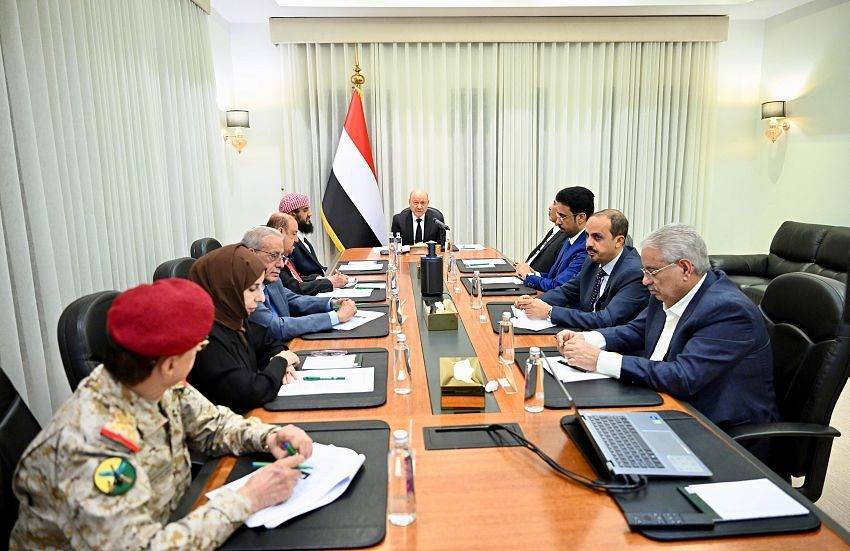
Al-Khanbashi to Asharq Al-Awsat: We Warn Against Incitement, Hadramout Has Room for All

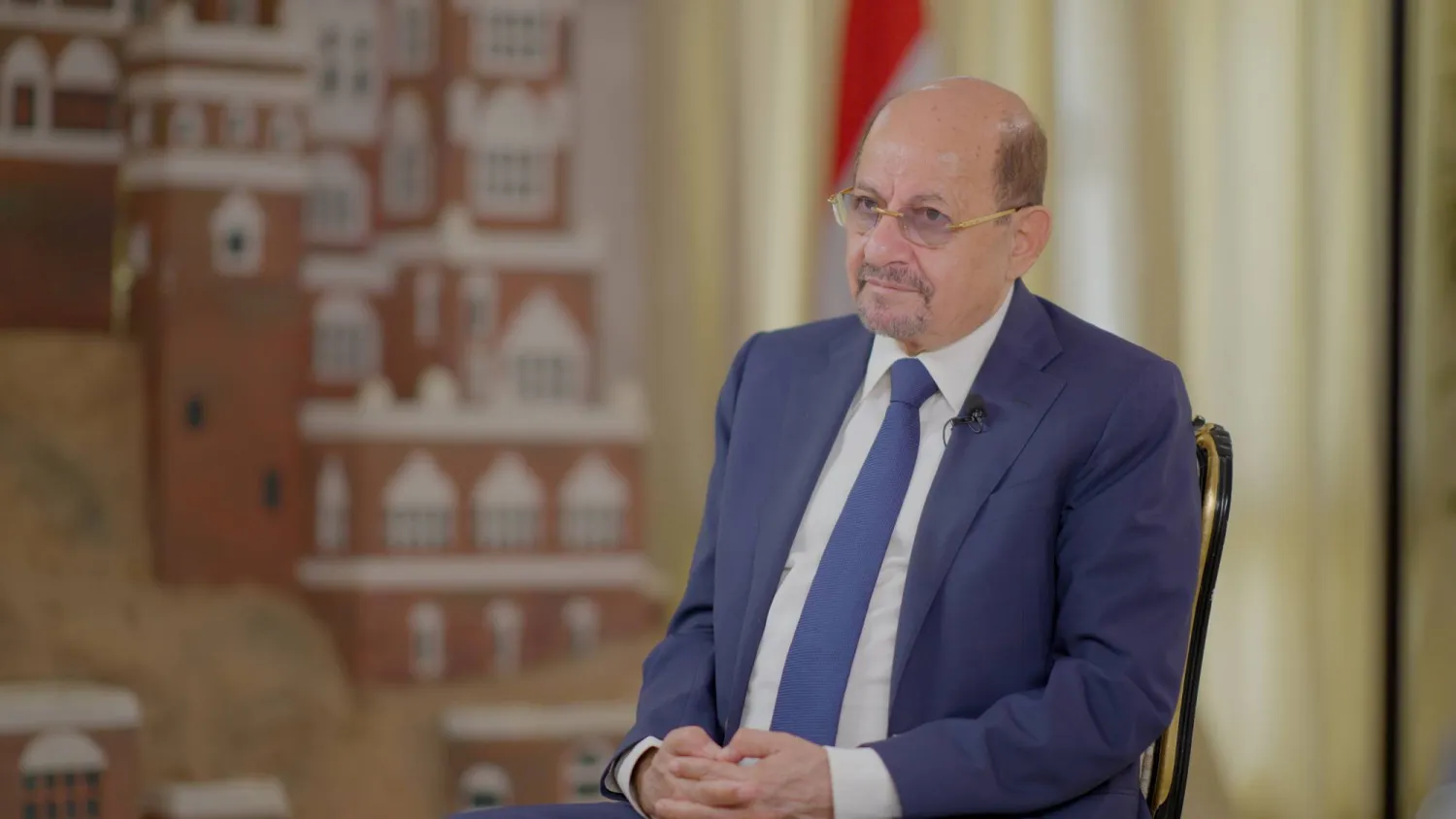
Governor of Hadramout, Salim Al-Khanbashi delivers a press conference in the city of Mukalla in Yemen's coastal southern Hadramout province on January 19, 2026. (Photo by FADEL SENNA / AFP)
TT

Al-Khanbashi to Asharq Al-Awsat: We Warn Against Incitement, Hadramout Has Room for All

Governor of Hadramout, Salim Al-Khanbashi delivers a press conference in the city of Mukalla in Yemen's coastal southern Hadramout province on January 19, 2026. (Photo by FADEL SENNA / AFP)

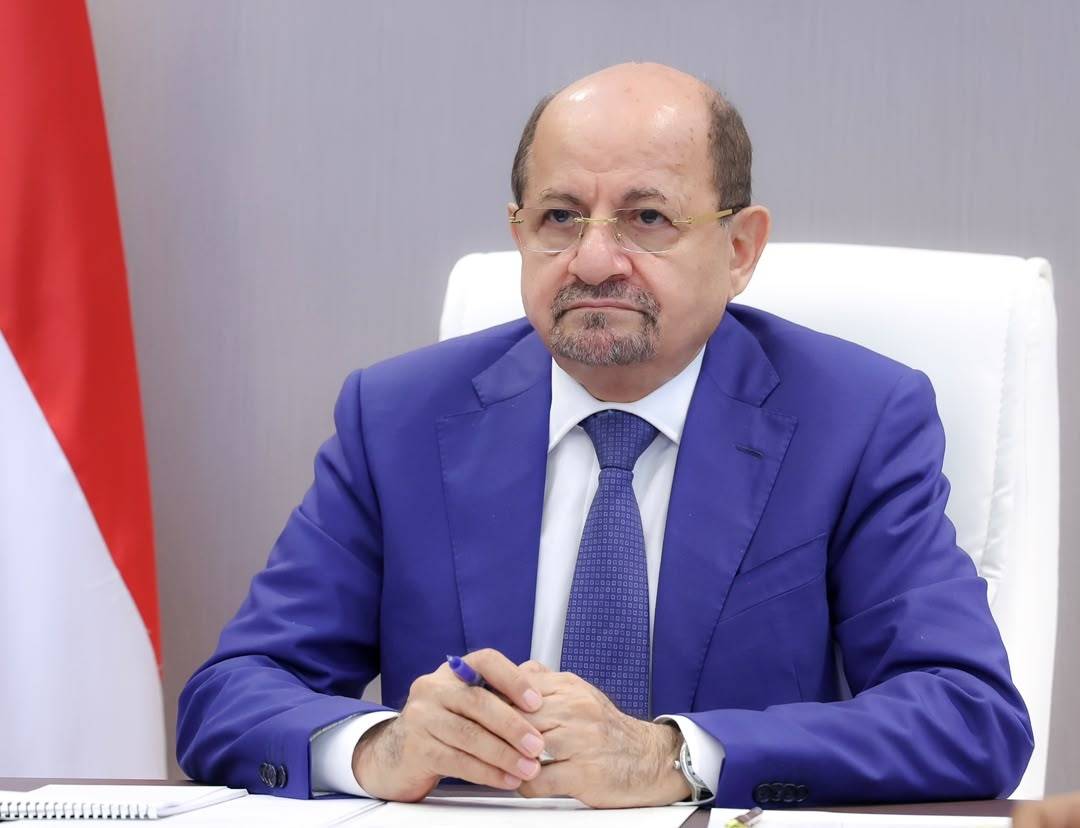
Presidential Leadership Council (PLC) member and Governor of Yemen's eastern Hadramout province Salem al-Khanbashi says he believes that “Hadramout triumphed for itself,” and that what took place there in December 2025 and early January 2026 marked a decisive moment in which Hadhramis reclaimed their right to protect their identity and blocked any political project seeking to dissolve the “Hadhrami self” under the slogans of outsiders.

In an interview with Asharq Al-Awsat Podcast, recorded in Riyadh on February 9, 2026, al-Khanbashi advised the new Yemeni government led by Dr. Shayea al-Zindani to steer clear of partisanship, raise performance levels, and combat corruption. During the discussion, he presented his account of events, framing the operation as a “takeover of military camps,” not the “ignition of a war.” He broadened the discussion to what he views as the priority of the current phase: consolidating stability, activating development, and opening the door to long-awaited Hadhrami investments returning home.

“Liberate us" from ourselves?

In describing the outcome of the confrontation, the deputy rejects reducing the picture to who won and who lost. He says the real victory was achieved when the people of Hadramout rejected the notion that someone could arrive and say, “We came to liberate you,” asking: “Liberate you from whom? From ourselves?” He stresses that the governorate, with its history stretching back “thousands of years,” cannot have another identity imposed upon it. He records his appreciation for those who stood in defense of this distinctiveness, while at the same time extending explicit thanks to the Kingdom of Saudi Arabia, its leadership and role, which he said was a key player in containing last month’s events.

On the moment he was tasked with the governorship at an extremely sensitive time, al-Khanbashi recounts that he was residing in Hadramout and did not leave except when necessary, before receiving a call from President Rashad al-Alimi and from parties including Saudi officials and colleagues on the Leadership Council, asking him to assume responsibility for the governorate “because we need you.”He says he tried to decline, but accepted under the pressure of “necessity,” emphasizing that he is a son of Hadramout who spent most of his life there, and that he accepted the post fully aware of the weight and complexity of the phase.

The picture becomes heavier as al-Khanbashi moves to his successive roles: governor, then commander of the National Shield Forces in Hadramout , then a member of the Leadership Council with the rank of vice president. He deliberately labels the January operation a “battle to take over the camps,” so that it would not be understood as targeting civilian society or as a search for settling scores.

Al-Khanbashi says his overriding concern was to spare Hadramout street fighting, protect civilian infrastructure, and minimize human losses. He describes the operation as “swift and decisive,” with a limited number of casualties.

Securing withdrawals... and a political outlet

Asked whether the military operation in Hadramout ended with reprisals against opponents, al-Khanbashi is keen to deny this. He says the withdrawal of departing forces was secured and that they were not subjected to any military or popular harassment. “We instructed that no one who was in the Southern Transitional Council, whether military or civilian, be harmed,” he says. At the same time, he explains that he took decisions to dismiss certain security and military leaders accused of involvement in looting weapons and ammunition or of poor performance, and that they will be referred for accountability in accordance with what they committed against the governorate.

Amid this, al-Khanbashi reiterates a message he wants widely understood: “Hadramout has room for all.” He calls for civic conduct that avoids incitement, and warns against marches he believes target civil peace and provoke the local scene.

He again urges adherence to civil behavior without incitement, citing gatherings that took place in early February 2026 in Seiyun. He suggests they were not spontaneous, saying: “We have evidence that these people were paid, and we want them not to force us to take measures involving a degree of coercive force against those who want to practice such acts. We are still under a state of emergency, and all measures can be taken.”

In the broader political context, al-Khanbashi speaks of moves to convene a broad Hadhrami meeting in Saudi Arabia bringing together political and social components, including Hadhramis from the Southern Transitional Council, with the aim of preparing a unified vision in the name of Hadramout to be presented to the Southern Dialogue Conference. He notes that a preparatory committee was formed in Mukalla to draft a position reflecting “all societal and political forces” in the governorate, alongside a parallel desire to represent the voice of Hadhrami expatriates within a single vision.

Electricity and investment

Electricity tops the services file, according to the governor. He places it at the head of priorities, explaining that the needs of the coast and the valley differ, but the headline is the same: energy that does not meet demand, especially in summer, with humidity and heat on the coast and harsh desert conditions in the valley.

He speaks of support projects to generate 300 megawatts for the coast, and other projects for the valley, alongside proposals for gas-powered plants and private-sector solar energy options with capacities that could reach 150 megawatts. He believes that a medium-term solution is not a substitute for a long-term strategic project for a large gas plant capable of covering Hadramout's future needs.

From energy he turns to investment as the other face of stability. Al-Khanbashi lists opportunities he sees as promising: tourism, real estate, the export of high-purity gypsum, potential minerals, coal in specific areas, black sands and heavy elements, fisheries, and the idea of aquaculture. He recalls his participation in a Hadhrami investment conference, calling on businessmen to balance their external investments with investing in Hadramout, while pledging to provide facilitation and an attractive environment.

On government affairs, al-Khanbashi describes the discussions that preceded the formation of the new government as having focused on criteria of competence, experience, and geographic balance, while rejecting the principle of quota-sharing. He then offers three pieces of advice he places at the core of the government’s test: moving away from ego and partisan drift, combating entrenched corruption in several ministries, and raising the level of revenue collection and transferring it to the central bank, especially in revenue-generating ministries. He highlights the need to regulate the financial relationship between the center and the governorates in accordance with the Local Authority Law, arguing that strict application would ease many chronic problems.

He recalls Hadramout's experience with oil revenues before exports were halted, noting that the governorate received 20 percent of the value of exported oil and used it for development projects such as electricity, roads, health, and education, before this resource stopped after the Houthis targeted export facilities.

"No barriers" with Saudi Arabia

In assessing Saudi development support, al-Khanbashi links relief and reconstruction as a single window for enabling Yemen to overcome its crisis, pointing to packages of projects in electricity, roads, health services, and others within Hadramout.

He places this within a relationship he describes as intertwined, difficult to separate socially, economically, and politically, invoking the extended borders, shared tribes, and cultural ties, to conclude that it is not possible to erect a “barrier” between Hadramout and the Kingdom.

Asked about the moment that remained most vivid in his memory during the 48 hours of the operation, al-Khanbashi says he feared the forces might not withdraw easily and what that could entail in terms of destruction and casualties, before the operation ended in record time with limited losses. He says this is what he will continue to take pride in: that Hadramout succeeded in avoiding internal fighting. In his message to the people of Hadramout, he calls for unity, abandoning the causes of division, and prioritizing security and development, pledging that the expansion of stability will lead to a “bright development era” reflected in the lives of the governorate’s residents.


Iraqi Justice Minister to Asharq Al-Awsat: ISIS Prisoners Held at a Fortified Site, Escape Impossible

Iraqi Justice Minister Khaled Shwani
TT

Iraqi Justice Minister to Asharq Al-Awsat: ISIS Prisoners Held at a Fortified Site, Escape Impossible

Iraqi Justice Minister Khaled Shwani

Iraqi Justice Minister Khaled Shwani told Asharq Al-Awsat that Iraq will not repatriate foreign prisoners affiliated with ISIS to their home countries if their involvement in crimes against Iraqi citizens is proven. He said a heavily fortified Iraqi prison currently holds thousands of ISIS members transferred from Syria, stressing that security breaches, escapes, smuggling, or internal unrest are not possible, despite what he described as enormous pressure on judicial institutions and the presence among the detainees of some of the world’s most dangerous terrorists.

Iraq agreed to receive thousands of prisoners suspected of affiliation with ISIS starting January 21. Although the international coalition transferred them in batches from prisons previously overseen by the Syrian Democratic Forces following military operations by the Syrian army in northeastern Syria, Iraqi Prime Minister Mohammed Shia Al-Sudani confirmed that “the decision to receive the prisoners was purely an Iraqi one.”

Since then, Shwani says he has been “working intensively with judicial, government, and security officials” to manage a highly sensitive and dangerous operation aimed at accommodating a large number of prisoners in a way that prevents them from becoming a “ticking time bomb,” and at returning most of them to their countries so that their detention does not turn into a new school for producing extremism.

The Minister was born in the city of Kirkuk, north of Baghdad, in 1975. He has served as Iraq’s justice minister since 2022. He is a lawyer and constitutional expert, and a member of the political bureau of the Patriotic Union of Kurdistan, led by Pavel Talabani.

Iraqi Justice Minister Khaled Shwani

In an exclusive interview with Asharq Al-Awsat, the Iraqi Minister said that taking custody of ISIS prisoners in such large numbers came after major efforts to ease prison overcrowding, but that Iraqi authorities bore the burden in order to safeguard regional security.

According to Shwani, the Justice Ministry has long experience in managing terrorist inmates and confronting extremism. It relies on a program known as the “Moderation Program,” which aims to strip inmates of extremist ideology through multiple means, including vocational training. For this reason, he said, the international community trusts Iraq to house the most dangerous terrorists in its prisons. The following is the full text of the interview:

When the decision was announced to transfer prisoners from Syria to Iraq, was the Justice Ministry ready to receive this number of inmates?

After the Iraqi government agreed to receive the prisoners, the National Security Council of Ministers convened, and preparations began to take custody of them. Certainly, receiving such a large number is neither easy nor simple. It requires large prison facilities, equipment, and security protection, in addition to everything inmates need in correctional institutions, whether for the prisoners themselves or the security requirements to protect the prisons.

Our prisons were already overcrowded. But because we believe in the importance of this issue, and because it is related to protecting regional security from prisoners of an extremely dangerous level, urgent measures had to be taken to prepare prison sections to receive and house them. With the support provided by Prime Minister Mohammed Shia Al-Sudani, and the relevant bodies in government and the judiciary, we were able to succeed. All prisoners received were placed in jail, and we have now provided all prison-related requirements, as well as the security requirements to protect it.

What do you mean by those requirements?

The detainees are now housed in standard prisons with air conditioning, bathrooms, and cleaning supplies. They receive three meals a day and are guarded by a professional staff of guards and investigators. I can say that the judicial institution is dealing with them professionally, likely different from the situation in Syria. Their conditions are now better than they were before their transfer to Iraq.

An ISIS member at Al-Karkh Prison in Baghdad (AP)

Has overcrowding increased after the addition of these prisoners? How are they distributed?

Because of the exceptional circumstances Iraq went through, including the occupation of areas by ISIS, earlier bombings by Al-Qaeda and other terrorist groups, as well as organized crime, the prison overcrowding rate when I took office three years ago stood at 300 percent. We put in place a systematic plan and managed to reduce overcrowding to 25 percent above normal capacity.

However, receiving 5,704 prisoners at once caused overcrowding again, because accommodating nearly 6,000 inmates required placing additional strain on other prisons, undermining efforts to ease overcrowding.

Where were they housed?

They were placed in a single prison. The operation is complex because their classification requires housing them in a prison that is tightly secured, fortified, and protected- security-wise, militarily, and intelligence-wise.

How were they housed while in pretrial detention, given that the Justice Ministry deals only with convicted prisoners?

Under Iraqi law, when a detainee is dangerous, a judge has the authority to place him in a secure location from which escape is impossible or feared, and where his protection can be guaranteed. This is not an exceptional case; it is purely legal. They are detainees under judicial decisions, and because of the danger they pose, they were placed in this prison, where they are held away from other prisoners.

How do you bear the burden? How is such a large number of prisoners managed?

There is a heavy burden on us at all levels. We need human resources to run this prison, infrastructure, additional manpower, military and security forces for protection, as well as the costs of housing, maintenance, and providing services to 5,704 prisoners. This is not easy. We face challenges, especially financial ones. But there is communication with the international coalition to bear the costs, and they have expressed readiness in this regard.

How is this matter funded?

There is understanding and communication with the international coalition, which has expressed readiness to bear financial burdens related to housing those prisoners, providing infrastructure and prison supplies, and some security requirements. We prepared a comprehensive project and sent it to the coalition, and we are awaiting their response and procedures.

How many investigators handle the prisoners’ cases?

About 150 investigators are working through the files of thousands of prisoners. They are carrying out enormous work, assisted by a large number of employees and specialized experts.

How are they classified?

We have among them the most dangerous terrorists. They are classified according to security criteria and internationally approved standards for dealing with prisoners. Highly dangerous inmates and those with terrorist ideology do not mix with ordinary prisoners. Our prisons are classified by type of crime, the severity of the offense, and age groups.

How likely is a breach or internal mutiny?

This prison is fortified and cannot be breached. I will not disclose further details, but the site is protected and cannot be penetrated. Nor can we speak of internal mutiny, because the security agencies supporting the Justice Ministry have taken their precautions with full professionalism. This cannot happen.

How are prisoners’ affairs managed inside the prison, and what measures are taken to prevent some from becoming potential hubs for terrorist activity?

First, we are in contact with their countries to repatriate them according to their nationalities once investigations are completed, provided they are not among those who fought Iraq, killed Iraqis, or participated in terrorist activities inside Iraq. Those exceptions will not be returned even if requested. We are working to repatriate the remaining detainees, and the international coalition is working with us to expedite the process.

As for their management, the Justice Ministry has long experience in this field. Other prisons of the same security classification hold dangerous terrorists, including ISIS leaders captured during operations to liberate Iraqi territory from the group. They have been placed in rehabilitation and reform programs.

This includes the “Moderation Program,” which aims to remove extremist ideology through intellectual, cultural, social, sports, and artistic approaches, in addition to vocational training. The program has achieved significant results. We seek to ensure their stay is temporary pending deportation, and during their time in custody we apply established programs and expertise in dealing with high-risk terrorist inmates.

What if efforts to return them fail? What would the situation be if they remain in Iraqi prisons for a long period?

What has been agreed with countries and with the international coalition is to return them as quickly as possible. There is clear coordination on this matter, with the exception of those who fought Iraqi security forces or committed crimes against Iraqis, as I said earlier. Those will be tried and will remain in Iraq.

ISIS members as they are placed in custody at Al-Karkh Central Prison in Baghdad (AP)

Are there countries that refuse to take back their nationals?

The matter is still in its early stages, as are the attempts. The international coalition and the United States are working with us to urge countries that have prisoners to receive them, and we will continue these efforts.

Why did the international coalition transfer ISIS prisoners to Iraq?

There may be a political aspect unrelated to the Justice Ministry, but I will highlight clear points: there is trust in the Iraqi defense and security system, trust that Iraq is a partner and an influential state within the international coalition to combat ISIS, and a reliable system to house these prisoners.


Ukrainian Official to Asharq Al-Awsat: Russia’s Demands to Annex Territory are a Red Line

Ukrainian soldiers at an undisclosed location in Ukraine’s Zaporizhzhia region on January 30, 2026 (AFP)
TT

Ukrainian Official to Asharq Al-Awsat: Russia’s Demands to Annex Territory are a Red Line

Ukrainian soldiers at an undisclosed location in Ukraine’s Zaporizhzhia region on January 30, 2026 (AFP)

A senior Ukrainian official said Kyiv is concentrating its negotiating efforts with Russia on achieving an unconditional ceasefire, while stressing the need for full international security guarantees to ensure that any future attack on Ukraine does not recur. He underscored that Russia’s demands to annex Ukrainian territory represent a red line.

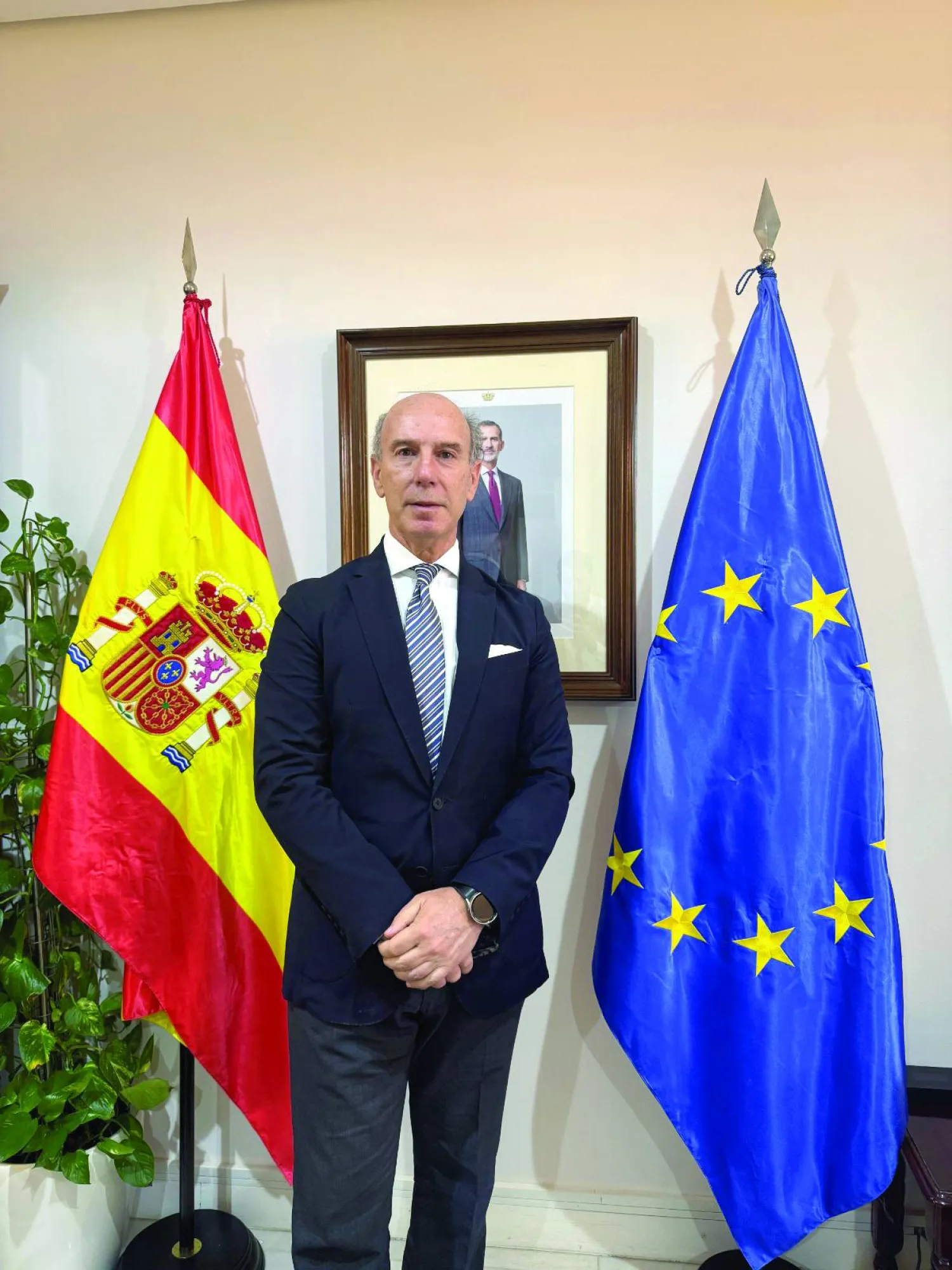
Speaking to Asharq Al-Awsat, Ukraine’s ambassador to Saudi Arabia Anatolii Petrenko reaffirmed his country’s commitment to peace, saying: “We take every opportunity to engage in diplomatic negotiations with Russia to deescalate the ongoing military standoff as a key prerequisite for inclusive political solution in order to achieve just and lasting peace.”

He added that “real breakthrough in current negotiations would be to achieve the unconditional ceasefire.” He also stressed the urgency of making progress on the return of abducted Ukrainian children and prisoners of war, noting that “If promptly agreed these would pave the way for much broader and deeper dialogue between Ukraine and Russia potentially leading to a comprehensive political decision.”

Anatolii Petrenko, Ukraine’s ambassador to Saudi Arabia (Embassy of Ukraine in Riyadh)

Petrenko said that, in this complex process, Ukraine is supported by its international partners who stand firmly on the principles of international law, Ukraine’s sovereignty, and its territorial integrity. He said: “We are convinced that unconditional ceasefire would be top testament of Russia’s genuine readiness for lasting peace.”

At the same time, he expressed regret that “daily realities of Russian strikes against Ukraine’s critical energy infrastructure against the backdrop of ongoing diplomatic efforts reflect fundamental gap we are to bridge using every compelling leverage in possession of international community.”

Petrenko went on to stress that “the issue of Russia’s demands for territorial annexation are illegitimate and represent our red line in accordance with Ukraine’s Constitution.” He added that “It cannot be considered as a matter of a technical compromise for the sake of ongoing negotiations with Russia,” noting that “Ukraine’s delegation has a clear mandate to pursue further diplomatic negotiations strictly based on our national interests.”

The American Role

Petrenko described the US role in any political settlement as central, saying: “The United States’ role remains central. This is our strategic partner, and we rely on our partnership to achieve a strategic solution for Ukraine’s sovereignty.”

He said this partnership includes “steadfast support to ongoing diplomatic negotiations with Russia, vital commitment to sustained combat readiness of our defense forces with tangible security guarantees and clear common vision for economic recovery of Ukraine once the war is terminated.”

Donald Trump and Volodymyr Zelenskyy during at the World Economic Forum in Davos on January 22 (Reuters)

Petrenko stressed that “United States’ leadership in maintaining world security should deliver an effective political solution to stop war against Ukraine thus undoubtedly generating global stability much needed across all continents and regions.”

On another front, he said Ukraine aspires to join the European Union in the foreseeable future, saying: “Ukraine has always been a part of Europe.” He added: “Our national ambition is to become a new member of the European Union in foreseeable future.”

He said “the European Union is our strongest partner to maintain macro-economic stability, develop Ukraine’s defense industry and contribute to future security guarantees,” noting that “our joint approach to ending the war has always been unified – politically, economically and militarily.”

Petrenko added that “European Union has to be part of diplomatic negotiations for peace as we all understand the European security remains undivided and Ukraine is the cornerstone of that security.”

Russia’s Exhaustion

Petrenko spoke about Russian losses since the war began on 24 February 2022, saying: “Since 24 February 2022, Russia has lost around 1.3 mln personnel, with 11,654 tanks, 24,013 armored vehicles, 435 aircraft and 28 warships destroyed.” He said “These figures illustrate not only a tragic human toll but also a profound degradation of Russia’s warfighting capacity.”

On the economic front, he noted: “Russia’s wartime economy shows clear signs of running aground,” stressing that “GDP growth has slowed to near stagnation at around 1% in 2025 and projected to remain minimal in 2026 due to sanctions, declining oil and gas revenues and rising structural imbalances.” He added: “Annual inflation reached around 7% with key interest rate at 16%, the budget is expected to run a noticeable deficit.”

Petrenko said: “War brings no prosperity to any nation in the world.” He added that “Russia should take this very seriously and reverse the aggression into civilized neighborly relationship with Ukraine as a responsible member of the United Nations and its Security Council.”

Saudi–Ukrainian Partnership

On relations with Saudi Arabia, Petrenko said: “Ukraine and Saudi Arabia experience a dynamic phase of consistent political and economic engagement.”

He said: “Last year President of Ukraine Volodymyr Zelenskyy paid an official visit to Saudi Arabia which resulted in the adoption of a Joint Statement showcasing the strong political will of the leaders to deepen and expand cooperation in the prospective fields.”

Volodymyr Zelenskyy holding talks with Saudi Crown Prince and Prime Minister Mohammed bin Salman in Jeddah on March 10, 2025 (EPA)

Petrenko reaffirmed the two countries’ determination to strengthen investment relations through partnerships in priority sectors, including energy, food industries, and infrastructure, with a shared desire to continue exploring opportunities for cooperation in oil, gas, their derivatives, and petrochemicals.

He added: “Particular value is attached to the Kingdom’s practical efforts to provide a conducive environment for diplomatic engagement within the Ukraine–US–Russia triangle last year, underscoring the Saudi Monarchy’s sincere commitment to contribute to a comprehensive, just and lasting peace in Ukraine in a meaningful and practical way.”

Petrenko expressed his country’s deep gratitude for the humanitarian and energy assistance provided by Saudi Arabia.