
Atallah to Asharq Al-Awsat: We Refused to Hand Assad the Resistance, the Punishment Was Brutal

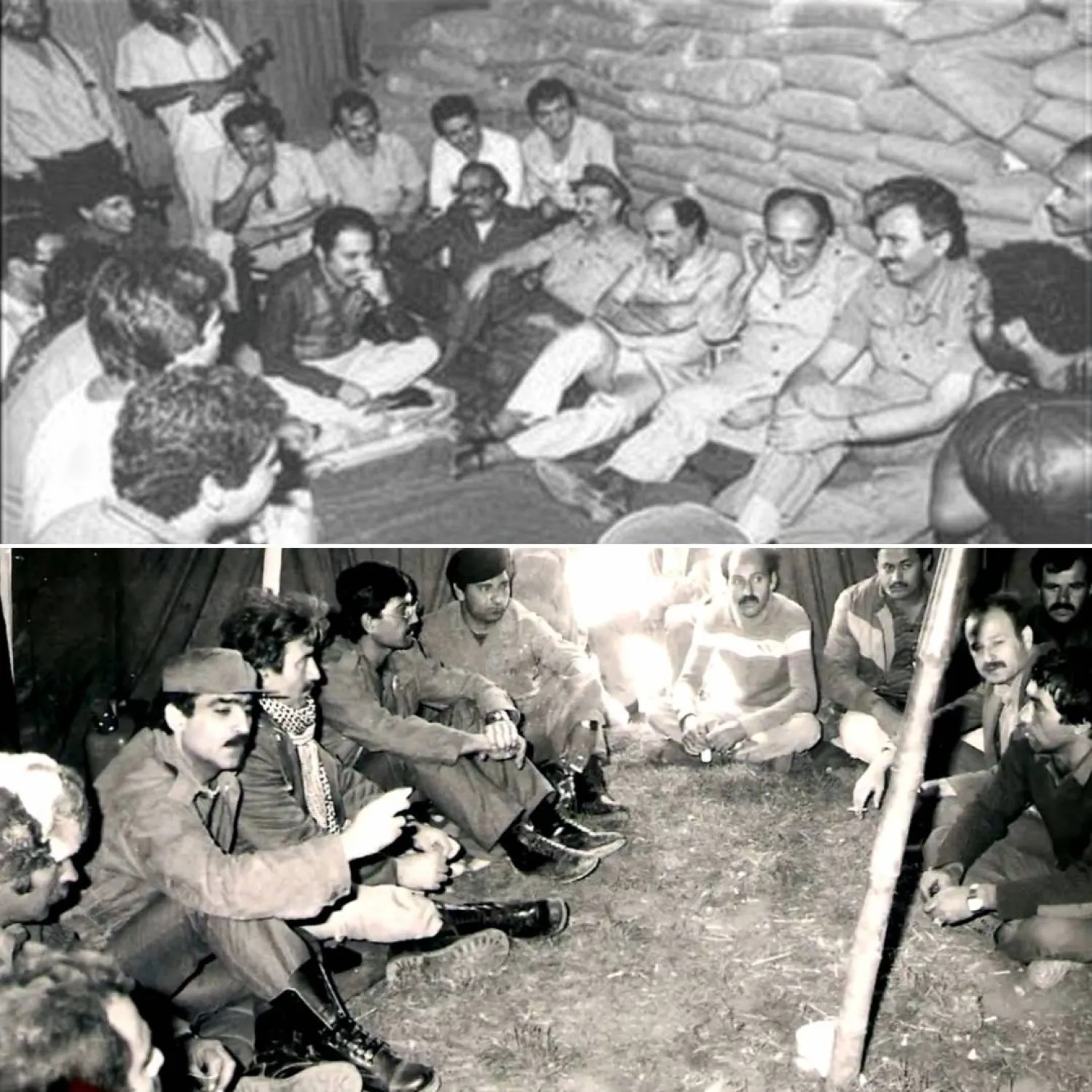
Atallah, Yasser Arafat, George Hawi, Mohsen Ibrahim and other fighters during the siege. (Courtesy of Elias Atallah)
TT

Atallah to Asharq Al-Awsat: We Refused to Hand Assad the Resistance, the Punishment Was Brutal

Atallah, Yasser Arafat, George Hawi, Mohsen Ibrahim and other fighters during the siege. (Courtesy of Elias Atallah)

On September 16, 1982, just days after the assassination of President-elect Bashir Gemayel and the Sabra and Shatila massacres, Beirut’s residents heard a call to arms. From the home of Kamal Jumblatt, two men — George Hawi, secretary-general of the Lebanese Communist Party, and Mohsen Ibrahim, leader of the Organization of Communist Action — issued an appeal to resist the Israeli army that had pushed into the capital.

By month’s end, the people of Beirut were stunned once more: loudspeakers mounted on Israeli army vehicles broadcast a message that seemed almost unreal. “People of Beirut,” the occupiers announced, “do not fire on us. Tomorrow we will withdraw. We have no missions inside the city.”

That very withdrawal, to Khaldeh on the city’s southern edge, filled Beirut with pride. Its residents had seen their own sons and daughters strike fear into one of the region’s most powerful armies. Yet almost no one knew who had orchestrated the string of seven attacks, carried out over just eleven days, that had forced the invaders to retreat.

The answer was Elias Atallah — then a young political bureau member of the Communist Party, serving as its military commander. He had been secretly tasked with founding and coordinating the Lebanese National Resistance Front (Jammoul). In his telling, only three people knew of his role: Hawi, Ibrahim, and Khalil Debs.

The early days

In the second of a three-part interview with Asharq Al-Awsat, Atallah said he began by selecting 21 young men, arming them, and dividing them into three sectors across Beirut. Israeli intelligence had little insight into their plans, which allowed Atallah to scout attack sites personally and sometimes even shadow operations from nearby streets.

The first strike came on September 20, 1982, when two fighters hurled grenades at a group of Israeli soldiers gathered around a fire near a pharmacy in the Sanayeh district. The attackers escaped unharmed; the Israelis suffered casualties.

Soon after, two armored vehicles were ambushed near the Patriarchate area with B-7 rockets. Another team assaulted Israeli troops occupying the PLO’s former offices on Mazraa Street. But it was the fourth attack that sent shockwaves: two young men walked into the famed Wimpy Cafe on Hamra Street and shot dead an Israeli officer and two soldiers as they sipped coffee.

Three more operations followed in rapid succession: in Tallet al-Khayyat, on the Selim Salam bridge, and outside the Alexander Hotel in Ashrafieh. Beirut had become a battlefield where the occupier was no longer untouchable.
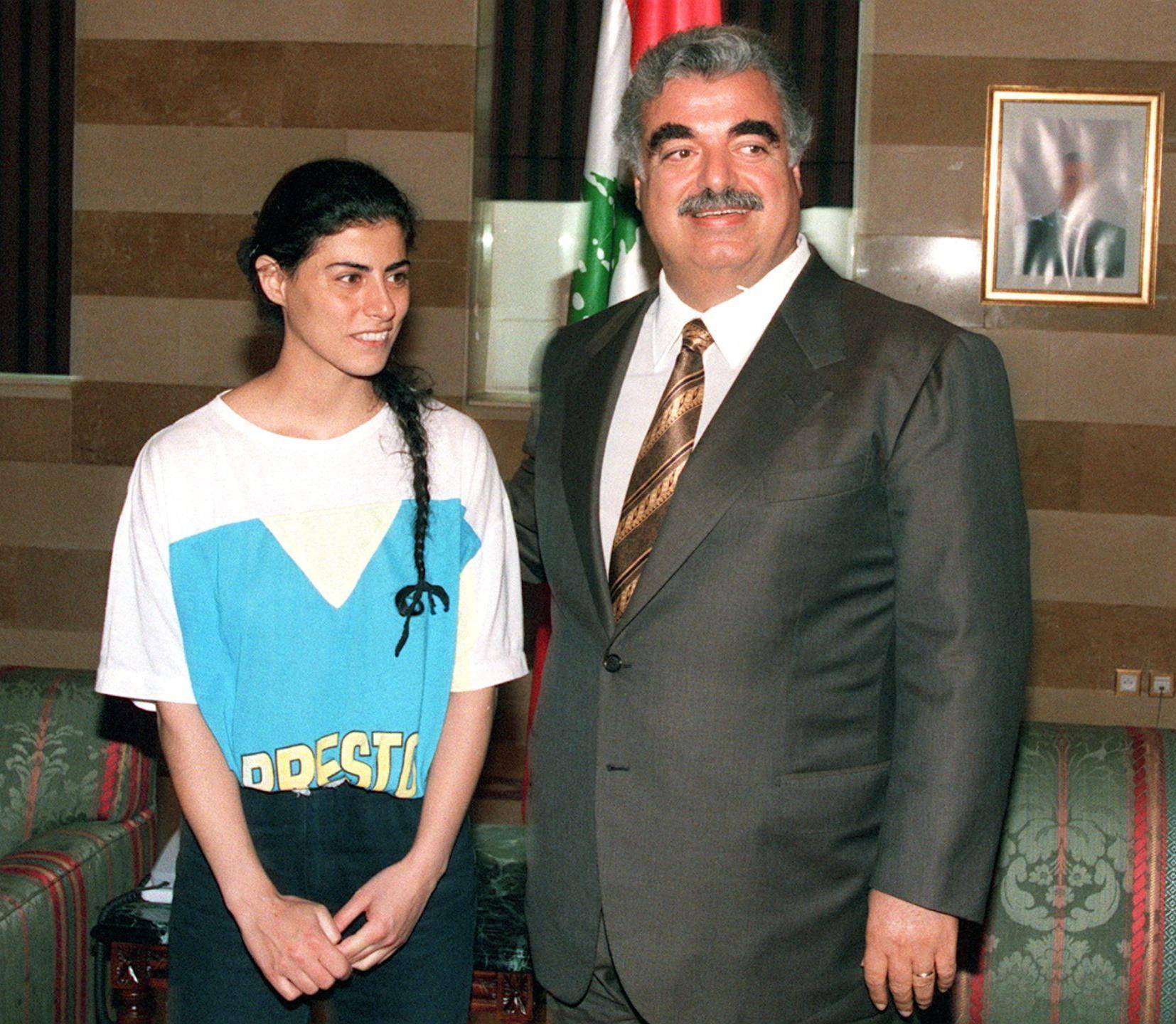
Then PM Rafik al-Hariri welcomes Soha Beshara after her release. (AFP)

The attempt on Antoine Lahd

Perhaps the most audacious operation came years later. On November 17, 1988, General Antoine Lahd, commander of the Israel-backed South Lebanon Army, was shot at close range by a young woman, Soha Beshara.

Atallah recalled: “Soha came from a communist family. She was athletic, often visited her village near Marjeyoun, and never raised suspicion. She befriended Lahd’s wife, who asked her to tutor their children privately at home. For months she taught lessons, drank coffee with the family, and gained their trust. That’s when the idea emerged.”

Only three people knew of the plan: Atallah, Hawi, and a young man living in Belgium. Atallah admitted he was uneasy: “I told her this wasn’t just about military difficulty. Could you really look him in the eye and pull the trigger? It wasn’t to discourage her, but I felt the operation lacked humanity. Still, she was determined.”

Soha fired several bullets into Lahd, wounding him critically, but he survived miraculously after being airlifted to Israel. She was captured instantly. Imprisoned in Khiam, she endured for 10 years before being released in 2000 through French intervention and at the request of then Prime Minister Rafik Hariri.

Atallah revealed that he tried to intercept her release convoy: “I believed she should be returned to us, not paraded elsewhere. But we were outmaneuvered; they took a different route.”

Walid Jumblatt and the resistance

Was Walid Jumblatt, Atallah’s longtime ally, aware of his coordination of operations? Atallah replied that Jumblatt was not directly involved: “I informed him later. He was uncomfortable, but told me: ‘If you need anything, I will help. But don’t let operations come too close to Mokhtara [his stronghold].’”

Jumblatt even offered logistical support, though without formally endorsing the resistance. To Atallah, this reflected the careful balance Jumblatt maintained in Lebanon’s fractured landscape.
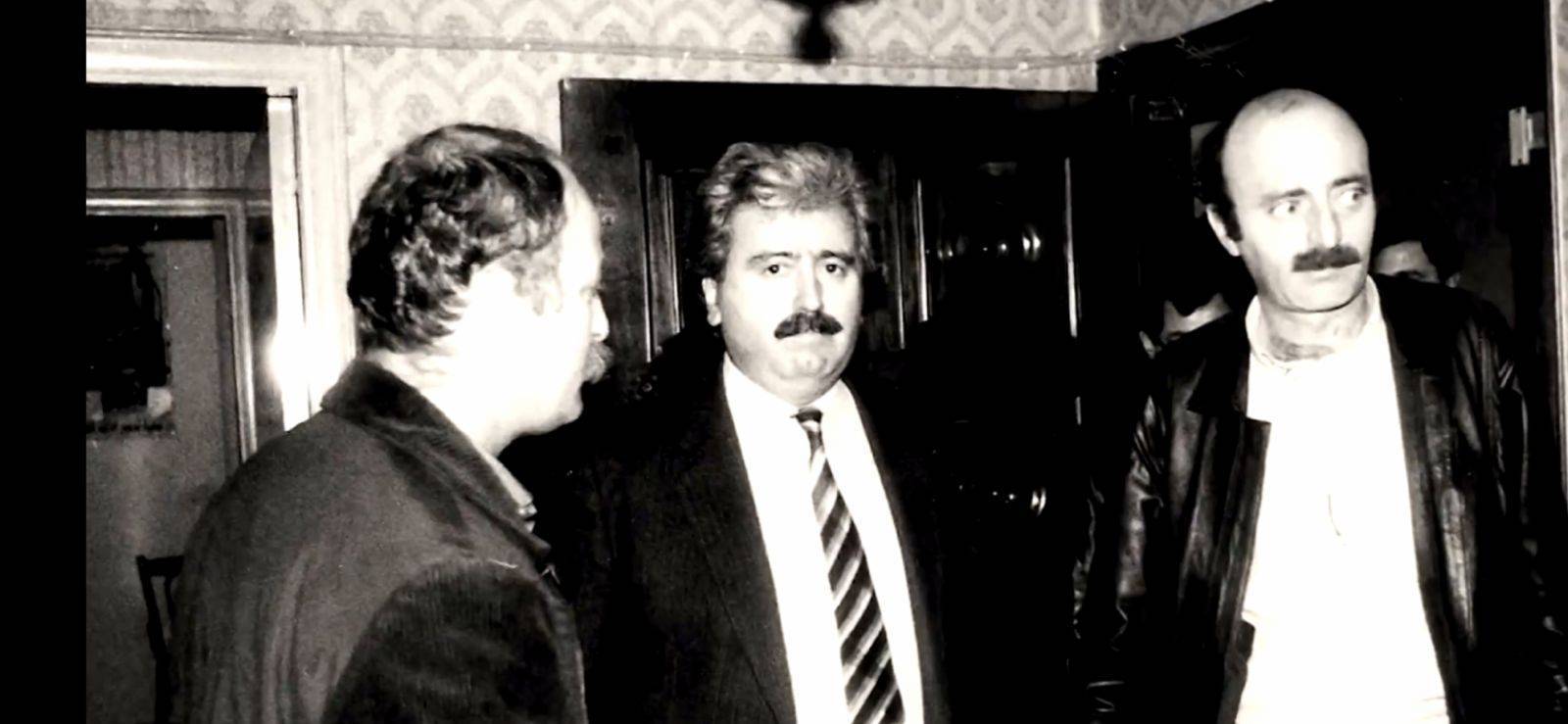
Atallah with Walid Jumblatt (R) and George Hawi (C). (Courtesy of Elias Atallah)

How Jammoul was undermined

The resistance’s decline was gradual, not sudden. One early sign came when the Soviets supplied the movement with five sniper rifles, which are powerful weapons capable of reaching targets at a kilometer’s range. The rifles arrived in Syria but were seized by Hafez al-Assad’s regime. Damascus denied receiving them; Moscow confirmed they had been delivered.

Soon tensions arose with the Amal movement, led by now parliament Speaker Nabih Berri. “The hostility wasn’t uniform,” Atallah recalled, “but at the leadership level, it was never friendly. Information leaks and betrayals followed - and behind it, I am convinced, stood the Syrian regime that had already silenced Imam Moussa al-Sadr.”

Ghazi Kanaan’s ultimatum

In February 1985, Atallah and Hawi were summoned to meet General Ghazi Kanaan, Syria’s intelligence chief in Lebanon. “He began with endless praise, saying that we were disciplined, brave, ideological... But the more he praised, the more uneasy I became,” Atallah recalled.

Kanaan then revealed his demand: “President Assad says the resistance is not a Lebanese affair but a strategic Arab cause. It must be directed accordingly. From now on, no operation will be carried out by one side alone. We will form a joint command. And you must merge with Hezbollah.”

Indignant, Atallah pushed back: “Yesterday one of our fighters was shot in the back in the South. We know Hezbollah did it. How can you ask us to join them? We will not be chess pieces.”

Kanaan slammed his hand on the table, sending coffee cups flying. “You will pay dearly,” he thundered. And he left without farewell.

Atallah and Hawi knew they had crossed Assad’s red line. “When he invoked ‘His Excellency the President,’ we understood this came directly from Hafez al-Assad. Refusing meant punishment.”

Assassinations begin

The punishment soon followed. “We paid first in blood,” Atallah said. “They began killing our leaders. Between 1986 and 1987 alone, some 30 of our cadres were assassinated.”

Among them were Khalil Naous, a central committee member respected across Beirut; Hussein Mroueh, the 87-year-old intellectual shot in his wheelchair; Hassan Hamdan, better known as the philosopher Mahdi Amel, whose lectures drew students from all faculties; and Suhail Toula, editor-in-chief of al-Nidaa.

The message was unmistakable. At Hamdan’s funeral, Kanaan himself appeared. “He didn’t come to offer condolences,” Atallah recalled bitterly. “He told our leaders to their faces: ‘Was it necessary to bring yourselves to this?’ It was as if he were signing his work.”

Despite the losses, Jammoul pressed on. “By 1988, we were still averaging three to four operations daily. Israeli deaths totaled around 300. And we never harmed Lebanese civilians, not once. That was our principle.”
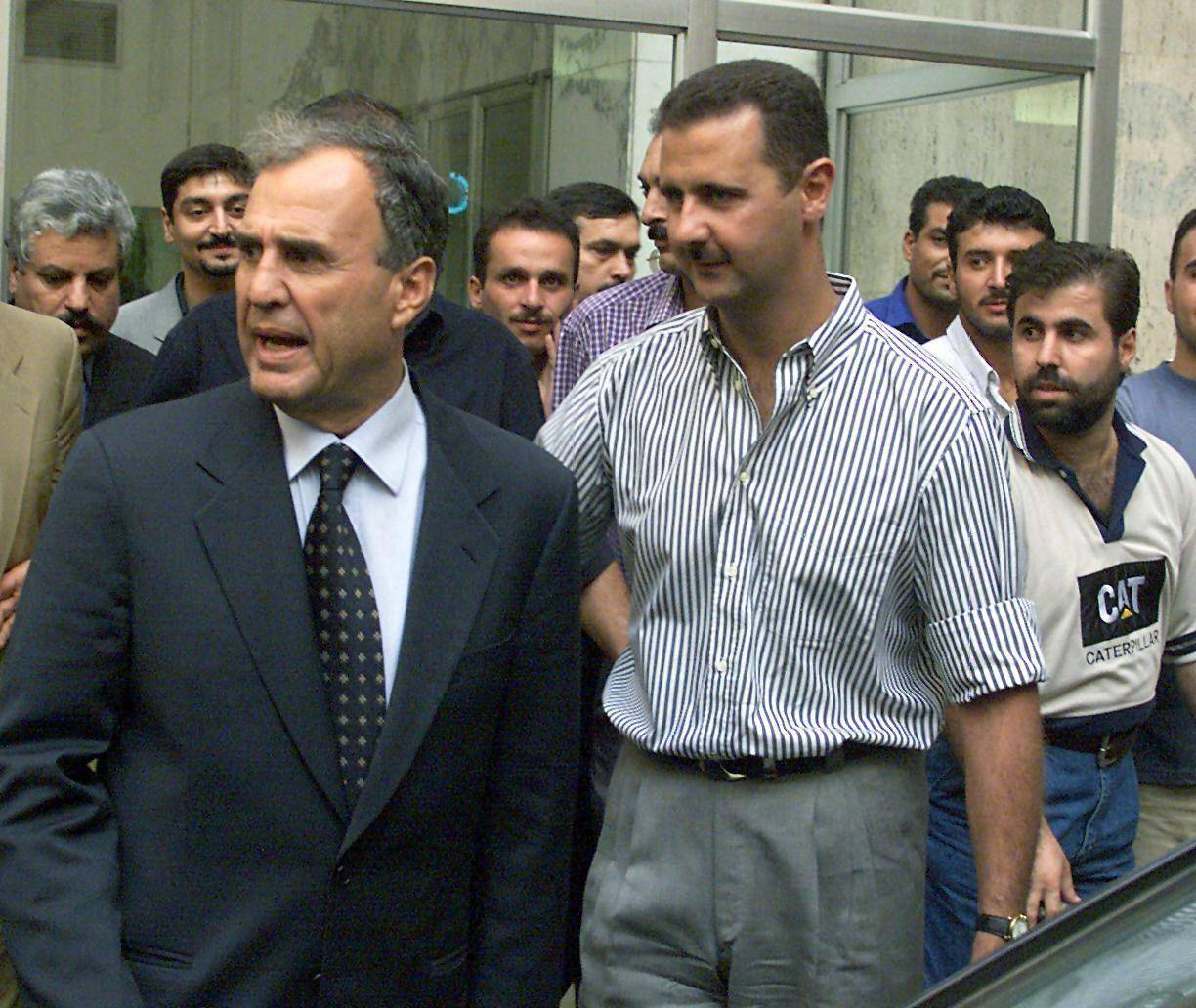
Ghazi Kanaan and Bashar al-Assad in Beirut in 1999. (AFP)

Numbers and losses

In total, Atallah estimated the resistance carried out more than a thousand operations. About 160 fighters were killed. “We were hunted, constantly. But we kept going,” he said.

Syrian interference grew more direct. Kanaan stoked clashes between the resistance and Amal, sparking fierce battles in Beirut. Syrian tanks rolled in from Aley and Sawfar. At one point, Atallah recalled, Communist Party offices were stormed without cause.

Exile and Moscow

Atallah also recounted being effectively exiled. After Israeli forces discovered their radio frequencies, he traveled to Moscow seeking technical help.

There, he was told he would remain six months - a decision, he later learned, that had been requested by Syrian intelligence. “Muhammad al-Khouli, Assad’s air intelligence chief, told George Hawi: ‘Either you find Atallah’s corpse on the street or you send him away.’ They chose exile. I refused and returned home.”

The final blow

The beginning of the end came with an Israeli strike on the party’s headquarters in Rmeileh, Atallah’s hometown on the Chouf coast. Intelligence had warned of the threat. The central committee was due to convene there, but Atallah urged evacuation.

The Israeli attack, using a vacuum bomb, destroyed the compound. Only two were killed, spared by the prior evacuation. But morale was shattered. “That was the heaviest blow,” Atallah admitted.

Asked whether Jammoul was penetrated, Atallah conceded only “very limited” infiltration, by an Israeli agent. He denied Arab involvement, and said the Soviets never pressured him personally to cooperate with the KGB.
Healey to Asharq Al-Awsat: UK Has More Jets Flying in the Region Than at Any Time in the Last 15 Years

British Secretary of State for Defense John Healey arrives for a cabinet meeting at 10 Downing Street in London, Britain, 24 March 2026.  EPA/ANDY RAIN
British Secretary of State for Defense John Healey arrives for a cabinet meeting at 10 Downing Street in London, Britain, 24 March 2026. EPA/ANDY RAIN
TT

Healey to Asharq Al-Awsat: UK Has More Jets Flying in the Region Than at Any Time in the Last 15 Years

British Secretary of State for Defense John Healey arrives for a cabinet meeting at 10 Downing Street in London, Britain, 24 March 2026.  EPA/ANDY RAIN
British Secretary of State for Defense John Healey arrives for a cabinet meeting at 10 Downing Street in London, Britain, 24 March 2026. EPA/ANDY RAIN

British Defense Secretary John Healey revealed Wednesday that UK pilots and aircrew have flown over 1,200 hours on defensive missions across the Middle East since the conflict with Iran erupted, saying they have now had over 80 engagements together with RAF Regiment Gunners.

In an interview with Asharq Al-Awsat following his visit to Saudi Arabia, Healey said that the UK has around 1,000 personnel in the region and an extra 500 air defense personnel in Cyprus.

“I continue to work closely with our partners in the region on what further support we can provide,” he said, lauding the UK-Saudi Arabia defense partnership which he said is “founded on mutual security interests and longstanding industrial collaboration.”

“Although our friendship is historic, it has evolved into a modern partnership that responds to contemporary challenges,” he added.

On ties between Moscow and Iran, Healey did not rule out a hidden Russian hand behind some of the Iranian tactics.

The following are the key points from the interview:

80 engagements

“UK pilots and aircrew have flown over 1,200 hours on defensive missions across the region. Together with our RAF Regiment Gunners, they have now had over 80 engagements since the conflict began,” said Healey.

“I am proud of the work that our UK Armed Forces are doing alongside our Gulf partners to help keep people safe in the region. Their dedication and professionalism is helping to save lives as Iran indiscriminately targets countries across the Gulf,” he added.

Heavy Deployment

“The UK has around 1,000 personnel deployed to the region, not including our personnel in Cyprus,” he told Asharq Al-Awsat. “Force protection is at the highest levels for UK bases in the region.”

“We have more UK jets flying in the region than at any time in the last 15 years. We are undertaking defensive counter air operations over Bahrain, Jordan, Qatar, and the UAE as well as Cyprus,” he said.

“Since January, I have deployed extra equipment and people to the region. This includes Typhoon and F-35 jets, Wildcat helicopters armed with purpose-built counter-drone Martlet missiles, a Merlin Crowsnest helicopter, providing airborne surveillance and control plus radar systems, air defense systems and counter-drone units.”

He added that there are now an extra 500 air defense personnel in Cyprus, and the warship, HMS Dragon - which is fully integrated within the layered air defense system with allies and partners - is deployed in the Eastern Mediterranean.

Defense Systems to Support the Gulf

“I continue to work closely with our partners in the region on what further support we can provide, which was the purpose of my visit (to Riyadh) this week,” Healey told Asharq Al-Awsat.

“I confirmed during my meeting with the Defense Minister, His Royal Highness Prince Khalid bin Salman Al Saud, that we will deploy Sky Sabre to the Kingdom of Saudi Arabia - an air defense system that will be integrated into Saudi Arabia’s defenses to support Saudi Arabia's efforts in repelling Iran's attacks,” he added.

He also said that Rapid Sentry – a system made up of a radar and a missile launcher – was deployed to Kuwait, and Lightweight Multiple Launchers to Bahrain.

“We have extended the operations of our jets in Qatar which are flying defensive missions every night, and through Taskforce Sabre we're ensuring UK industry steps up too. The Taskforce brings together industry who offer counter drone and air defense capabilities with governments, including Gulf partners ... to rapidly provide them with the equipment they need.”

Advanced defense partnership with Saudi Arabia

On his visit to Saudi Arabia, he said the trip was aimed at showing support “during this period of sustained and indiscriminate Iranian attacks, and also to discuss further cooperation between our nations to protect our people and our shared interests in the Kingdom. That's why I was delighted to meet with His Royal Highness Prince Khalid bin Salman to discuss recent events in the region.”

“The UK and Saudi Arabia have a close, longstanding friendship, and share a decades-long defense partnership, founded on mutual security interests and longstanding industrial collaboration.”

That friendship “has evolved into a modern partnership that responds to contemporary challenges. This really matters in times like today: it means we have the trust and the shared understanding to respond quickly and decisively when the security environment demands it. It is precisely because of that deep foundation that we are able to act as we have done, such as deploying Sky Sabre to Saudi Arabia.”

Russian-Iranian cooperation

On Russia’s role in the Iran war, Healey said: “Our assessment is that, even prior to US and Israeli strikes, Russia highly likely shared intelligence and provided training to Iran, including on things such as drone technology and operations, and electronic warfare. And our intelligence also indicates that this cooperation is ongoing.”

“No one will be surprised that Putin’s hidden hand may be behind some of the Iranian tactics and potentially some of their capabilities as well. We see an axis of aggression between Russia and Iran - two countries that menace their neighbors and that pose a threat more widely to us all.”

No assessment on targeting Europe

Healey said that there is no assessment Iran is trying to target Europe with missiles. “Even if they did, we have the resources and alliances we need to keep the UK and our allies safe from any kind of attacks, whether it's on our soil or from abroad. The UK stands ready 24/7 to defend itself and protection of forces is at the highest levels for our bases in the region.”


Spain’s FM Backs Saudi Arabia, Tells Asharq Al-Awsat that Iranian Attacks Are ‘Unjustified’

Spanish Foreign Minister Jose Manuel Albares. Photo: Foreign Ministry
TT

Spain’s FM Backs Saudi Arabia, Tells Asharq Al-Awsat that Iranian Attacks Are ‘Unjustified’

Spanish Foreign Minister Jose Manuel Albares. Photo: Foreign Ministry

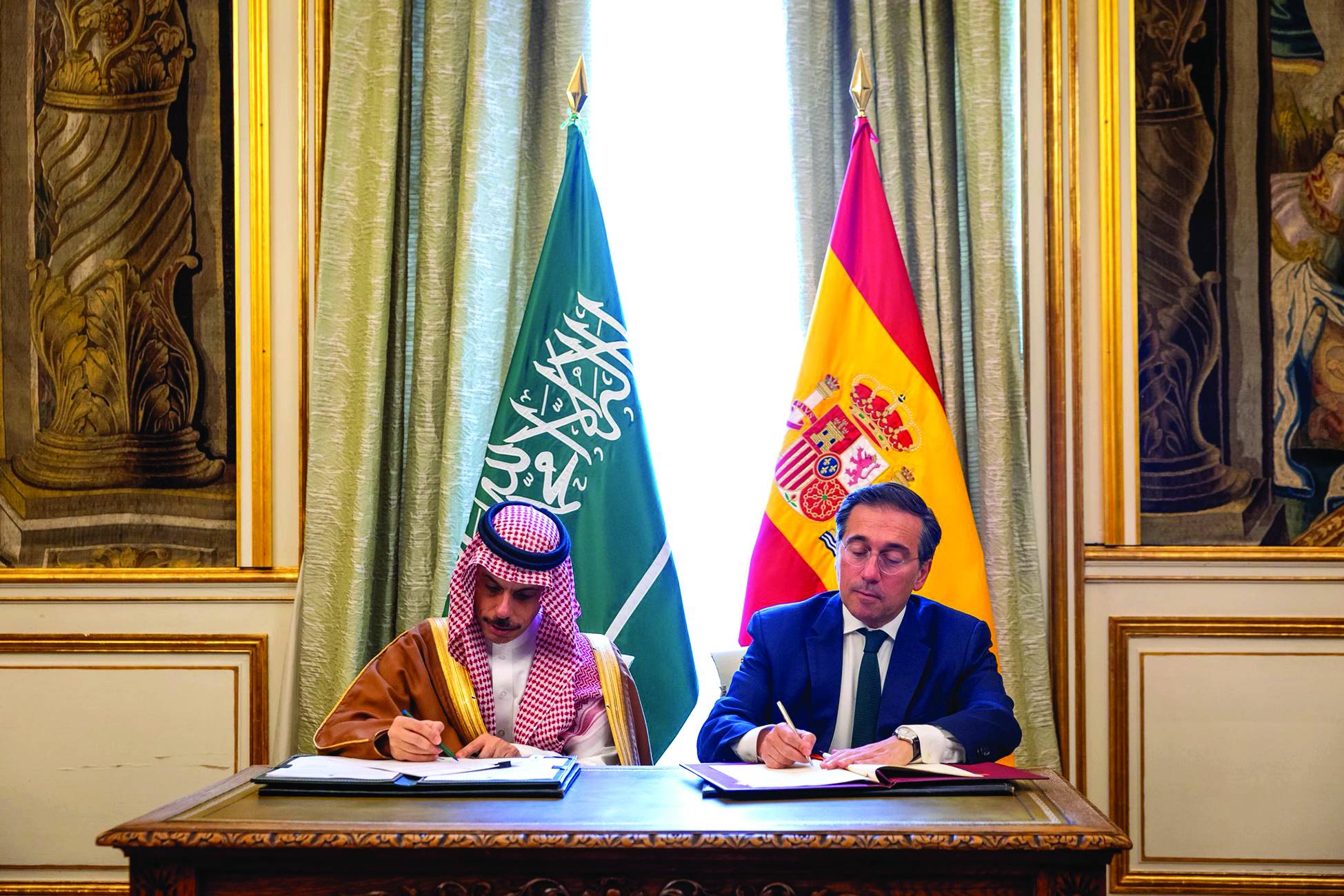
Spanish Foreign Minister Jose Manuel Albares has expressed Madrid’s support to Saudi Arabia, describing Iranian attacks on the Kingdom and other countries in the Gulf as “unjustified.”

In an interview with Asharq Al-Awsat published Thursday, the minister revealed that efforts were being exerted by Spain as part of several European countries and in coordination with nations in the Middle East to de-escalate, resort to diplomacy and put an end to the US-Israeli-Iranian war.

Albares said “Spain has openly condemned” the Iranian attacks and summoned Iran’s ambassador to convey “its firm rejection of violence.”

The Spanish Foreign Ministry also “called for an immediate cessation of these attacks," he said.

“The attacks conducted by Iran are completely unjustified,” Albares told Asharq Al-Awsat, while stressing full solidarity with Saudi Arabia and other Gulf countries against the Iranian attacks.

Saudi Crown Prince Mohammed bin Salman has recently received a phone call from the Spanish Prime Minister, Pedro Sanchez, who expressed “Spain’s support and solidarity in light of the unjustified attacks that the country is suffering.”

“Spain's stance is firmly rooted in defending international law and the United Nations Charter, rather than the principle of might makes right,” said Albares.

This message has been conveyed to Saudi Arabia, Bahrain, Kuwait, the United Arab Emirates, Oman, Qatar, Jordan, Türkiye, Egypt, Uzbekistan and Azerbaijan, he added.

Call for de-escalation and negotiation

“Spain advocates de-escalation, negotiation, and respect for international law. Our voice aims to bring reason and restraint to the current situation. We cannot accept the idea of war becoming a means by which countries interact with one another or a mechanism for establishing a balance of power in the Middle East. Violence never brings peace, stability or democracy; it only creates more violence and chaos,” said the minister.

“In light of this military escalation, Spain is acting coherently in accordance with the values of peace and solidarity that define Spanish society — values that are also shared by the majority of European states. Our country makes its decisions in line with European principles, the UN Charter, and international law,” he added.

The war has already had consequences that extend beyond the Middle East. For example, it has affected Cyprus and Türkiye, he said, warning that this increases the risk of the ongoing conflict spreading beyond the region.

The minister told Asharq Al-Awsat that the war is also affecting international trade and production of energy, which have a direct impact on global economies and geopolitics.

“The unpredictable consequences of the current conflict are making the situation extremely dangerous for the security and stability of the Middle East, including the Gulf states, which are being particularly targeted,” he said in response to a question.

Countries involved in the confrontation

Albares spoke about the situation of several countries in the region, including Lebanon, which he said “is facing a dramatic situation with numbers of victims increasing daily, an overstretched medical system incapable to attend them, more than a million of displaced people, and the destruction of civil infrastructure. The life of the people of Lebanon is disappearing before their eyes.”

He said Spain has condemned the attacks carried out by Hezbollah, that are fueling the spiral of confrontation, as well as Israel's attacks. “An Israeli land invasion is already ongoing, a grave error in a country that has already endured immense suffering.”

“We cannot ignore the attacks by Israel and non-State actors on UN forces, on UNIFIL, in which Spain has a significant presence, nor the repeated violations of international humanitarian law," Albares said.

The minister also expressed concern over the situation in Gaza and the West Bank. “There is no clear vision for the future, and humanitarian aid is not reaching the area, with access blocked and NGOs and humanitarian actors prevented to operate on the ground. In the West Bank in particular, settlement expansion and settler violence continues to increase with impunity,” he said.

High-risk situation defined by an unpredictable conflict

“We are facing an escalation of violence that has already killed thousands of people and negatively impacted maritime navigation in the Strait of Hormuz, and critical energy infrastructures, with direct consequences for global energy security,” he said.

“In short, it is an extremely high-risk situation defined by an unpredictable conflict that poses a direct threat to the security and stability of the Middle East, with repercussions that can be felt across the globe,” he added.

Asked about his views of the Gulf's concern about the war’s repercussions, Albares said: “Spain fully understands the Gulf countries' concerns about the consequences of this war. This has been reflected in the diplomatic outreach that I have conducted with my counterparts in the region.”

“Increasing insecurity in countries under attack from missiles and drones without justification — attacks that Spain firmly condemns — particularly those launched by Iran, contribute to an increasingly dangerous and complex situation. In this context, Spain advocates clear de-escalation, negotiation and respect for international law, insisting that we must avoid anything that adds to the tension.”

He added that “the situation in the Strait of Hormuz is also extremely worrying, as its impact on energy security and international trade is clear.”

He stressed that the conflict has human and humanitarian dimensions, such as loss of life and displacement, warning that this could have direct consequences also in Europe. So, he called for “a responsible solution based on solidarity.”

Unified position

“The only clear thing is that a response is necessary, and in this sense, Spain supports a response based on the unity of the international community around the universal applicability and respect of International law and the UN Charter,” said Albares.

Asked to what extent the current situation is likely to explode into a broader war,” the minister said: “The consequences of the actions of Israel, as well as Iran’s response, are unpredictable. We are entering a situation that makes it difficult to determine where the escalation could lead and what the ultimate effects could be.”


Al-Khanbashi to Asharq Al-Awsat: We Warn Against Incitement, Hadramout Has Room for All

Governor of Hadramout, Salim Al-Khanbashi delivers a press conference in the city of Mukalla in Yemen's coastal southern Hadramout province on January 19, 2026. (Photo by FADEL SENNA / AFP)
TT

Al-Khanbashi to Asharq Al-Awsat: We Warn Against Incitement, Hadramout Has Room for All

Governor of Hadramout, Salim Al-Khanbashi delivers a press conference in the city of Mukalla in Yemen's coastal southern Hadramout province on January 19, 2026. (Photo by FADEL SENNA / AFP)

Presidential Leadership Council (PLC) member and Governor of Yemen's eastern Hadramout province Salem al-Khanbashi says he believes that “Hadramout triumphed for itself,” and that what took place there in December 2025 and early January 2026 marked a decisive moment in which Hadhramis reclaimed their right to protect their identity and blocked any political project seeking to dissolve the “Hadhrami self” under the slogans of outsiders.

In an interview with Asharq Al-Awsat Podcast, recorded in Riyadh on February 9, 2026, al-Khanbashi advised the new Yemeni government led by Dr. Shayea al-Zindani to steer clear of partisanship, raise performance levels, and combat corruption. During the discussion, he presented his account of events, framing the operation as a “takeover of military camps,” not the “ignition of a war.” He broadened the discussion to what he views as the priority of the current phase: consolidating stability, activating development, and opening the door to long-awaited Hadhrami investments returning home.

“Liberate us" from ourselves?

In describing the outcome of the confrontation, the deputy rejects reducing the picture to who won and who lost. He says the real victory was achieved when the people of Hadramout rejected the notion that someone could arrive and say, “We came to liberate you,” asking: “Liberate you from whom? From ourselves?” He stresses that the governorate, with its history stretching back “thousands of years,” cannot have another identity imposed upon it. He records his appreciation for those who stood in defense of this distinctiveness, while at the same time extending explicit thanks to the Kingdom of Saudi Arabia, its leadership and role, which he said was a key player in containing last month’s events.

On the moment he was tasked with the governorship at an extremely sensitive time, al-Khanbashi recounts that he was residing in Hadramout and did not leave except when necessary, before receiving a call from President Rashad al-Alimi and from parties including Saudi officials and colleagues on the Leadership Council, asking him to assume responsibility for the governorate “because we need you.”He says he tried to decline, but accepted under the pressure of “necessity,” emphasizing that he is a son of Hadramout who spent most of his life there, and that he accepted the post fully aware of the weight and complexity of the phase.

The picture becomes heavier as al-Khanbashi moves to his successive roles: governor, then commander of the National Shield Forces in Hadramout , then a member of the Leadership Council with the rank of vice president. He deliberately labels the January operation a “battle to take over the camps,” so that it would not be understood as targeting civilian society or as a search for settling scores.

Al-Khanbashi says his overriding concern was to spare Hadramout street fighting, protect civilian infrastructure, and minimize human losses. He describes the operation as “swift and decisive,” with a limited number of casualties.

Securing withdrawals... and a political outlet

Asked whether the military operation in Hadramout ended with reprisals against opponents, al-Khanbashi is keen to deny this. He says the withdrawal of departing forces was secured and that they were not subjected to any military or popular harassment. “We instructed that no one who was in the Southern Transitional Council, whether military or civilian, be harmed,” he says. At the same time, he explains that he took decisions to dismiss certain security and military leaders accused of involvement in looting weapons and ammunition or of poor performance, and that they will be referred for accountability in accordance with what they committed against the governorate.

Amid this, al-Khanbashi reiterates a message he wants widely understood: “Hadramout has room for all.” He calls for civic conduct that avoids incitement, and warns against marches he believes target civil peace and provoke the local scene.

He again urges adherence to civil behavior without incitement, citing gatherings that took place in early February 2026 in Seiyun. He suggests they were not spontaneous, saying: “We have evidence that these people were paid, and we want them not to force us to take measures involving a degree of coercive force against those who want to practice such acts. We are still under a state of emergency, and all measures can be taken.”

In the broader political context, al-Khanbashi speaks of moves to convene a broad Hadhrami meeting in Saudi Arabia bringing together political and social components, including Hadhramis from the Southern Transitional Council, with the aim of preparing a unified vision in the name of Hadramout to be presented to the Southern Dialogue Conference. He notes that a preparatory committee was formed in Mukalla to draft a position reflecting “all societal and political forces” in the governorate, alongside a parallel desire to represent the voice of Hadhrami expatriates within a single vision.

Electricity and investment

Electricity tops the services file, according to the governor. He places it at the head of priorities, explaining that the needs of the coast and the valley differ, but the headline is the same: energy that does not meet demand, especially in summer, with humidity and heat on the coast and harsh desert conditions in the valley.

He speaks of support projects to generate 300 megawatts for the coast, and other projects for the valley, alongside proposals for gas-powered plants and private-sector solar energy options with capacities that could reach 150 megawatts. He believes that a medium-term solution is not a substitute for a long-term strategic project for a large gas plant capable of covering Hadramout's future needs.

From energy he turns to investment as the other face of stability. Al-Khanbashi lists opportunities he sees as promising: tourism, real estate, the export of high-purity gypsum, potential minerals, coal in specific areas, black sands and heavy elements, fisheries, and the idea of aquaculture. He recalls his participation in a Hadhrami investment conference, calling on businessmen to balance their external investments with investing in Hadramout, while pledging to provide facilitation and an attractive environment.

On government affairs, al-Khanbashi describes the discussions that preceded the formation of the new government as having focused on criteria of competence, experience, and geographic balance, while rejecting the principle of quota-sharing. He then offers three pieces of advice he places at the core of the government’s test: moving away from ego and partisan drift, combating entrenched corruption in several ministries, and raising the level of revenue collection and transferring it to the central bank, especially in revenue-generating ministries. He highlights the need to regulate the financial relationship between the center and the governorates in accordance with the Local Authority Law, arguing that strict application would ease many chronic problems.

He recalls Hadramout's experience with oil revenues before exports were halted, noting that the governorate received 20 percent of the value of exported oil and used it for development projects such as electricity, roads, health, and education, before this resource stopped after the Houthis targeted export facilities.

"No barriers" with Saudi Arabia

In assessing Saudi development support, al-Khanbashi links relief and reconstruction as a single window for enabling Yemen to overcome its crisis, pointing to packages of projects in electricity, roads, health services, and others within Hadramout.

He places this within a relationship he describes as intertwined, difficult to separate socially, economically, and politically, invoking the extended borders, shared tribes, and cultural ties, to conclude that it is not possible to erect a “barrier” between Hadramout and the Kingdom.

Asked about the moment that remained most vivid in his memory during the 48 hours of the operation, al-Khanbashi says he feared the forces might not withdraw easily and what that could entail in terms of destruction and casualties, before the operation ended in record time with limited losses. He says this is what he will continue to take pride in: that Hadramout succeeded in avoiding internal fighting. In his message to the people of Hadramout, he calls for unity, abandoning the causes of division, and prioritizing security and development, pledging that the expansion of stability will lead to a “bright development era” reflected in the lives of the governorate’s residents.