
Israel’s elite undercover units “Mista’arvim,” known locally as “musta’arabun,” have stepped up operations deep inside Gaza’s residential areas, carrying out a string of abductions of Palestinians - members of Hamas and other factions as well as civilians, family members and field sources said.
Kidnappings of prominent Palestinians have become recurring, the most recent involving nurse Tasneem al-Hams, the daughter of Dr. Marwan al-Hams, who was seized by a similar force on July 21 and remains in custody, the family said.
In a statement on Thursday morning the al-Hams family said Tasneem was taken from the vicinity of a field hospital in the Mawasi area of Khan Younis, in southern Gaza close to where her father was abducted.
The family condemned the new seizure and accused an armed group linked to Yasser Abu Shabab, who calls his faction the “Popular Forces,” of taking part in an operation carried out by Israeli special forces.
Neither the reasons for the father’s abduction nor for the daughter’s seizure - more than two months after the first incident - have been disclosed.
Some sources link the two cases to other similar operations in recent weeks and say most abductions appear aimed at people who may have information connected to the fate of Israeli hostages.
“Did they treat Israeli hostages?” Sources inside and outside Hamas, when asked, would not say definitively that Dr. al-Hams or his daughter had treated Israeli hostages.
But they did not rule out that possibility to Asharq Al-Awsat, suggesting Israel might be seeking information on the whereabouts or conditions of hostages who may have been treated in Gaza hospitals after the Oct. 7, 2023 attacks, when some wounded were transferred to public hospitals.
Field sources tied Tasneem’s arrest to Israeli interrogations of her father about issues that remain unclear because neither his family nor Hamas sources have relevant information, they added.
Al-Hams is a Gaza Health Ministry official affiliated with the Hamas government - responsible for field hospitals and their spokesman - a role that only emerged during the war as those facilities proliferated. Before the conflict he was head of Abu Yusuf al-Najjar Hospital; his house was struck.
Repeated abductions, sources say, show Israeli special forces, with help from various armed groups across the strip, are abducting faction members both inside and outside hospitals.
About 45 days ago, a special unit abducted the husband of a senior Islamic Jihad leader’s daughter in Deir al-Balah in central Gaza; a drone strike killed the husband’s son in the same operation. The forces then dumped the abductee’s identity card and belongings at the site of an attack on a civilian vehicle that had two Palestinians with no links to any faction.
Field sources said the leader’s son-in-law had at one point dealt with an Israeli hostage who appeared in a video recently looking malnourished, and that the raid also aimed to push the senior leader out of his hideout, an effort that failed. The movement immediately moved its hostage elsewhere because of the son-in-law’s security knowledge, the sources said.
In under 20 days, an Israeli special unit abducted three activists from the al-Qassam Brigades from the al-Nasser neighborhood and the Al-Shati refugee camp, two of whom were reportedly involved in guarding Israeli detainees, and a third who worked as a mail correspondent for the Qassam intelligence apparatus.
Sources said the abductions occurred separately and were followed by Israeli warplanes striking several houses where Israeli hostages had been held.
They added that Israel appeared to have obtained from one captive a plan drawn up by the “Al-Shati Battalion” to resist an incursion into the camp, prompting Israeli ground troops to avoid routes that might be booby-trapped and facilitating advances toward the camp.
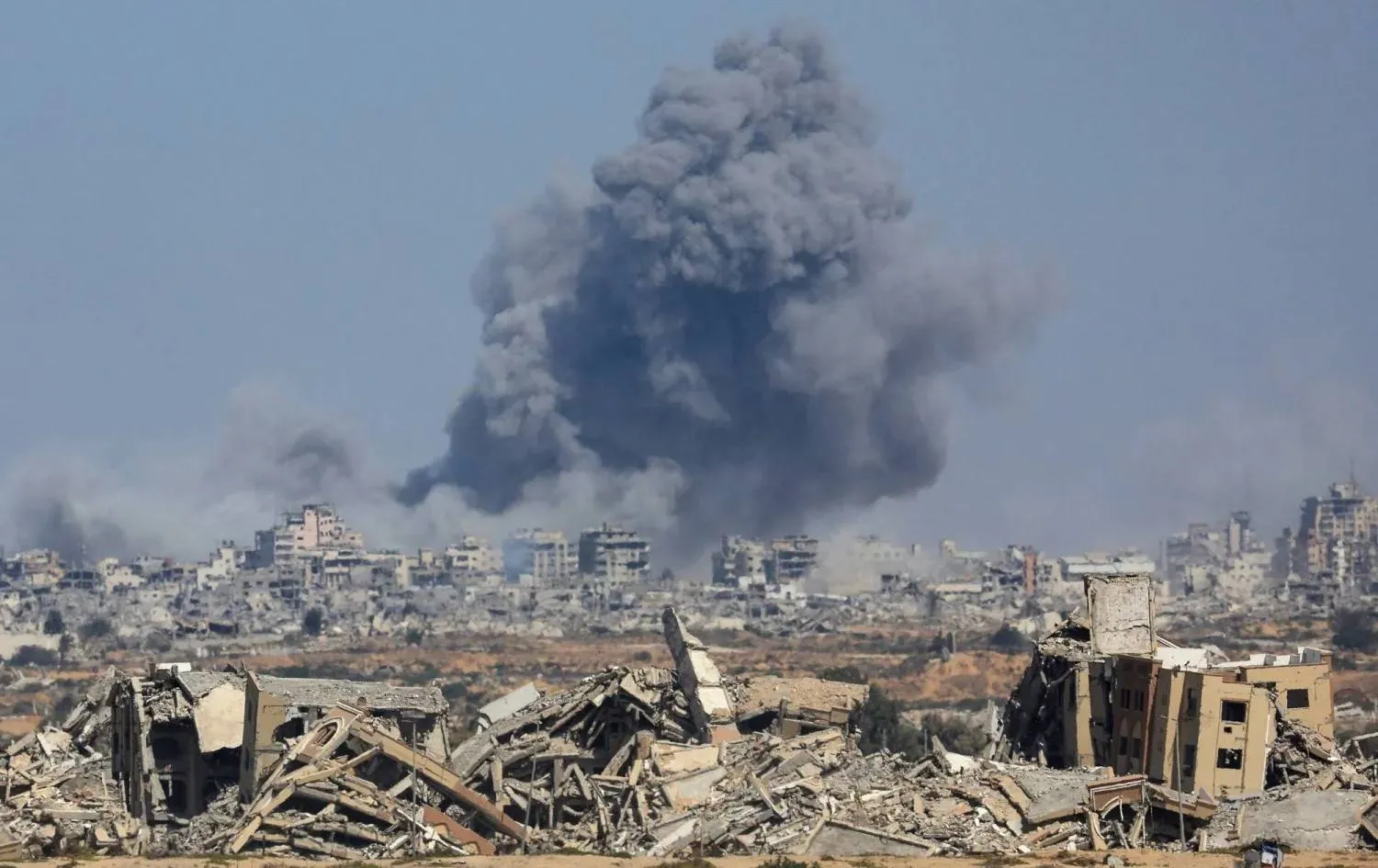
Ground forces remain operating around the northern edges of the camp and Israel has carried out multiple air strikes on houses and other targets, the sources said.
Some recent special-forces operations that seized activists from Hamas and Islamic Jihad led to targeted killings of others, including leaders said to have taken part in the Oct. 7 attack, those who supervised the movement of detainees, and figures who participated in celebratory handovers of captives during the last ceasefire that began in January and lasted more than two months.
The Israeli military has announced the killings of a Hamas commander in central Gaza and a deputy leader south of Gaza City. It also announced killing others accused of involvement in kidnapping and holding Israeli hostages or taking part in handover celebrations.
Analysts say Israel’s abduction campaign appears aimed at extracting as much information as possible about remaining hostages in Gaza and, where feasible, recovering survivors. While largely unable so far to recover living hostages, Israeli forces have recovered some bodies following abductions of faction activists.
Field sources told Asharq al-Awsat three weeks ago that Israeli special units had intensified their activities inside Gaza in recent months, helping to identify and surveil locations and monitor movements, with the help of collaborators who watched houses and other sites to learn who frequented them.
Some collaborators were captured and confessed, the sources said, and field measures were taken against them after interrogation. They added that the units had planted cameras and eavesdropping devices to spy on activists, civilians and places, including hospitals, to track visitors, and that many such devices had been uncovered recently.
Hamas’s al-Qassam Brigades and its intelligence arm have been closely following attempts by the special units to operate more freely, the sources said, and “strict orders” were issued to faction fighters to be vigilant and to carry light arms and hand grenades to confront any such threat.