


UN Data: Two-Thirds of Yemen’s Population Unable to Meet Food Needs  

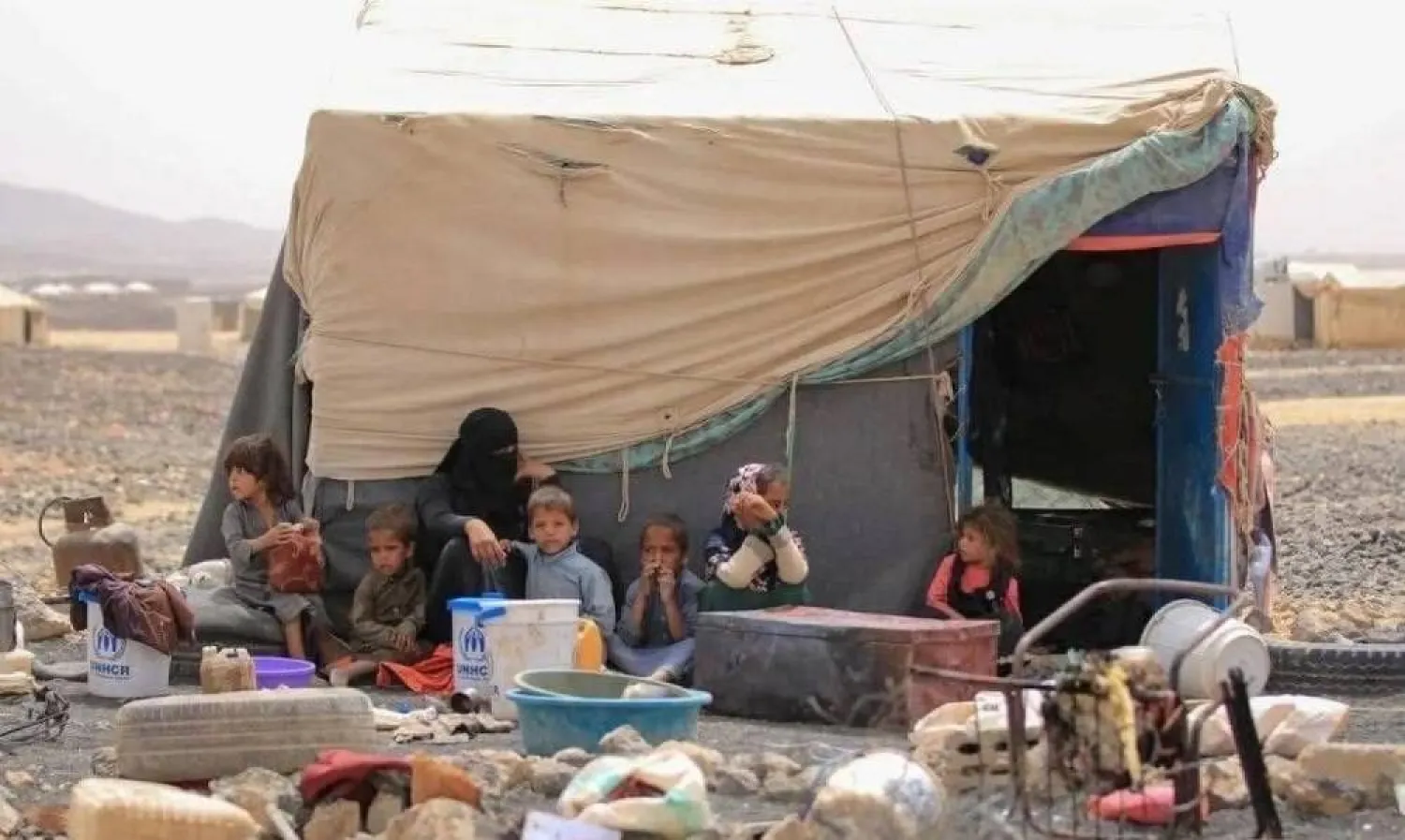
Internally displaced Yemenis are among the most vulnerable groups, particularly those living in camps. (UNHCR)
TT

UN Data: Two-Thirds of Yemen’s Population Unable to Meet Food Needs  

Internally displaced Yemenis are among the most vulnerable groups, particularly those living in camps. (UNHCR)

When the Houthis closed UN offices in areas under their control about two months ago, two-thirds of Yemen's population were unable to meet their food needs, while half of households nationwide restricted adult food intake to prioritize children, recent humanitarian data showed last week.

In the government-controlled ports, food imports increased by 52% year-on-year, according to the same data.

In its Yemen Food Security Update, the World Food Program (WFP) said that in September, two months after Houthis suspended delivering and distributing aid in areas under their control, around 61% of surveyed households in Yemen struggled to meet their minimum food needs.

The 2025 Global Hunger Index indicates that hunger remains alarming in Yemen, with available indicators pointing to deteriorating conditions and that the country is likely to fall into the “extremely alarming” category, it said.

In Houthi-held areas, humanitarian agencies face crippling challenges in the operating environment, and all the program’s activities have been paused in northern Yemen as of August 31, it added.

“All governorates in Yemen remained above the ‘very high’ threshold of more than 20% for poor food consumption, with peaks recorded in Al-Bayda, Lahj, Raymah, Dhale, and Al-Jawf (43%-48%),” WFP said.

It added that to cope with food shortages, half of households nationwide restricted adult food intake to prioritize children.

Most vulnerable groups

Data also showed that internally displaced Yemenis (IDPs) are among the most vulnerable groups, particularly those living in camps.

In September, among IDPs, 42% reported moderate to severe hunger, while 26% among residents.

Begging was adopted by 8% of IDPs, with higher levels among those in camps (13%).

WFP remote monitoring data indicated a very low dietary diversity score among children aged 6-23 months, with a very high prevalence of severe child food poverty.

Self-reported diarrhea affected 34% of ill children under five, putting them at risk of acute malnutrition.

Meanwhile, in government-controlled areas, the cost of the minimum food basket (MFB) declined by 6% month-on-month and by 16% Year-on-year, the largest YoY drop recorded to date.

Key drivers include the market’s gradual self-correction following currency appreciation, continued decline in fuel prices, and strengthened market monitoring by the government.

However, economic challenges persist, as the IMF indicated critically low US dollar reserves in government-controlled areas, and public debt exceeded 100% of IRG GDP as of mid-2025.

WFP also noted that the 2025 Global Peace Index ranked Yemen as the fifth least peaceful country globally.

The continued attacks on Red Sea ports resulted in damage to infrastructure and reduced capacity, primarily triggering a 23% decline in food imports and 26% in fuel imports during January-September 2025 compared to the same period in 2024, it said.



Rescue Teams Search for Survivors in Building Collapse that Killed at Least 2 in Northern Lebanon

A Lebanese flag is pictured, in the aftermath of a massive explosion, in Beirut's damaged port area, Lebanon August 17, 2020. REUTERS/Hannah McKay
TT

Rescue Teams Search for Survivors in Building Collapse that Killed at Least 2 in Northern Lebanon

A Lebanese flag is pictured, in the aftermath of a massive explosion, in Beirut's damaged port area, Lebanon August 17, 2020. REUTERS/Hannah McKay

At least two people were killed and four rescued from the rubble of a multistory apartment building that collapsed Sunday in the city of Tripoli in northern Lebanon, state media reported.

Rescue teams were continuing to dig through the rubble. It was not immediately clear how many people were in the building when it fell.

The bodies pulled out were of a child and a woman, the state-run National News Agency reported.

Dozens of people crowded around the site of the crater left by the collapsed building, with some shooting in the air.

The building was in the neighborhood of Bab Tabbaneh, one of the poorest areas in Lebanon’s second largest city, where residents have long complained of government neglect and shoddy infrastructure. Building collapses are not uncommon in Tripoli due to poor building standards, according to The AP news.

Lebanon’s Health Ministry announced that those injured in the collapse would receive treatment at the state’s expense.

The national syndicate for property owners in a statement called the collapse the result of “blatant negligence and shortcomings of the Lebanese state toward the safety of citizens and their housing security,” and said it is “not an isolated incident.”

The syndicate called for the government to launch a comprehensive national survey of buildings at risk of collapse.


Israel to Take More West Bank Powers and Relax Settler Land Buys

A view of Israeli settlement of Maale Adumim, in the West Bank, Sunday, June 18, 2023. (AP)
TT

Israel to Take More West Bank Powers and Relax Settler Land Buys

A view of Israeli settlement of Maale Adumim, in the West Bank, Sunday, June 18, 2023. (AP)

Israel's security cabinet approved a series of steps on Sunday that would make it easier for settlers in the occupied West Bank to buy land while granting Israeli authorities more enforcement powers over Palestinians, Israeli media reported.

The West Bank is among the territories that the Palestinians seek for a future independent state. Much of it is under Israeli military control, with limited Palestinian self-rule in some areas run by the Western-backed Palestinian Authority (PA).

Citing statements by Finance Minister Bezalel Smotrich and Defense Minister Israel Katz, Israeli news sites Ynet and Haaretz said the measures included scrapping decades-old regulations that prevent Jewish private citizens buying land in the West Bank, The AP news reported.

They were also reported to include allowing Israeli authorities to administer some religious sites, and expand supervision and enforcement in areas under PA administration in matters of environmental hazards, water offences and damage to archaeological sites.

Palestinian President Mahmoud Abbas said the new measures were dangerous, illegal and tantamount to de-facto annexation.

The Israeli ministers did not immediately respond to requests for comment.

The new measures come three days before Prime Minister Benjamin Netanyahu is scheduled to meet in Washington with US President Donald Trump.

Trump has ruled out Israeli annexation of the West Bank but his administration has not sought to curb Israel's accelerated settlement building, which the Palestinians say denies them a potential state by eating away at its territory.

Netanyahu, who is facing an election later this year, deems the establishment of any Palestinian state a security threat.

His ruling coalition includes many pro-settler members who want Israel to annex the West Bank, land captured in the 1967 Middle East war to which Israel cites biblical and historical ties.

The United Nations' highest court said in a non-binding advisory opinion in 2024 that Israel's occupation of Palestinian territories and settlements there is illegal and should be ended as soon as possible. Israel disputes this view.


Arab League Condemns Attack on Aid Convoys in Sudan

A general view shows the opening session of the meeting of Arab foreign ministers at the Arab League Headquarters (Reuters)
TT

Arab League Condemns Attack on Aid Convoys in Sudan

A general view shows the opening session of the meeting of Arab foreign ministers at the Arab League Headquarters (Reuters)

Arab League Secretary-General Ahmed Aboul Gheit strongly condemned the attack by the Rapid Support Forces on humanitarian aid convoys and relief workers in North Kordofan State, Sudan.

In a statement reported by SPA, secretary-general's spokesperson Jamal Rushdi quoted Aboul Gheit as saying the attack constitutes a war crime under international humanitarian law, which prohibits the deliberate targeting of civilians and depriving them of their means of survival.

Aboul Gheit stressed the need to hold those responsible accountable, end impunity, and ensure the full protection of civilians, humanitarian workers, and relief facilities in Sudan.