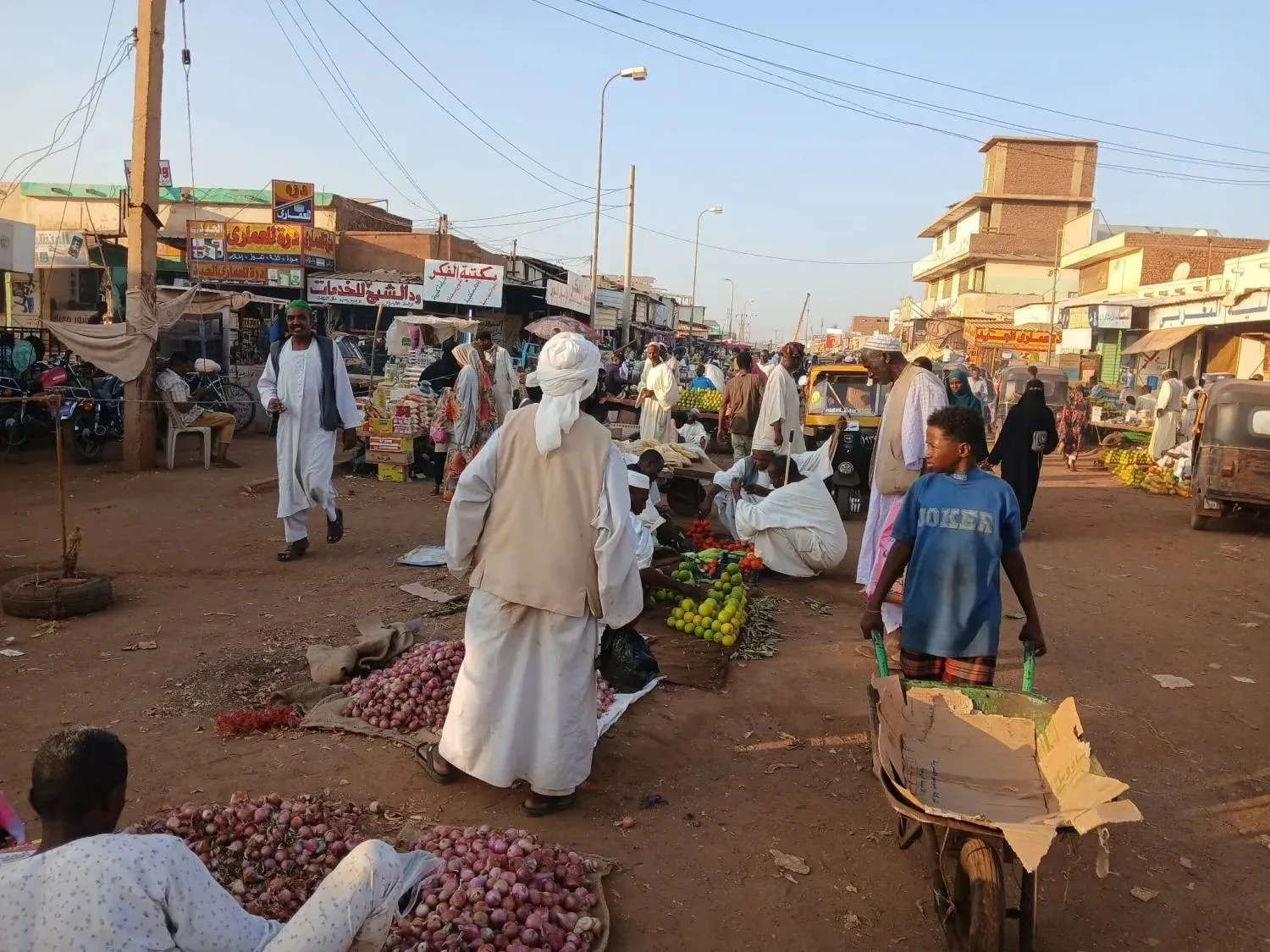

Residents of al-Manaqil in central Sudan say their city came close to falling after the Rapid Support Forces seized Wad Madani in December 2023, raising fears that one of the region’s most important agricultural hubs would be next.
The capture of Wad Madani on December 19 opened what looked like a clear path to al-Manaqil, the second largest city in Gezira State, located about 156 kilometers from Khartoum. But despite its vulnerability and limited military presence, the city remained under the control of the Sudanese army.
Al-Manaqil sits in the heart of the al-Manaqil Extension Agricultural Project, which forms the largest part of the Al-Jazeera (Gezira) Project spanning nearly 2.2 million feddans. The city is a key artery for agricultural production and a vital link in Sudan’s food supply chain.
Residents say the city had almost no capacity for defense before the war. It hosted only a small branch of military intelligence and lightly armed police forces. When the RSF entered Wad Madani, al-Manaqil saw waves of displacement and a near halt in public services as tension rose with each new advance by the RSF in Gezira State.
Schools Close and Residents Improvise to Survive
Middle school teacher Musab Abdullah, 35, said he never imagined seeing his city completely shut down. Schools closed, institutions stopped operating and many families were left without income.
“I stayed home without work although I had to provide for my small family,” he said.
He tried manual construction work for a low wage, then worked as a daily farm laborer. When that was no longer possible, he turned his home into a private school to earn a living and prevent children in his neighborhood from losing access to education.
A Security Vacuum and a Tightening Siege
Before the war, al-Manaqil had no military units except for the intelligence branch and a few police forces. As battles expanded in Gezira State, fears grew that the city had been left exposed.
Mustafa al-Khalifa, the former deputy head of the Popular Resistance and Mobilization, said the commander of the First Infantry Division in Wad Madani, Major General Ahmed al-Tayeb, authorized the transfer of the Third Brigade to al-Manaqil.
A small force of 200 to 300 men carrying light weapons arrived under Brigadier Ahmed al-Mansi and settled at the local administration compound, he said.
Electricity and water were cut, fuel ran out and food became scarce. “The dead were taken to cemeteries in animal-drawn carts,” al-Khalifa said. Hospitals closed and medicine was unavailable, forcing residents to turn to natural herbs.
Fear of a Chain Collapse
According to al-Khalifa, RSF fighters entered villages in Gezira State in combat vehicles with heavy machine guns and “killed between 50 and 60 people in each village in full view of the population.”
Residents feared that the fall of al-Qurayshi locality, which includes al-Manaqil, would be followed by the collapse of remaining areas held by the army, opening the road to al-Obeid, the capital of North Kordofan.
The operations room believed al-Manaqil was close to falling after RSF took al-Hasahisa, al-Kamlin, Rufaa, Wad Madani and areas across eastern Gezira State. But the commander of ground forces, Major General Ahmed Hanan Sabeer, directed that withdrawing units be relocated to al-Manaqil with food supplies guaranteed.
Two days after Brigadier al-Mansi’s arrival, volunteers filled warehouses with food enough for seven months. Members of the Popular Resistance began acquiring weapons and combat vehicles. When the RSF announced a date for storming the city, al-Manaqil had almost no defensive units, so local businessmen financed an arming campaign that delivered about 25 new vehicles in one day. Defensive lines were set up eight kilometers around the city.
A City on the Brink
Panic after the fall of Wad Madani prompted many residents of al-Manaqil to flee, leaving the city nearly empty for a time.
Shawqi Bella, head of the financial committee of the Popular Resistance and Mobilization, said two steam-powered combat vehicles would have been enough for the RSF to seize the city because it had almost no military forces.
“But divine protection intervened, then the efforts of the Sudanese army, the mobilized volunteers, the Operations Authority and the forces that withdrew from al-Qutaynah, Rufa’a and other towns in Gezira that al-Manaqil received,” he said.
Residents formed Popular Resistance committees before a nationwide decision to create such bodies was announced. They collected money and received an airdrop of weapons, medicines and intravenous fluids. They then began purchasing weapons and registering them with the Operations Authority and military intelligence.
Bella said the battle of Wad Hussein, a village about 30 kilometers west of Wad Madani, marked a turning point. “After fierce battles we defeated the attacking forces and captured large amounts of equipment, including nine armored combat vehicles. It was a decisive battle that broke the back of the rebel forces.”
Hospitals in al-Manaqil were out of service and the city was crowded with wounded and sick people. Bella said he moved the solar power system from his house and his college to the Ila Specialized Hospital to allow doctors to perform surgeries and treat wounded fighters.
Lawyer Working Under Trees
Lawyer Youssef Abdullah said the authorities used his office and others to run daily operations when the siege intensified. “I carried my bag with my stamp and notarization papers and sat under a building or a tree to complete daily transactions,” he said.
He became a mobile lawyer handling paperwork in printing shops powered by solar energy. With no fuel or transport, he once walked 13 kilometers to al-Kuraymit to obtain insulin for his diabetic father.
“Despite the hardship, I continued working because the situation required endurance,” he said. “I refused to flee despite repeated calls from colleagues. I had great trust in the armed forces and their ability to manage the battle.”
Solidarity and a Haven for the Displaced
Fayad Mahmoud, supervisor of the Asoud al-Manaqil group, said the city’s resilience stemmed from rare social cohesion and coordinated roles played by all segments of society.
Residents provided money, weapons, manpower and logistical support to protect the city and repel threats. Popular backing strengthened security and created a unified front where official and community efforts converged.
al-Manaqil also received large numbers of displaced people from Gezira, White Nile State and Sennar. Families opened their homes before shelters were established, turning the city into a safe haven for those fleeing fighting.
Popular efforts extended to restoring hospitals, schools, clinics and roads through direct support from volunteers and local leaders, helping daily life continue despite the war.
“High morale and values of solidarity and compassion were essential to al-Manaqil’s resilience,” Mahmoud said. “Kind words, encouragement and strong social ties helped the community overcome hardship and remain united.”