



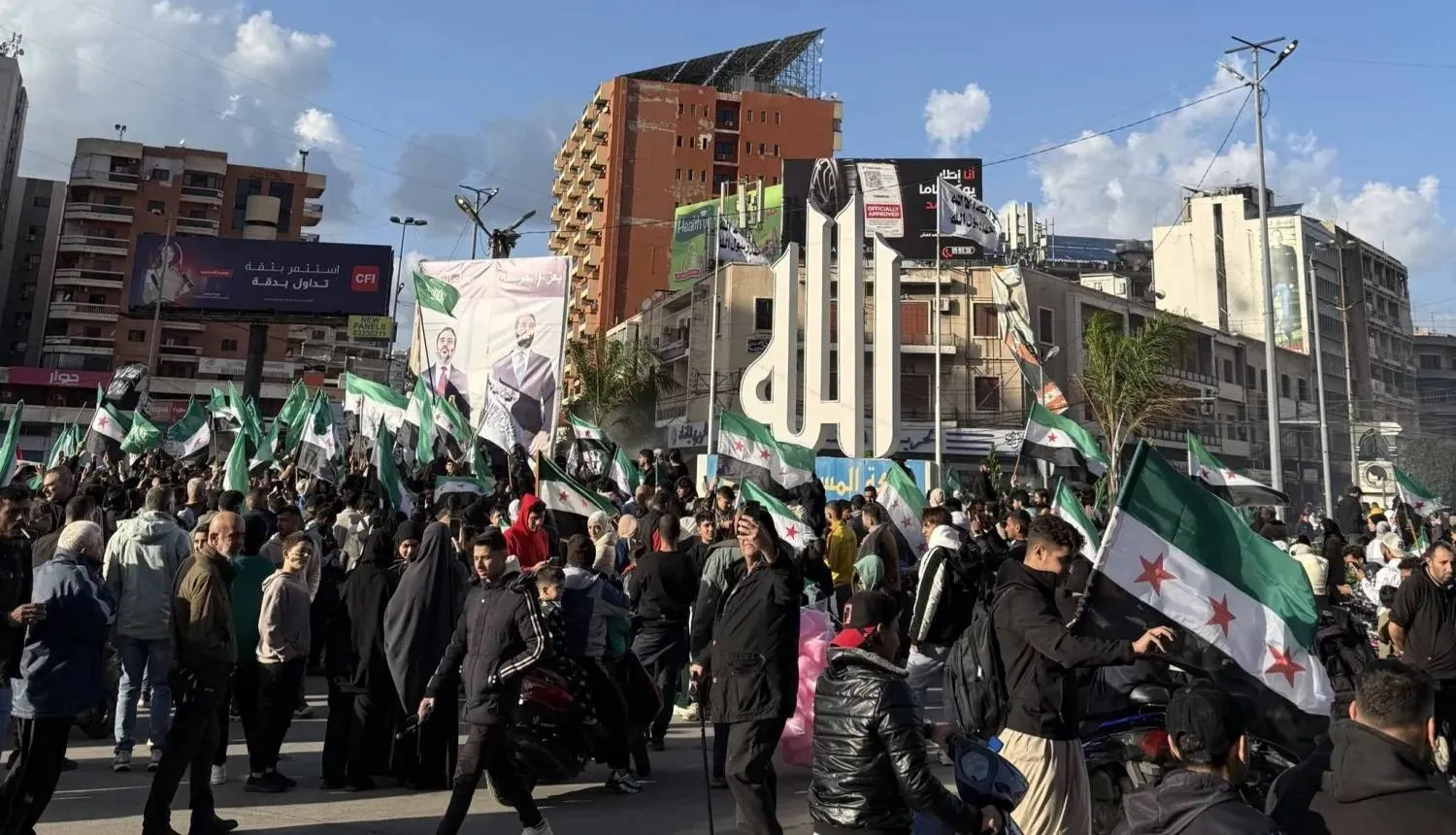

The collapse of Bashar al-Assad's regime in Syria in December 2024 created major political, security and economic changes in Lebanon. Beirut also rid itself of what remained of Damascus’ influence - after Syria withdrew its forces from Lebanon in 2005 following 30 years of military and political hegemony - through Assad’s allies, namely Hezbollah.
With the ouster Assad, Lebanon became free to make its political decisions away from the influence of Damascus and its allies. Lebanon and Syria can establish mutual official relations, secure their shared border and improve the trade exchange between them.
Tehran-Beirut route severed
Head of Lebanon’s Saydet al-Jabal Gathering, former MP Fares Souaid told Asharq Al-Awsat: “Lebanon has changed. The most important thing that happened was that the new Syria severed the Tehran-Beirut route that used to supply Hezbollah with all of its security, military and financial means.”
Now, the party has to resort to smuggling to get what it needs, he added. “That option is not secured by military units working for Iran, forcing Hezbollah to approach the new situation in Lebanon with a lot more pragmatism than before.”
He said the party has been forced to take a “humble” approach to “critical issues.”
“We saw how Hezbollah did not quit the government even though it objected to cabinet decisions, especially the one related to imposing state monopoly over arms,” he explained. The decision effectively calls on Hezbollah to disarm.
The party was unable to take any steps to counter the decision because the “real route that has been feeding it has been cut,” Souaid stressed.
Developments, past and present, have shown that anything negative or positive taking place in Syria will impact Lebanon, he went on to say. “If Syria is well, then Lebanon is well.”
He said Lebanon still believes that Syria under President Ahmed al-Sharaa has a promising future and relations between Beirut and Damascus will also be promising.
The relations are already on the right track with the establishment of joint security and military committees sponsored by Saudi Arabia, he remarked. Efforts have already been exerted to secure the shared border between them ahead of demarcation starting from the Shebaa Farms.
Such coordination between Lebanese and Syrian security and military agencies “never happened under Assad rule. So, this is a new development for both countries,” he revealed.
Treaties with Syria
The neighbors currently appeared focused on reshaping their relations in a way that preserves their mutual interests. Souaid acknowledged, however, that pending complex issues remain.
He underlined the need to annul all political, security and economic treaties that were signed during Syria’s hegemony over Lebanon.
Lebanon has appointed an ambassador to Damascus, while the latter has yet to name an envoy to Beirut, he noted.
He also said that the Syrians are prioritizing resolving the issue of Syrian detainees held in Lebanese jails.
The issue is a “black mark” in the relations between the two countries. Lebanon’s justice minister must resolve this file so that it does not complicate efforts to forge good ties, Souaid urged.
Pending files
Lebanon has been perceived as dealing “coolly” with Syria’s insistence on resolving the detainee file.
Some Lebanese officials have for years also complained about Syrian refugees in Lebanon and the burden they have on the state. An informed security source told Asharq Al-Awsat that with Assad’s collapse, this issue was no longer a “major crisis”.
It revealed that half of the Syrian refugees who were in Arsal and the northern Akkar region in Lebanon have returned to their home country. This has been felt by the drop in the numbers of Syrian laborers in Lebanon.
The shared border is another issue of pressing concern for the neighbors.
After Assad’s ouster, Lebanon’s northern and eastern borders are no longer open to the regime’s allies and outlaws, especially drug and other smugglers.
The source said: “The most important achievement on the security level has been curbing the smuggling of weapons from Syria to Lebanon and money from Lebanon to Syria.”
“Captagon factories along both sides of the border have also been destroyed, leading to the dismantling of drug smuggling networks and culminating in the arrest of Lebanon’s most wanted drug smuggler, Noah Zeiter, who was seeking refuge in Syria before Assad’s ouster,” added the source.


