


How the United Nations’ Relationship with the Houthis Reached a Dead End

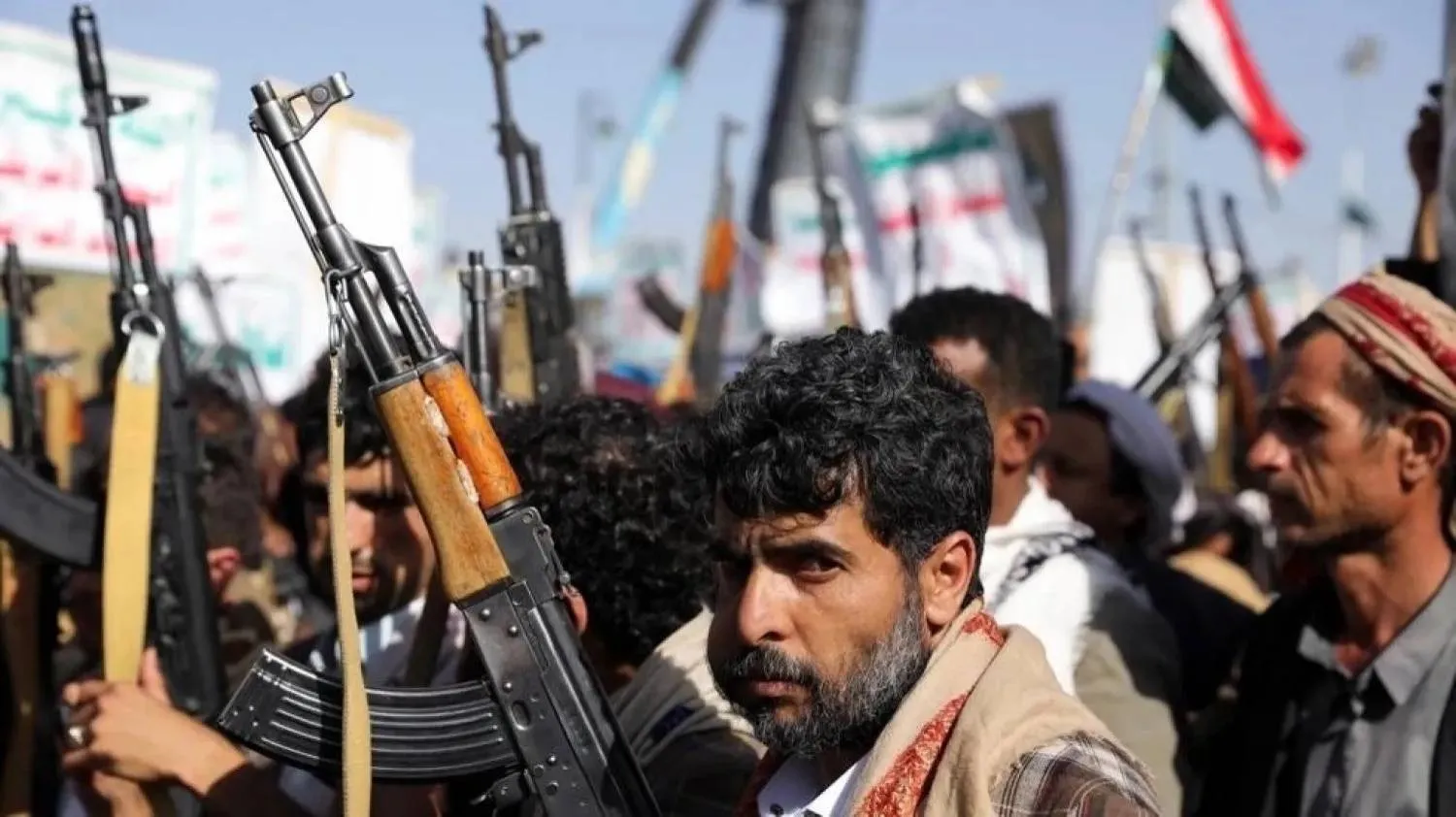
The Houthis claim that humanitarian workers are spying on them. (Reuters file)
TT

How the United Nations’ Relationship with the Houthis Reached a Dead End

The Houthis claim that humanitarian workers are spying on them. (Reuters file)

After more than a year of suspending most of its humanitarian activities in areas controlled by the Houthi movement, amid the arrest of dozens of local staff and the seizure of assets and property, the United Nations has declared that its relationship with the group has reached a dead end. The development raises serious concerns about the humanitarian consequences for millions of Yemenis who rely on food assistance.

Reflecting the depth of the crisis, the World Food Program has decided to halt its operations entirely in Houthi-held Sanaa and dismiss all its staff, after exhausting efforts to end repeated violations against humanitarian workers and to secure minimum conditions for safe operations.

Sources working with the United Nations and the aid sector told Asharq Al-Awsat that the decision to end the program’s presence in Houthi-controlled areas was driven by systematic practices aimed at undermining the independence of humanitarian work. These included direct interference in operations, tight restrictions on staff movement, the seizure of offices and warehouses, and repeated attempts to impose beneficiaries based on political and security considerations.

The program had suspended its activities in those areas several times over recent years in protest against Houthi interference in food aid distribution and attempts to divert assistance away from its humanitarian purpose.

Despite this, it maintained limited operations through local partners to deliver emergency aid to the most vulnerable, particularly during natural disasters and floods that struck several governorates over the past two years. This continued until security and administrative conditions deteriorated to unprecedented levels.

Arrests and asset seizures

Despite the flexibility shown by the United Nations in dealing with restrictions and its efforts to overcome violations of the rules governing UN missions, the Houthis responded with escalating measures.

These included raids on the offices of several UN agencies, including the World Food Program, the arrest of dozens of local employees, accusations that they were spying for the United States and Israel, and the seizure of assets and property belonging to UN agencies and other organizations.

According to the sources, the program continued for more than a year to pay salaries to its staff, including those detained or barred from work after Houthi intelligence services took control of UN premises.

It also maintained paying rent on buildings, while engaging in difficult negotiations aimed at securing the release of detained staff, ending the takeover of offices, and recovering confiscated assets.

Aid organizations later concluded that they had delayed too long in deciding to end their presence, citing what they described as deliberate stalling during negotiations.

While one wing overseeing what is referred to as the Houthi foreign ministry showed some understanding of UN demands and proposed solutions, another wing led by intelligence agencies pushed for further escalation.

Escalation without end

During negotiations led by the UN coordinator for Yemen over the past year, the Houthis proposed presenting what they claimed were “evidence” to support espionage charges against local staff. They later suggested trying the detainees and issuing a general amnesty after convictions.

The United Nations rejected claims, insisting on the unconditional release of all detained staff — around 73 people — as well as others held from international and local organizations and diplomatic missions.

The talks coincided with further Houthi escalatory steps, including raids on additional humanitarian offices, new arrests of local staff, and the referral of dozens to a specialized court for terrorism and state security cases. This deepened mistrust and closed off any prospects for compromise.

With around 12 million people living in Houthi-controlled areas, the UN has warned that these measures, most recently the raid on the offices of six UN agencies in Sanaa and the seizure of their assets, will lead to an unprecedented deterioration of the humanitarian situation, in the absence of acceptable arrangements to ensure aid reaches those in need.

The UN Security Council adopted resolutions in 2025 and this year calling on the Houthis to provide a safe working environment and to immediately and unconditionally release all detained staff from the United Nations, non-governmental organizations, and diplomatic missions.

The militants have ignored the calls and demanded a review of the UN presence agreement in Yemen, which dates back to the 1960s.


Iraq Seeking New Oil Export Routes after Hormuz Disruption

FILE PHOTO: Tankers are seen off the coast of Fujairah, as Iran vows to fire on ships transiting the Strait of Hormuz, amid the US-Israel conflict with Iran, in Fujairah, United Arab Emirates, March 3, 2026. REUTERS/Amr Alfiky/File Photo
TT

Iraq Seeking New Oil Export Routes after Hormuz Disruption

FILE PHOTO: Tankers are seen off the coast of Fujairah, as Iran vows to fire on ships transiting the Strait of Hormuz, amid the US-Israel conflict with Iran, in Fujairah, United Arab Emirates, March 3, 2026. REUTERS/Amr Alfiky/File Photo

Iraqi authorities are exploring alternative routes to export oil after transit through the Strait of Hormuz was disrupted by the Middle East war, an oil ministry spokesperson told AFP Tuesday.

Saheb Bazoun said that "much like other countries in the region, oil production and marketing have been severely impacted, leaving the government no choice but to seek alternative" export routes.

Iraq has several oil shipments stuck at sea, he said.

Iraq is a founding member of the OPEC cartel, and crude oil sales make up 90 percent of the country's budget revenues.

Before the war, it was exporting more than 3.5 million barrels per day.

The Strait of Hormuz remains closed to almost all oil tankers, and Iran has vowed that not one litre of oil would be exported from the Gulf while its war with the United States and Israel continues.

Iraq's oil production and exports have sharply decreased, Bazoun said.

Iraqi authorities are considering several options for exports, including a pipeline which runs thought Iraq's northern Kurdistan region to the port of Ceyhan in Türkiye.

They are also considering transporting oil by land, but many plans will require time to be implemented, according to Bazoun.

A senior official in Iraq's Kurdistan region told AFP talks are underway to facilitate oil exports from federal Iraq.

He said that Baghdad had requested to "export 200,000 bpd" via the Ceyhan pipeline, which has a capacity of 700,000 bpd.

But regional authorities asked for several measures in return, including that Baghdad facilitates the region's access to US dollars through banks.

"We have made it clear to Baghdad that the relief on dollars should happen first," the Kurdish official said, claiming that there is a "100 percent dollar embargo on Kurdistan."

Since the start of the year, Iraq has been dealing with a US dollar liquidity shortage that has affected many sectors across the country.

Oil production has also been disrupted in the Kurdistan region since foreign oil companies have halted production as a precautionary measure since the start of the war.


Syria Appoints Kurdish YPG Commander Sipan Hamo Deputy Defense Minister

Sipan Hamo, the commander of the Kurdish People's Protection Units (YPG)
TT

Syria Appoints Kurdish YPG Commander Sipan Hamo Deputy Defense Minister

Sipan Hamo, the commander of the Kurdish People's Protection Units (YPG)

Syria's defense ministry said on Tuesday that Sipan Hamo, commander of the Kurdish People's Protection Units (YPG), had been appointed deputy defense minister for the country's eastern territories.

The move is seen as part of implementing a US-brokered integration agreement signed on January 29 between Syrian Democratic Forces (SDF) commander Mazloum Abdi and Syrian President Ahmed al-Sharaa.

"Sipan Hamo has been appointed Assistant Minister of Defence for the eastern region," a defense ministry official said in a statement.


UN: Almost 700,000 Displaced, 84 Children Killed after Israeli Strikes on Lebanon

An explosion erupts following an Israeli airstrike on the village of Abbasiyeh in southern Lebanon on March 10, 2026 -  (Photo by KAWNAT HAJU / AFP)
An explosion erupts following an Israeli airstrike on the village of Abbasiyeh in southern Lebanon on March 10, 2026 - (Photo by KAWNAT HAJU / AFP)
TT

UN: Almost 700,000 Displaced, 84 Children Killed after Israeli Strikes on Lebanon

An explosion erupts following an Israeli airstrike on the village of Abbasiyeh in southern Lebanon on March 10, 2026 -  (Photo by KAWNAT HAJU / AFP)
An explosion erupts following an Israeli airstrike on the village of Abbasiyeh in southern Lebanon on March 10, 2026 - (Photo by KAWNAT HAJU / AFP)

The humanitarian crisis in Lebanon has deepened amid the wider Middle East war, with 84 children killed and more than 667,000 people displaced, two UN agencies said on Tuesday, as lives are upended on a massive scale across the country.

A total of 486 people have been killed in the war so far and 1,313 injured, of which 259 are children, according to the World Health Organization.

"This is only seven-days conflict, and we are already seeing that almost 100 children that have lost their lives," said Abdinasir Abubakar, WHO representative in Lebanon.

"One reason why we have a high number of children is that most of the attacks that we see actually is, it's urban centers, like in Beirut," he said, adding that Israel's airstrikes, which it says target Hezbollah infrastructure, are putting civilian lives at risk.

The current rate of displacement in Lebanon is outpacing levels seen during the 2023-24 war between Hezbollah and Israel, the UN Refugee Agency said on Tuesday. During that conflict, 886,000 people were internally displaced in Lebanon, while tens of thousands of Israelis were evacuated from northern towns near the Lebanese border.

ISRAEL ORDERS EVACUATION

Lebanon's sharp rise in displacement this week stems from large-scale evacuation orders issued by the Israeli army for southern Lebanon and Beirut's densely populated southern suburbs, which the UN human rights chief said on Friday raised serious concerns under international law.

The WHO warned that Lebanon's hospitals and frontline responders were under "extraordinary strain" trying to manage the rising number of patients.

Five hospitals are now out of service, four partially damaged, and 43 primary healthcare centers are closed - mostly in the south, which has been largely evacuated, Abubakar said.

"Many of the people fleeing were also fleeing back in 2024. We met many who then had their homes completely destroyed, family members killed and so on. So this means that people are not waiting to see what will happen next. They leave immediately," said Karolina Lindholm Billing, UNHCR representative in Lebanon.

Some 120,000 people are staying in government-designated shelters, while others are still looking for somewhere to stay, the UNHCR said, citing government figures.

"Many others are staying with relatives or friends or still searching for accommodation, and we see cars lined along the street with people sleeping in them and also on the sidewalks," Billing said.