

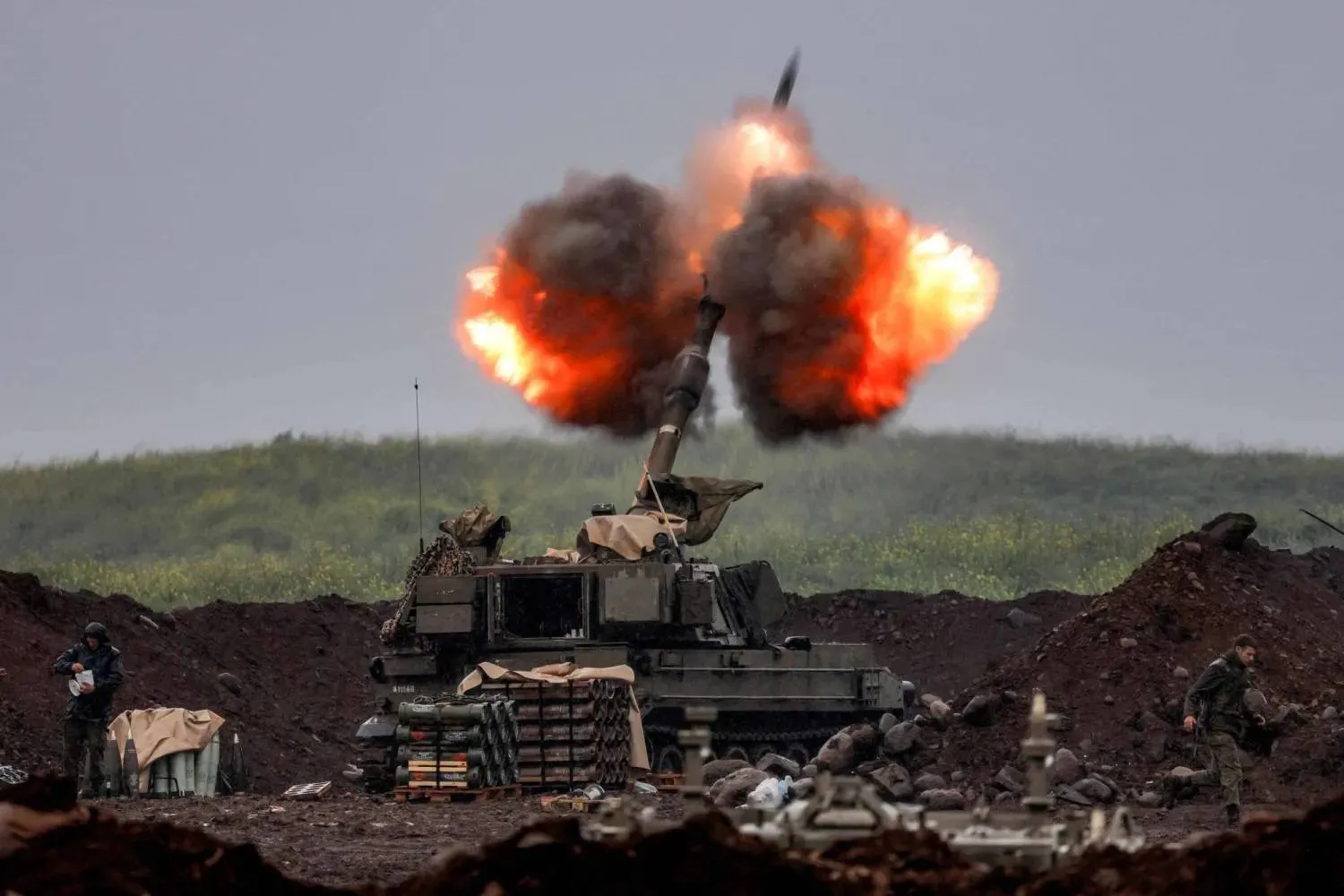

Israeli Army Advances into Lebanon on Four Axes

Israeli artillery fires toward Lebanese territory as forces attempt deeper incursions (AFP)
TT

Israeli Army Advances into Lebanon on Four Axes

Israeli artillery fires toward Lebanese territory as forces attempt deeper incursions (AFP)

Israeli troops advanced from four directions on Friday into Lebanese territory, as attacks resumed along the Khiam and Taybeh axes, operations restarted on the Maroun al-Ras front, and a new axis was opened in the western sector toward the town of Naqoura.

The push appears aimed at dispersing defending forces confronting the incursions by widening the scope of the assault and diversifying its axes. The move follows a two-day lull in the offensive on Khiam and a lack of progress on the Taybeh front on Thursday, when tanks came under anti-tank missile fire.

Sources in southern Lebanon told Asharq Al-Awsat that heavy strikes on the towns of Yohmor, Arnoun and Zawtar, elevated areas on the western bank of the Litani River overlooking Taybeh, suggest Israeli forces are seeking to neutralize fire directed from those heights at tanks advancing in Taybeh.

They said the Israeli army is trying to reach the Litani bank and Wadi al-Hujair, in a bid to isolate the area from its southern extensions, making it easier to advance into the Hujair and Saluki valleys from the south and southwest, from the outskirts of Mays al-Jabal and Houla.

Hezbollah said in a series of statements that it fired artillery at Israeli troop concentrations in Taybeh and the Taybeh project area, and detonated explosive devices targeting troop gatherings and a bulldozer, indicating its fighters remain present in the town.

On the Khiam front, local sources in Marjayoun said Israeli forces renewed their attacks on the town, where Hezbollah fighters are still holding pockets in its center and north. They said Israeli ground units pushed toward central Khiam in an attempt to tighten control, alongside artillery shelling and airstrikes focused on its northern areas.

The sources said the attack on Khiam unfolded along three axes, from the south toward the north, from the west toward the edge of the plain, and from the east and northeast along the administrative border of Ibl al-Saqi, adding that the attempted advances were accompanied by heavy firepower.

In the central sector, Israeli forces resumed attacks toward Maroun al-Ras and Aita al-Shaab, alongside airstrikes targeting the city of Bint Jbeil and artillery shelling of Maroun al-Ras. This indicates the incursion aims to reach Bint Jbeil from the east and north, a front where Israeli forces had halted their advance last week.

Hezbollah said it detonated explosive devices in Aitaroun and targeted Israeli troop concentrations in Maroun al-Ras and its public garden.

For the first time since the war began, the Israeli army opened an incursion axis in Naqoura, days after expanding operations in the Labbouneh area east of the coastal border town.

The advance was accompanied by intense airstrikes on towns deeper inside Lebanon in the Tyre district, between 15 and 25 km away, in an apparent attempt to prevent supporting fire for defending forces and to stop attacks on advancing troop concentrations.

Since the morning, Israeli warplanes have carried out a series of airstrikes and artillery bombardments targeting at least 12 towns in the Tyre district, and around 25 towns across the Nabatieh, Marjayoun and Bint Jbeil districts.

The Israeli military said on Friday it had struck 2,000 targets in Lebanon since the war with Hezbollah began on March 2. In a statement, it said Israeli forces continue “limited, targeted ground operations” in southern Lebanon as part of what it described as advanced defensive efforts against Hezbollah.

It said that more than 2,000 targets had been hit so far, including 120 command centers, more than 110 weapons depots and more than 130 rocket launchers.

The military added that more than 570 Hezbollah fighters had been killed, including 220 from the Radwan Force, around 150 operators of surface-to-surface missiles, and more than 30 commanders of various ranks.

Burhan Rejects Ceasefire Before RSF Surrender as Drone Strike Hits Power Station in Northern Sudan

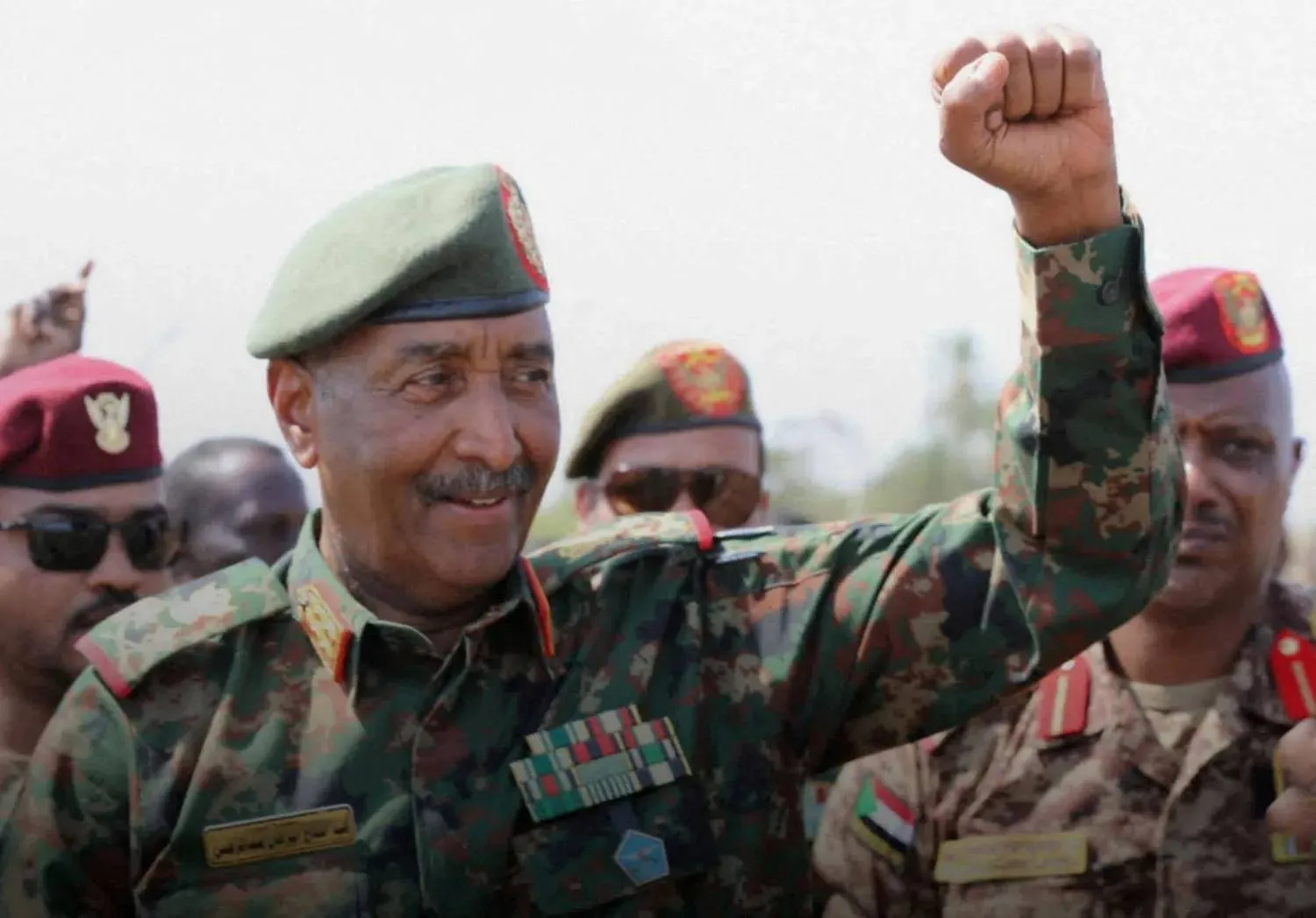
Sudanese army chief Abdel Fattah al-Burhan attends a group iftar with members of the community police in the final days of Ramadan. (Sudanese Armed Forces – Facebook).
TT

Burhan Rejects Ceasefire Before RSF Surrender as Drone Strike Hits Power Station in Northern Sudan

Sudanese army chief Abdel Fattah al-Burhan attends a group iftar with members of the community police in the final days of Ramadan. (Sudanese Armed Forces – Facebook).

A drone attack blamed on the paramilitary Rapid Support Forces (RSF) struck the town of Al-Dabba in northern Sudan, targeting a power station and the Faculty of Engineering at the University of Dongola, officials said Friday. The strike cut electricity to the town and left at least three people injured.

The attack came hours after Sudan’s army chief and head of the Sovereign Council Abdel Fattah al-Burhan reiterated his rejection of any ceasefire and vowed to continue fighting until the RSF surrenders.

In an Eid al-Fitr address on Thursday evening, al-Burhan said there would be “no truce” unless the RSF withdrew and regrouped under a comprehensive peace plan leading to a permanent settlement, with no armed actors remaining outside state control.

He added that Sudan’s leadership remained open to peace initiatives that meet security requirements and prevent a return to war.

Al-Burhan accused the RSF of committing war crimes, genocide and crimes against humanity, and said any future political process must dismantle the group’s role in Sudan.

He also pledged to “purge” the country of what he described as the “Dagalo militia,” referring to RSF leader Mohamed Hamdan Dagalo, also known as Hemedti, and to rebuild state institutions while advancing civilian governance and peaceful transfer of power.

Al-Burhan last year proposed a UN-backed initiative requiring RSF forces to withdraw to agreed locations in Darfur before negotiations begin. The proposal ran parallel to a plan by the United States, Saudi Arabia, the United Arab Emirates and Egypt calling for a three-month humanitarian truce and a transition to a civilian-led government.

Shortly after his speech, RSF drones struck Al-Dabba, a strategic town in Northern State along the Nile. Local official Mohamed Saber, head of the area’s security committee, said the attack took place early Friday, the first day of Eid al-Fitr, and targeted civilian infrastructure, including the engineering faculty.

He said three people were wounded but did not disclose their condition, accusing the RSF of deliberately targeting civilian sites “to spread fear among unarmed residents.”

According to the official, Sudanese army air defenses intercepted some of the drones, and military and allied forces remain on alert to repel further attacks.

The RSF did not immediately comment on the strike. It has previously said its drones target military positions or civilian sites used by the army and its allies.

Friday’s attack was not the first on Al-Dabba. In October 2025, RSF drones struck the town, killing five people and injuring others.

Al-Dabba, home to tens of thousands, is a key commercial and agricultural hub linking northern, western and eastern Sudan.


Report: UN Chief Says He Is Cooperating with Trump’s Board of Peace on Gaza

UN Secretary General Antonio Guterres looks on after a family picture during the EU Summit at the EU headquarters in Brussels, on March 19, 2026. (AFP)
TT

Report: UN Chief Says He Is Cooperating with Trump’s Board of Peace on Gaza

UN Secretary General Antonio Guterres looks on after a family picture during the EU Summit at the EU headquarters in Brussels, on March 19, 2026. (AFP)

UN Secretary General Antonio Guterres welcomed the aim of Donald Trump's Board of Peace to fund and deliver the basics of a Gaza reconstruction plan to rebuild Palestinian homes and infrastructure, Politico reported on Saturday.

“There is an objective there that ‌was defined, ‌approved by the Security Council, ‌and ⁠we are cooperating ⁠actively with structures created by the Board of Peace,” Guterres told the news outlet in an interview.

Guterres saw no need for the board beyond Gaza's reconstruction. “This ⁠is not the effective way ‌to address ‌the dramatic problems that we have now,” he said.

“We need to be ‌clear about international law, to be clear about the values of the Charter of the United Nations. That is ‌essential in any peace initiative.”

He also called for an end to ⁠Iran's ⁠closure of the Strait of Hormuz, suggesting the UN could help protect the waterway and be part of a plan to de-escalate attacks.

Guterres said he had not spoken with Trump since the start of the war, although he has spoken to others in the administration.


Israel Says Targeting Hezbollah in Beirut as South Lebanon Struck

Debris cover the site of Hezbollah's Al-Manar TV headquarters after it was hit in an Israeli airstrike on Dahieh, a southern suburb of Beirut, Lebanon, Tuesday, March 3, 2026. (AP)
TT

Israel Says Targeting Hezbollah in Beirut as South Lebanon Struck

Debris cover the site of Hezbollah's Al-Manar TV headquarters after it was hit in an Israeli airstrike on Dahieh, a southern suburb of Beirut, Lebanon, Tuesday, March 3, 2026. (AP)

The Israeli military said it launched a wave of strikes on Beirut claiming to target the Iran-backed group Hezbollah early Saturday, while Lebanese state media reported strikes in the country's south.

Lebanon was pulled into the Middle East war when Hezbollah began firing rockets into Israel on March 2 to avenge the killing of Iran's supreme leader Ali Khamenei.

Israel has since launched strikes across Lebanon and sent ground troops into the country's south.

In a brief statement on Saturday, the Israeli military said its forces were "currently striking Hezbollah terrorist organization targets in Beirut".

A military spokesman earlier issued a warning to residents of Beirut's southern suburbs, a Hezbollah stronghold, to evacuate ahead of strikes.

Lebanon's official National News Agency (NNA) reported strikes on two neighborhoods in the area, without immediately saying what had been hit or whether there were any casualties.

In southern Lebanon, close to the border, the NNA said an Israeli airstrike hit a house in the town of Ghandouriyeh, killing at least one person and wounding two others.

The agency reported more strikes overnight and in the early morning on several areas of southern Lebanon, as well as an "extensive combing operation" carried out by Israeli troops in the area of Khiam town.

Hezbollah also said its fighters had targeted Israeli troops in six villages in southern Lebanon.

The group said it had also launched rockets across the border, where air raid sirens were activated, according to the Israeli military's Home Front Command.

The US ambassador to Lebanon, Michel Issa, gave his backing on Friday to a truce initiative proposed by Lebanese President Joseph Aoun, telling reporters that "matters are not resolved without talking".

He said, however, he believed Israel "has decided not to stop" striking Lebanon yet.

"That means Lebanon has to decide whether it can meet the Israelis in this case," the ambassador added.

Lebanon's health ministry says the war has killed more than 1,000 people in Lebanon and displaced more than one million more.

Two Israeli soldiers have been killed in southern Lebanon, according to the military.