
Syrian authorities said they had thwarted an attempt to smuggle a large shipment of military-grade detonators from the Nabk area in the Qalamoun region of rural Damascus into Lebanon.
They also uncovered a cross-border tunnel and seized weapons depots prepared for smuggling, state media reported on Wednesday.
The Internal Security Directorate in Nabk said it dismantled a plan to move a large quantity of explosive detonators used in making improvised explosive devices, adding the shipment was bound for Lebanon.
In a statement, it said the operation was carried out with “high professionalism” after precise technical and field surveillance, preventing the materials from reaching their destination.
Authorities said about 6,000 detonators were seized, without identifying the smugglers or the intended recipients in Lebanon.
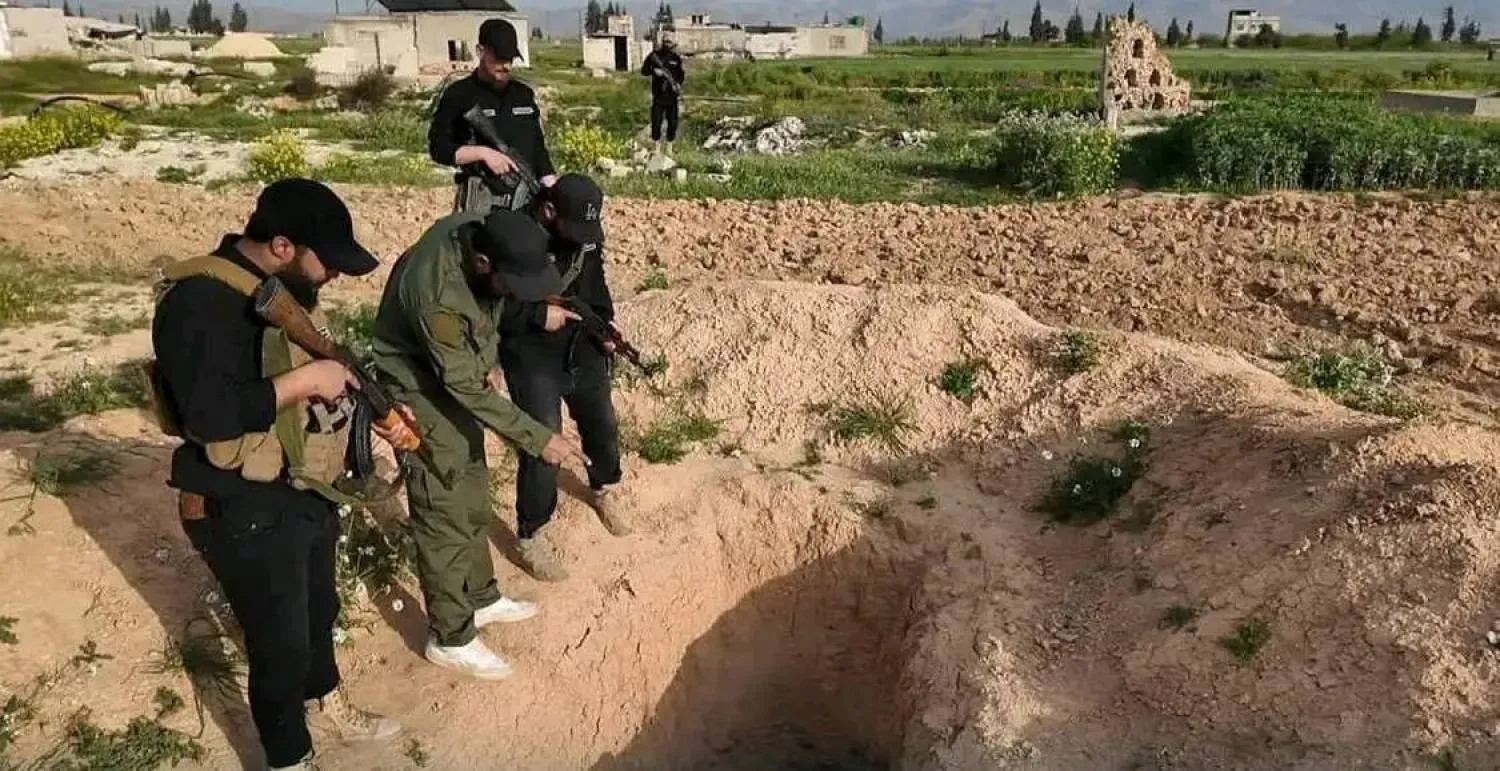
The announcement came as internal security forces in Homs reported discovering a tunnel linking Syrian and Lebanese territory in the border town of Housh al-Sayyed Ali, in the Qusayr area of southern Homs province.
Weapons and ammunition depots prepared for smuggling were also seized, according to the Syrian Al-Ikhbariya channel, which gave no details on who dug the tunnel.
Earlier this month, Syria’s defense ministry said it had uncovered a network of tunnels in the Qusayr area used to smuggle drugs and weapons, adding that Hezbollah had used them.
Qusayr has been one of Hezbollah’s main areas of influence in Syria since 2013, until the fall of its ally Bashar al-Assad. The area served as a key supply route from Albu Kamal on the Iraqi border in Deir al-Zor, through Palmyra and Homs, to the Lebanese border.
Media reports say tunnels are widespread along the Qusayr border, alongside informal crossings used by residents to move between the two countries. For many, smuggling has become a source of income amid worsening economic conditions, poverty, and security instability, complicating efforts to secure the border.
The developments come amid fears Syria could be drawn into a wider conflict through Lebanon and efforts to disarm Hezbollah, with backing from the United States and Israel.
On April 11, Syria’s interior ministry said its counterterrorism department, working with internal security in rural Damascus, arrested five people in a cell linked to Hezbollah after tracking suspicious activity in the capital.
Authorities said a woman in the cell was caught attempting to carry out an attack by planting an explosive device near the home of a religious figure in Bab Touma, close to the Mariamite Cathedral. Media reports identified the target as Rabbi Michael Houri.
Earlier this month, the defense ministry allowed a photographer from Agence France-Presse to document the army’s deployment along the border for the first time since reinforcements were sent about a month earlier, including several cross-border tunnels that had recently been uncovered.
Mohammad Hammoud, a Syrian-Lebanese border official, told AFP the army had discovered “a network of tunnels linking the two countries” used to smuggle weapons and drugs. A Syrian army field commander also said Hezbollah had used the tunnels.
Hezbollah fought alongside Assad’s forces in the conflict that began in 2011 as a peaceful uprising before escalating into war.
An AFP photographer saw at least five tunnels crossing the border, including one that started in a house basement and led via concrete steps into narrow, dark passageways used for transit.
On March 28, Syrian authorities said they found a tunnel near a village west of Homs linking Syria to Lebanon, adding that “Lebanese militias” had used it for smuggling before it was closed.
In February, the interior ministry said it dismantled a cell behind attacks in the Mezzeh district of Damascus, adding the weapons used had come from Hezbollah, which denied involvement.