With Kuwait’s emergence as an independent state in 1966, three pioneering forces emerged whose ambitions exceeded the resources at hand. The first was an emerging, highly ambitious press, working with rudimentary presses yet driven by diverse professional voices and experience.
At the same time, a theatrical movement took shape, rooted mainly in comedy, but it quickly drew an enthusiastic and deeply loyal audience. Alongside the press and theater, an artistic movement arose that reached beyond the boundaries of the local scene to the wider Gulf, producing singers and performers whose stardom carried regional titles such as “Shadi al-Khaleej.”
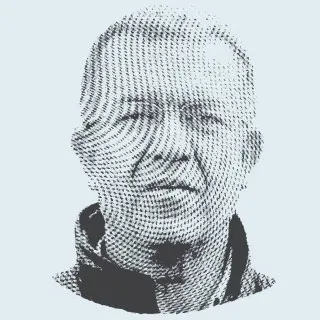
The theater movement presupposed women taking to the stage, and that was no easy step. Actresses began to appear in roles that conformed to prevailing social norms. Among the earliest and most prominent of them was Hayat Al-Fahad, who passed away last week at the age of 78.
Kuwait’s cultural life flourished, advancing day by day until the catastrophe of the Iraqi invasion. The occupation slowed the momentum of this renaissance and its expressions, but its overall trajectory endured. Kuwaitis had their own newspapers, singers, and actresses before this became common across other Gulf states.
Hayat Al-Fahad carried her experience from the stage to television, securing a lasting place for herself in its stories and narratives. Before that, she had worked in radio, after a long struggle to convince her mother to allow her into public life. It was not an easy path for an orphan raised in a modest household.
In every program, she left her mark: the image of the working woman, burdened by hardship that never leaves her. She belonged to a generation whose identity and self-image were bound to their craft, unable to live outside their profession, or their “mission.” At first, her mother opposed her decision to pursue art as a career. In time, it became her entire life.