


Syria’s Grand Mufti Warns Against Acts that Could Fuel Strife

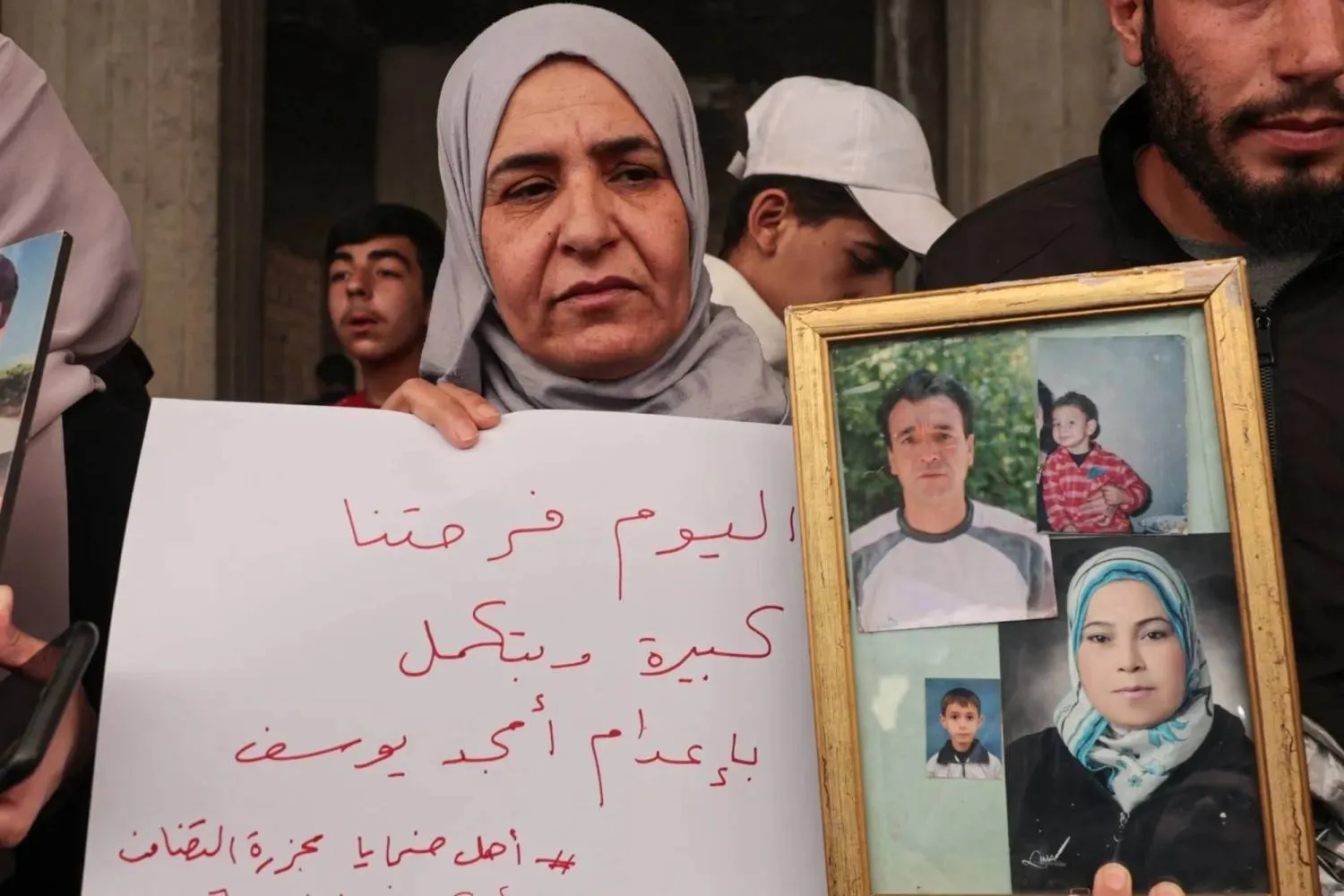
A Syrian woman holds pictures on April 24, 2026, of relatives killed by former regime forces in the 2013 Tadamon massacre south of Damascus. (EPA)
TT

Syria’s Grand Mufti Warns Against Acts that Could Fuel Strife

A Syrian woman holds pictures on April 24, 2026, of relatives killed by former regime forces in the 2013 Tadamon massacre south of Damascus. (EPA)

Syria’s Grand Mufti Sheikh Osama al-Rifai has called for calm after days of protests demanding the prosecution of supporters of the former regime, warning citizens against “undisciplined actions that could open the door to strife,” the official Syrian news agency SANA reported.

Rifai said Friday that accountability for criminals must be left to the state and its relevant agencies. He said demands for justice and for holding those involved in violations to account were “a legitimate right,” but must be pursued through the state and the law, not through unorganized individual or collective action.

“What the Syrian people endured over 60 years of injustice and suffering because of the practices of the defunct regime and its loyalists requires wise conduct today, far from strife,” SANA quoted him as saying.

He said the responsibility for applying the law and holding suspects accountable rests with the relevant state institutions, urging people to trust judicial and official procedures rather than resorting to individual acts that could have dangerous repercussions for social security.

AFP reported that dozens of Syrians joined a protest overnight Tuesday into Wednesday in which shops and cars were vandalized in a Damascus neighborhood. Protesters demanded that loyalists of the former rule be held to account, part of wider mobilizations that began in several areas and prompted the authorities to warn against turning to “revenge.”

Neighborhoods seen as supportive of the former regime in several areas, including Aleppo and Idlib, have seen similar protests in recent days. Demonstrators called for the trial of those they described as “shabiha” and “remnants of the regime,” terms used for loyalists of the ousted president, Bashar al-Assad.

Residents said the protests included attacks on private property, fueling tensions and fears of acts outside the law as the authorities work to launch a transitional justice process after years of war, AFP reported.

Videos on social media showed dozens of people moving through the Mezzeh 86 neighborhood, which had a mostly Alawite population. Shops and cars were attacked and chants were directed against residents.

A similar demonstration took place outside the nearby Great Mezzeh Mosque, demanding the expulsion of “shabiha,” before security forces deployed to control the situation and asked residents to stay in their homes.

The Ash al-Warwar neighborhood on the outskirts of Damascus, which also has a mostly Alawite population, saw a similar protest on Monday night, an AFP photographer reported.

Leaflets have spread in several provinces in recent days, giving loyalists of the former rule the choice between leaving the country or staying in their homes “awaiting accountability.”

The first such protest began last week in Kafr Aweed in rural Idlib, in the northwest of the country.

The protests came despite the authorities starting trials of former security and military officials from the previous rule, and announcing the arrest of about 6,000 people, including soldiers, officers and loyalists linked to the former rule. The authorities are trying to contain the protests, which have raised concerns among rights advocates.

Syrian President Ahmad al-Sharaa said last week, while receiving a delegation from Damascus, that “it is important that transitional justice not be used as a pretext for revenge or as a tool for domination,” warning that otherwise “we would be confronting one injustice with another.”

Arrests over the 2020 strike on Jabal al-Duwaila camp

In a related development, SANA said internal security units in Idlib province arrested Issa Ghannam and Fadi Maarouf on suspicion of leaking the coordinates of an opposition camp in Jabal al-Duwaila in the city of Kafr Takharim, Idlib province, in 2020.

The agency quoted the Interior Ministry as saying investigations showed that “Fadi Maarouf, known as Abu Jahl, sent the site’s coordinates to Issa Ghannam, who in turn transferred them to Brigadier General Abdulrahman Najm, head of the State Security branch under the defunct regime. The camp was then hit by direct air strikes during a meeting of its members, causing more than 100 deaths and injuries.”

The Interior Ministry statement did not say which faction the targeted camp belonged to or who carried out the strike.

Reports at the time said Russian warplanes bombed a parade by fighters at a Faylaq al-Sham camp, affiliated with the National Front for Liberation, in al-Duwaila in the Kafr Takharim area near the Turkish border, on Oct. 26, 2020, causing dozens of deaths and injuries.



Syrian Authorities Say Killed Assad-Era Officer After Clash

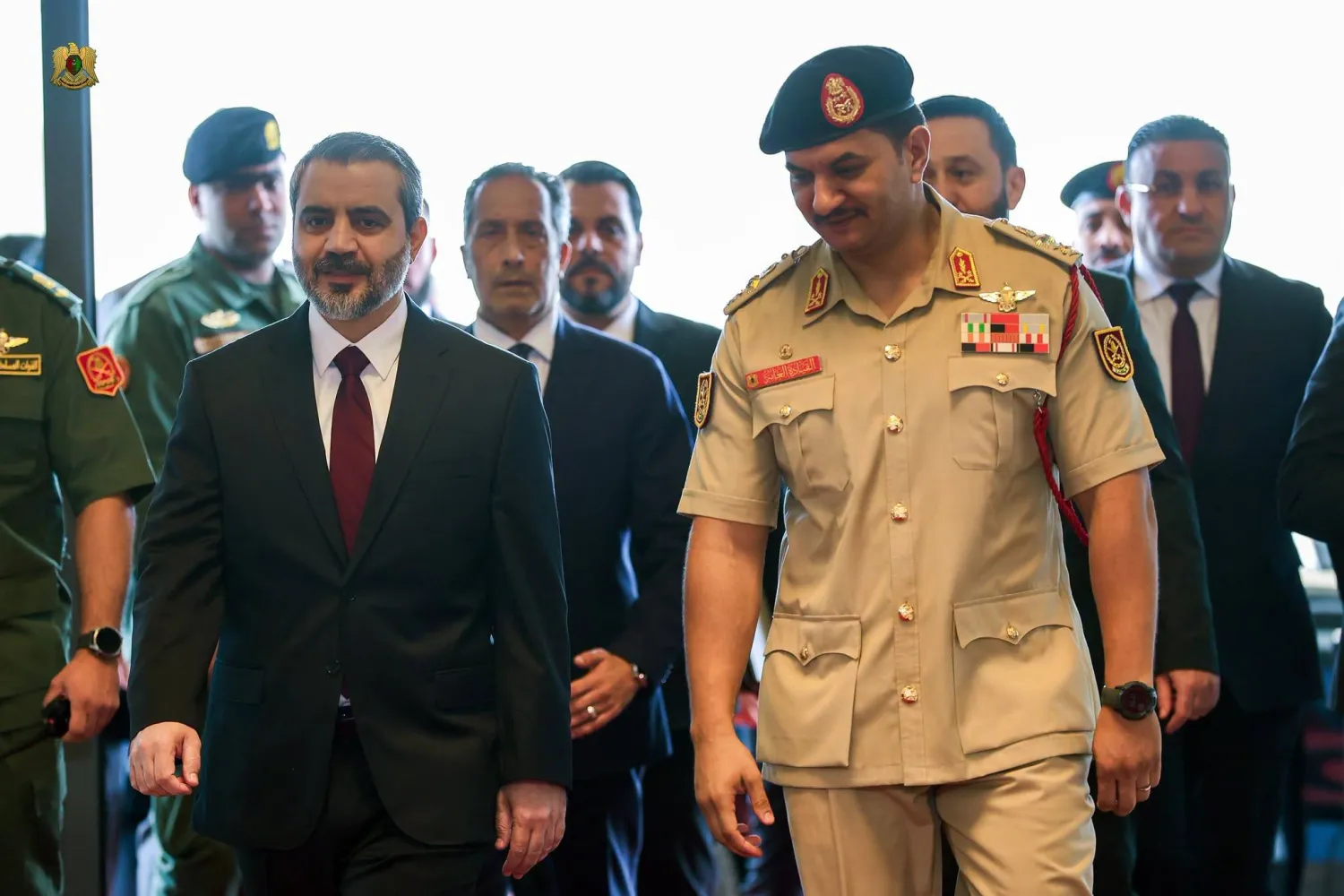
A member of Syria's internal security forces in Tartus city. (SANA)
TT

Syrian Authorities Say Killed Assad-Era Officer After Clash

A member of Syria's internal security forces in Tartus city. (SANA)

Syrian security forces said on Sunday that they killed an army commander who served under ousted ruler Bashar al-Assad, after he opened fire on them as they tried to arrest him.

In a statement, the forces accused Firas Abdul Karim Hammoud of having taken part in anti-government insurrections that killed security personnel.

Since Assad's fall in December 2024, Syria's new authorities have arrested dozens of security officials from his rule, and trials began in April.

The security forces said they "neutralized Firas Abdul Karim Hammoud... following an armed clash and a raid on his hideout in the town of Safita" in Tartus province in the coastal Alawite heartland.

Hammoud had previously "opened fire on security personnel during an attempt to arrest him", they added.

"During the recent operation, he again opened fire and initiated a firefight with the security forces... necessitating their response."

They said Hammoud served as a commander of the special forces in the so-called "25th Division" under Assad's rule.

They accused him of working under Assad-era general Ghiath Dalla in leading pro-Assad groups on the coast after the former president's fall.

They added that he was involved in "armed insurrection operations" against state institutions that killed security personnel.

Dalla, a former officer in the much-feared Fourth Brigade, had announced on social media last year the formation of a "military council for the liberation of Syria".

The announcement came shortly before deadly violence targeting the Alawite minority, to which Assad's family belongs, erupted on the Syrian coast in March 2025.

Authorities accused armed Assad supporters of sparking the violence by attacking security forces in an ambush.


Iraq Sentences US-Sanctioned Oil Official to Prison

The sun sets behind apartment buildings in Baghdad, Iraq, Friday, Aug. 28, 2026. (AP)
TT

Iraq Sentences US-Sanctioned Oil Official to Prison

The sun sets behind apartment buildings in Baghdad, Iraq, Friday, Aug. 28, 2026. (AP)

Iraq sentenced a US-sanctioned oil official to seven years in prison after he was arrested as part of a government-led anti-corruption campaign, the country's anti-graft body said on Sunday.

Deputy oil minister for distribution affairs Ali al-Bahadli is among dozens of officials who were detained in June during anti-graft raids that took place in several areas, mostly in Baghdad's fortified Green Zone.

The Commission of Integrity said in a statement that an anti-corruption court sentenced Bahadli to seven years in prison for "illicit gains".

The ruling requires Bahadli to return to the state an amount equivalent to more than $20 million in ill-gotten gains, in addition to paying a fine of the same amount.

The United States imposed sanctions on Bahadli in May, accusing him of fraudulently mixing Iraqi and Iranian oil as part of a scheme to help Iran avoid sanctions.

At the time, Iraq's oil ministry denied the accusations against Bahadli, who was then arrested during the anti-graft raids.

Iraqi authorities said that the raids were part of new Prime Minister Ali al-Zaidi's campaign to fight the corruption that has plagued Iraq for decades.

But several Iraqi officials told AFP that the raids were also part of al-Zaidi's campaign against funding for pro-Iran armed groups and the smuggling of Iranian oil.

Iraq has been under mounting pressure from the United States to curb Tehran's influence and rein in Iran-backed armed factions, which Washington designates as terrorist groups.

Al-Zaidi, who took office this year with the blessing of the United States, has pledged to ensure the armed factions that emerged after the US-led invasion hand over their weapons to the state.

In Iraq, corruption is especially rampant across public institutions, but convictions typically target mid-level officials or minor players and rarely those at the top of the power hierarchy.


US News Agency Says Crew Attacked by Israeli Settlers in West Bank

 Israeli settlers look out through a metal fence, as an Israeli flag flutters nearby, on the day of their weekly tour in Hebron, in the Israeli-occupied West Bank, August 29, 2026. (Reuters)
Israeli settlers look out through a metal fence, as an Israeli flag flutters nearby, on the day of their weekly tour in Hebron, in the Israeli-occupied West Bank, August 29, 2026. (Reuters)
TT

US News Agency Says Crew Attacked by Israeli Settlers in West Bank

 Israeli settlers look out through a metal fence, as an Israeli flag flutters nearby, on the day of their weekly tour in Hebron, in the Israeli-occupied West Bank, August 29, 2026. (Reuters)
Israeli settlers look out through a metal fence, as an Israeli flag flutters nearby, on the day of their weekly tour in Hebron, in the Israeli-occupied West Bank, August 29, 2026. (Reuters)

Israeli settlers attacked an NBC crew in the central West Bank Saturday, as they were interviewing a Palestinian woman who said she’d been driven out of her house by settlers, the network said.

NBC’s American correspondent Matt Bradley, two other crew members and the woman they were interviewing were all treated for injuries sustained during the attack, NBC said. There were no further details on their injuries.

The assault was caught on video and shared by NBC, with footage showing masked settlers approaching the crew with sticks and beating the crew’s vehicles.

Israel’s military said it was “aware of reports of Palestinian injuries, including a Palestinian woman who sustained non-life-threatening injuries and was evacuated by the Red Crescent for medical treatment.” It did not comment on the attack on the NBC crew.

It was the latest in a growing wave of violence by West Bank settlers. Prime Minister Benjamin Netanyahu issued a rare condemnation of the violence on Saturday. The Israeli leader has come under heavy US criticism for the settler attacks.

Settlers seized British activist and held him locked in shed

Israeli settlers seized a British activist from a Palestinian village in the West Bank and locked him in a shed before turning him over to police, his lawyer said Sunday.

The lawyer, Inbar Shaked Vardi, said settlers held her client, Finn Joughin, for half an hour Saturday before turning him over to Israeli police. Joughin was set to appear before a Jerusalem court later Sunday, she said.

Video showed two settlers, one armed, restraining Joughin and marching him away from the village.

It was not immediately clear what led to his capture. Settlers say he assaulted a child, accusations Vardi vehemently denied.

Settlers point to a video where the activist uses his body in an apparent attempt to block a settler boy from passing through a fence. Vardi said the video shows he was trying to protect the village.

Police said they were investigating and holding Joughin in custody on suspicion of committing an indecent act against a minor.