Iran Says Lebanon Conflict 'Main Topic' in US Talks

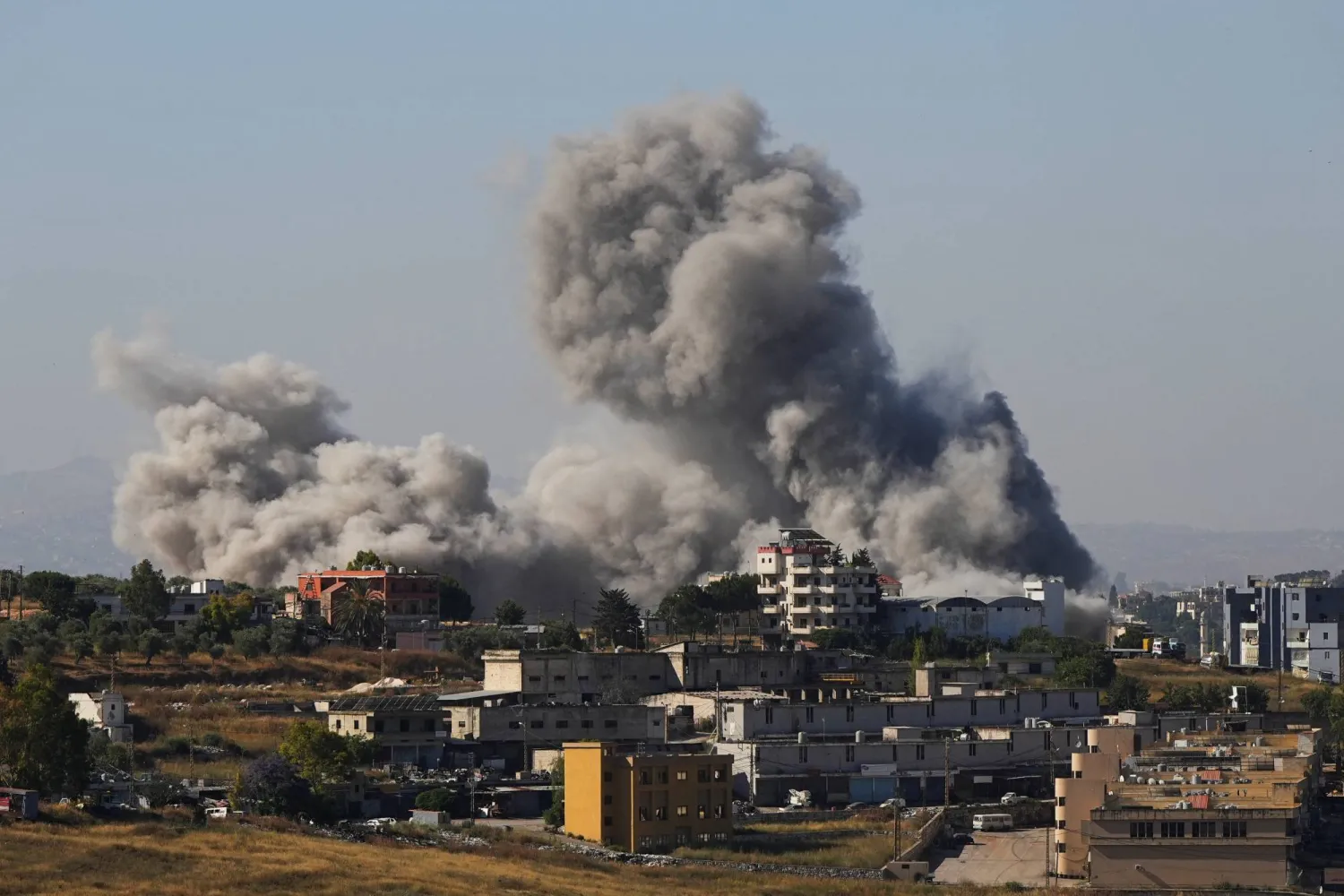
Smoke billows from southern Lebanon following an Israeli strike, as seen from Nabatieh, Lebanon, June 20, 2026. REUTERS/Stringer
TT

Iran Says Lebanon Conflict 'Main Topic' in US Talks

Smoke billows from southern Lebanon following an Israeli strike, as seen from Nabatieh, Lebanon, June 20, 2026. REUTERS/Stringer

Iran said on Sunday that the ongoing conflict in Lebanon between Israel and militant group Hezbollah will top the agenda in talks with the United States in Switzerland, as well as issues such as frozen Iranian funds and the sale of the country's oil.

"The Zionist regime continues to violate its commitment in Lebanon, this issue will be the main topic of discussion in today's talks," foreign ministry spokesman Esmaeil Baqaei said in a video shared by IRNA state news agency.

Tehran said on Thursday it had signed a deal with Washington to end months of hostilities that began on February 28 following US-Israeli attacks on Iran.

Under the agreement, the Israel-Hezbollah conflict in Lebanon was also due to stop, said AFP.

Iran's military announced on Saturday that it has closed the Strait of Hormuz again over ongoing Israeli attacks in Lebanon.

But there were no reports of fresh strikes in Lebanon after Saturday evening and Baqaei said since Saturday "a fragile cessation (in Lebanon) has been established".

He added that Tehran would also pursue the issue of its frozen and inaccessible funds during the talks.

"The issue of making available Iran's frozen or restricted assets, as well as the discussion related to issuing the necessary licenses for the sale of Iranian oil, will also be on the agenda," he said from Switzerland.

Iran has not officially disclosed the value of its frozen assets, though media reports have estimated them at more than $100 billion, largely frozen since the 1979 Iranian Revolution that toppled the US-backed shah.

According to Baqaei, the Iranian delegation will meet the US delegation in a "quadrilateral meeting" that will also include mediators Pakistan and Qatar.


Al-Alimi Orders Field Investigation to Document Houthi Violations

An elderly man sits on a wheelchair next to a woman at a temporary shelter for internally displaced people (IDPs) at the Shawkani school, north of Aden in southern Yemen, on September 15, 2026. (Photo by AFP) /
TT

Al-Alimi Orders Field Investigation to Document Houthi Violations

An elderly man sits on a wheelchair next to a woman at a temporary shelter for internally displaced people (IDPs) at the Shawkani school, north of Aden in southern Yemen, on September 15, 2026. (Photo by AFP) /

Yemeni Presidential Leadership Council Chairman Rashad Al-Alimi directed the National Commission to Investigate Alleged Human Rights Violations to intensify field monitoring and investigations in Taiz, Hodeidah, Marib, and areas affected by Houthi attacks, as a Yemeni rights network documented the deaths and injuries of dozens of civilians and hundreds of violations in Taiz Governorate in less than two weeks.

During a meeting with the chairman and members of the National Commission to Investigate Alleged Human Rights Violations, Al-Alimi said that the developments witnessed in the country in recent days, particularly in Taiz, Hodeidah, and the western coast, had been accompanied by widespread displacement and attacks on civilian facilities and objects protected under international law.

He noted that the affected sites included warehouses belonging to the United Nations and international organizations, as well as the King Salman Humanitarian Aid and Relief Centre.

Al-Alimi called on the commission, within the framework of its mandate and independence, to intensify monitoring and investigations into incidents related to the recent events, including the killing and starvation of civilians, displacement, forced displacement, attacks on homes and civilian, medical, and educational facilities, damage to displacement camps, the planting of landmines, and any other violations of international humanitarian law or human rights law.

661 Violations

In a separate report, the Yemeni Network for Rights and Freedoms said it had documented 661 crimes and violations that it said were committed by the Houthi group against civilians in Taiz Governorate between September 3 and 15.

According to the report, the incidents included killings, injuries, field executions, shelling of civilian objects, abductions, arrests, raids on homes, destruction of property, and attacks on vital facilities and infrastructure.

The network reported that 51 civilians were killed and 62 others injured, most of them children and women, as a result of sniper fire, artillery and mortar shelling, drones, and ballistic missiles.

It also said the Houthis carried out the field execution of nine military personnel in front of their children in the districts of Al-Wazi'iyah, Maqbanah, and Al-Kadaha.

According to the report, the violations included 167 cases of abduction and arrest, most of them in districts under Houthi control, as well as raids on 213 homes in Al-Wazi'iyah, Maqbanah, and Al-Kadaha.

The network also documented attacks on five mosques, six health facilities, 16 electricity stations and generators, and nine communications networks and stations, as well as two bridges and two main roads, including the Hija Al-Abed road linking Aden and Taiz, in addition to 34 civilian means of transportation.

Displacement and Vulnerable Groups

The rights network said the figures reflected the widening scope of violations over a short period, noting that attacks on homes, health facilities, mosques, communications and electricity networks, roads, and means of transportation affect not only individuals but also the basic foundations of civilian life, making access to food, water, healthcare, and transportation more difficult.

It added that the latest clashes had led to a deterioration in the humanitarian situation in Taiz, with thousands of families displaced from various areas and severe shortages of food, water, and medicines, along with a decline in basic services, particularly electricity and water.

In another development, the network's field monitoring team said it had documented widespread recruitment operations that it said affected large numbers of African refugees and migrants, as well as Yemeni children.

The network said some of them were lured or forced to join the Houthi ranks and sent to the front lines in Taiz Governorate. It considered this a violation of international rules concerning the protection of children and civilians and said it exposed the most vulnerable groups to direct risks.

The Yemeni Network for Rights and Freedoms warned of the continued deterioration of the humanitarian situation in Taiz, calling on the international community and human rights organizations to document violations, protect civilians, and pressure for an end to attacks on civilians and civilian objects, while ensuring that aid and essential services reach those affected and displaced.



Israel Adds Tender for 2,167 Housing Units to Settlement Expansion Plan

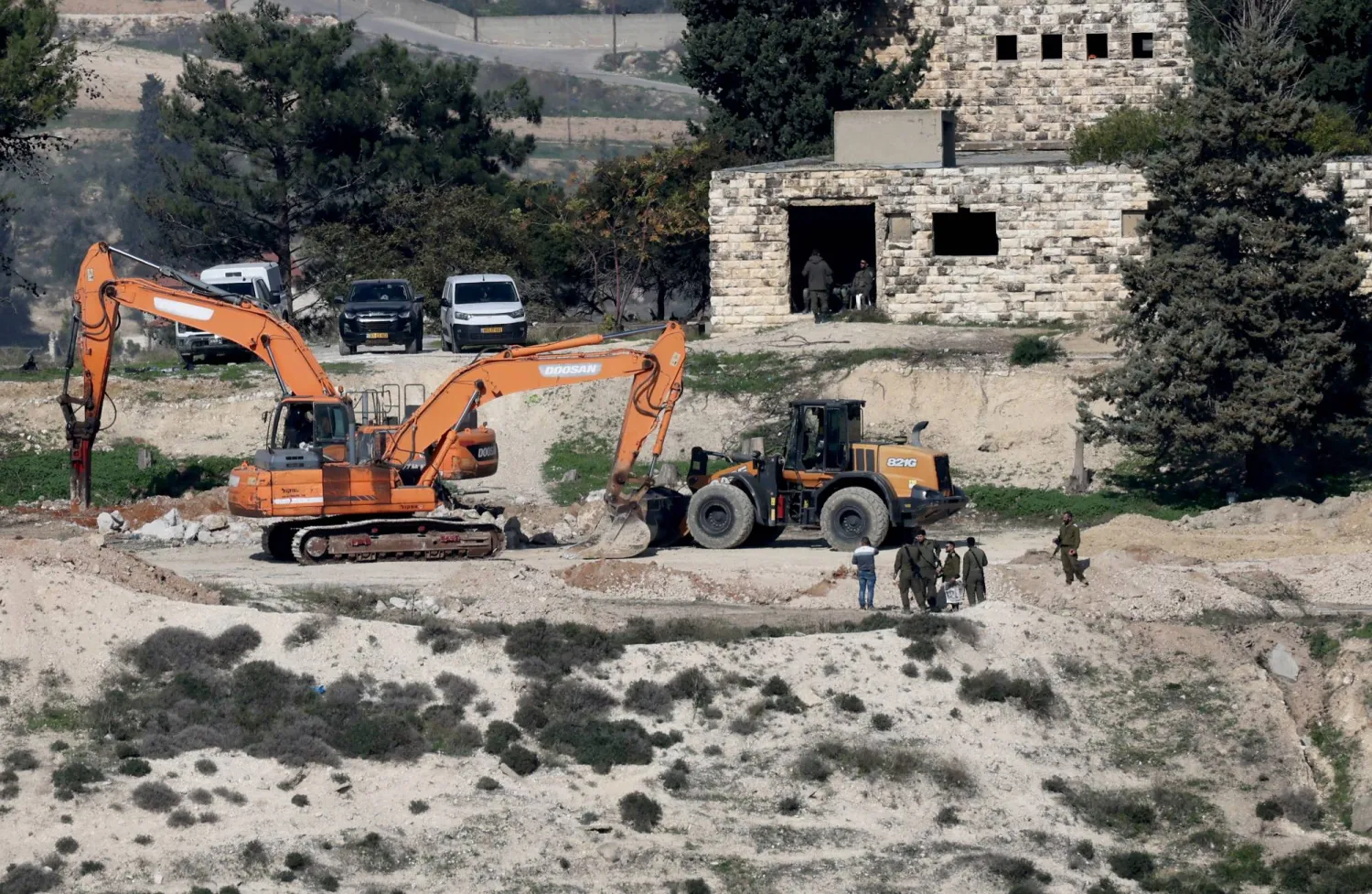
Israeli bulldozers level land at the evacuated Israeli settlement of Sanur, near the West Bank city of Jenin, 23 December 2025. EPA/ALAA BADARNEH
TT

Israel Adds Tender for 2,167 Housing Units to Settlement Expansion Plan

Israeli bulldozers level land at the evacuated Israeli settlement of Sanur, near the West Bank city of Jenin, 23 December 2025. EPA/ALAA BADARNEH

Israel has added ‌a tender for 2,167 housing units to its E1 settlement expansion plan, Israeli rights groups said of a project that critics say endangers a future Palestinian state.

The project would bisect the Israeli-occupied West Bank and cut it off from East Jerusalem, fragmenting the land Palestinians hope will form the heart of a state, said Reuters.

The tender for 2,167 units is in addition to a tender for 1,234 units announced at the end of August, ‌bringing the ‌total number of housing units to 3,401, ‌Israeli ⁠rights group Ir ⁠Amim said in a statement issued late on Wednesday.

The decision was condemned by a representative for Palestinian President Mahmoud Abbas on Thursday who said the E1 tenders were in violation of international law.

Israeli Finance Minister Bezalel Smotrich, an ultra-nationalist in the governing right-wing coalition, has said ⁠the plan would "bury" a Palestinian state.

The ‌tender is scheduled to ‌open for bidding on October 25, two days before Israel is ‌due to hold a parliamentary election.

Ir Amim ‌said the bidding date showed the government's resolve to push ahead with the E1 project and "create an increasingly irreversible reality on the ground ahead of the elections."

The Prime Minister's Office did ‌not immediately respond to a request for comment.

Many Western states and campaign groups ⁠have opposed ⁠the E1 settlement project over concerns that it could undermine a future peace deal with the Palestinians.

Britain, France and Canada banned exports from Israeli settlements in the West Bank last week. British Foreign Secretary Ed Miliband has said the E1 project risks making a Palestinian state unviable.

Under Israel's right-wing coalition government there has been a massive expansion of settlements in the West Bank.

UN bodies, Palestinians and most countries view the settlements as illegal under international conventions — a stance disputed by Israel — and as a major obstacle to peace.


Palestinian Authority: US Denial of Abbas Visa to Attend UN 'Unjustified'

FILE PHOTO: Palestinian President Mahmoud Abbas appears on a screen as he addresses delegates during a high-level meeting of heads of state on a two-state solution between Israel and the Palestinians at United Nations headquarters in New York City, US, September 22, 2025. REUTERS/Eduardo Munoz/File Photo
TT

Palestinian Authority: US Denial of Abbas Visa to Attend UN 'Unjustified'

FILE PHOTO: Palestinian President Mahmoud Abbas appears on a screen as he addresses delegates during a high-level meeting of heads of state on a two-state solution between Israel and the Palestinians at United Nations headquarters in New York City, US, September 22, 2025. REUTERS/Eduardo Munoz/File Photo

The Palestinian Authority on Thursday slammed a decision by the United States to refuse visas for its officials to attend the UN General Assembly in New York next week, a move which includes President Mahmoud Abbas.

In a statement, the Palestinian foreign ministry called it "an unjustified measure that runs counter to efforts to rebuild trust, develop Palestinian-US relations, and create the necessary political climate for implementing the two-state solution and achieving peace and stability.”

In a statement that did not mention Abbas by name, the State Department said Wednesday it would deny visas to members of the Palestine Liberation Organization (PLO) and officials with the Palestinian Authority (PA), "as a consequence of their failure to reform, contrary to their commitments to the United States, and their ongoing activities that undermine the prospects for peace."

The Trump administration took the same step last year, forcing the Palestinian leader, a regular at the UN General Assembly, to address the body of global leadership by video.