


Lebanese Expat Admits to Working with Israel in Abduction of Former Officer

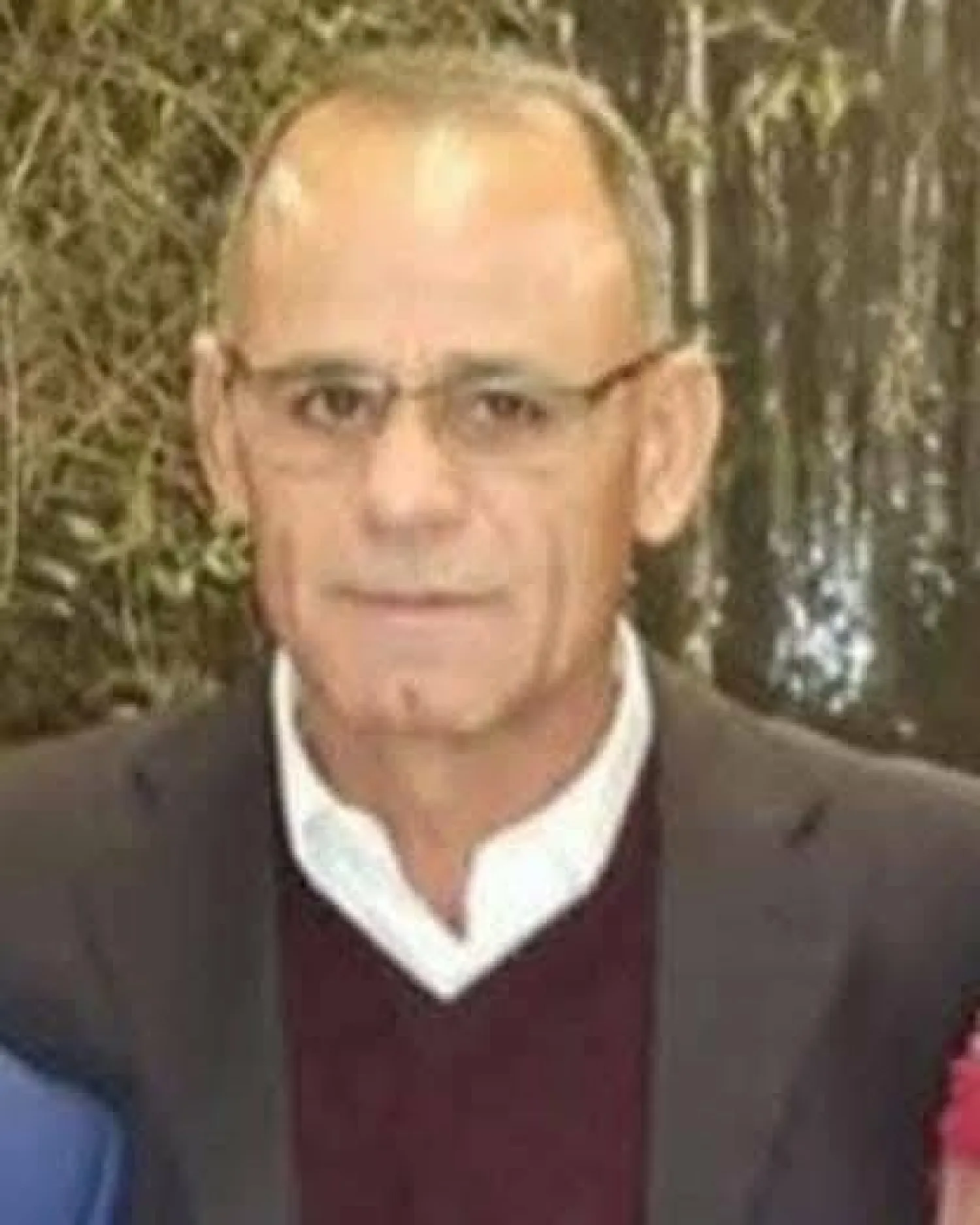
Retired Lebanese General Security officer Ahmad Shukr, who was abducted in eastern Lebanon (Family file photo / Asharq Al-Awsat)
TT

Lebanese Expat Admits to Working with Israel in Abduction of Former Officer

Retired Lebanese General Security officer Ahmad Shukr, who was abducted in eastern Lebanon (Family file photo / Asharq Al-Awsat)

Lebanese authorities have concluded their investigation into the abduction and disappearance of retired General Security captain Ahmed Shukr, reaching what officials described as a “decisive conclusion” three weeks after he vanished under mysterious circumstances.

A senior judicial source told Asharq Al-Awsat that Shukr was kidnapped in a “highly precise and complex security operation” planned and executed by Israel’s Mossad, which exploited security gaps and relied on the direct cooperation of a Lebanese operative recruited specifically for the mission.

The source stressed that the operation “was not random, but part of an organized intelligence effort,” adding that Shukr was targeted for reasons that remain unknown.

Public Prosecutor Judge Jamal Hajjar ordered the closure of the investigation’s preliminary phase, during which only one suspect was arrested: A Lebanese expatriate residing in Africa, believed to have worked for the Mossad and to have played a central role in luring and abducting Shukr.

According to the judicial source, the suspect initially denied any involvement but soon confessed to cooperating with the Mossad and carrying out multiple assignments, including the task of luring Shukr prior to his abduction.

He admitted to meeting Mossad officers in Africa and receiving payments ranging from $5,000 to $10,000 for each mission.

Investigators said the suspect had prior acquaintance with Shukr, enabling him to build a relationship of trust. After returning to Lebanon roughly ten days ago — apparently in an attempt to dispel suspicion — the suspect rented an apartment owned by Shukr in the town of Choueifat.

Investigators described this detail as crucial in understanding how Shukr was drawn into the trap, alongside other technical and logistical evidence that reinforced the conclusion the operation was carried out with high precision under the supervision of a professional intelligence service.

The suspect’s confessions were corroborated by technical evidence, particularly telecommunications data tracing Shukr’s movements and the timing of his disappearance.

While the initial phase of the investigation has been concluded, authorities say it remains open to the possible involvement of additional suspects believed to be inside Lebanon. Efforts are also ongoing to determine Shukr’s fate, which remains unknown.

The case is expected to be referred to Government Commissioner to the Military Court Judge Claude Ghanem for prosecution of the suspect and anyone else implicated.

Hajjar has also issued search warrants for two individuals—a Swedish national of Syrian origin and a French national of Lebanese origin, suspected of luring Shukr from his hometown of Nabi Sheet to an area near Zahle under the pretext of assisting with a property purchase.

Both men disappeared following Shukr’s abduction. The Swedish suspect is known to have left Lebanon via Beirut’s international airport within hours, while it remains unclear whether the French suspect fled illegally.

Investigators believe the operation may be linked to the long-standing case of Israeli pilot Ron Arad, who went missing in Lebanon in 1986.

Shukr’s family has rejected links to Fuad Shukr, a Hezbollah official killed by Israel in July 2024 in Beirut’s southern suburbs, saying no one in the town even knew him.


US Pauses Some Aid to Somalia, South Sudan over 'Theft'

FILE - Workers distribute food aid from the World Food Program at a refugee camp in Dolo, Somalia on July 18. 2012. (AP Photo/Jason Straziuso, file)
TT

US Pauses Some Aid to Somalia, South Sudan over 'Theft'

FILE - Workers distribute food aid from the World Food Program at a refugee camp in Dolo, Somalia on July 18. 2012. (AP Photo/Jason Straziuso, file)

The United States paused aid in Somalia and South Sudan on Thursday over reports of theft and government interference, declaring a "zero-tolerance policy" for the misuse of its assistance.

The suspension of aid to Somalia followed the destruction of a US-funded World Food Program (WFP) warehouse in the capital Mogadishu's port.

The US Under Secretary for Foreign Assistance, Humanitarian Affairs and Religious Freedom posted on X late Wednesday that Somali officials had "illegally seized 76 metric tons of donor-funded food aid for vulnerable Somalis".

A WFP spokesperson confirmed to AFP that the warehouse had been demolished by port authorities, but the government and two local sources said the food had not been stolen.

"The warehouse was partially demolished during the weekend without the knowledge of the WFP team, but there was no looting involved," a WFP staff member in Mogadishu, speaking on condition of anonymity, said.

"All the stocked supply was kept intact. The government gave the space for WFP to build the warehouse in the first place, and they wanted it back," a port staff member, also speaking anonymously, told AFP.

In a statement, the Somali government said the warehouse was demolished as part of "expansion and repurposing works" at the port.

US officials said any future aid would be "dependent on the Somali Federal Government taking accountability" and resolving the matter.

Meanwhile, the US embassy in South Sudan, another conflict-hit country in east Africa, said it was suspending parts of its aid program over the "continued abuse, exploitation, and theft directed against US foreign assistance by South Sudanese officials at national, state, and county levels".

It highlighted the detention of a US-linked aid worker after he refused to illegally hand over assets to a county commissioner in South Sudan's Ayod County in Jonglei state, and the refusal to allow the transfer of US-funded pharmaceutical supplies in Bahr el-Ghazal state.

The embassy said it was suspending aid in Ayod County and "considering significant reductions" in Bahr el-Ghazal.

The Trump administration has slashed aid over the past year.

Somalis in the United States have also become a particular target for the administration in recent weeks, targeted in immigration raids.

They have also been accused of large-scale public benefit fraud in Minnesota, which has the largest Somali community in the country with around 80,000 members.

There has also been a rift with Somalia over Israel's recognition of Somaliland, a breakaway region of Somalia, which was supported by the US.


Syrian Government Announces Ceasefire in Aleppo After Deadly Clashes

Security forces affiliated with the Ministry of the Interior stand guard in the Ashrafieh neighborhood, which they have taken control of, according to the Ministry of the Interior, following battles with the Syrian Democratic Forces, in Aleppo, Syria, January 9, 2026. (Reuters)
TT

Syrian Government Announces Ceasefire in Aleppo After Deadly Clashes

Security forces affiliated with the Ministry of the Interior stand guard in the Ashrafieh neighborhood, which they have taken control of, according to the Ministry of the Interior, following battles with the Syrian Democratic Forces, in Aleppo, Syria, January 9, 2026. (Reuters)

Syria's defense ministry announced a ceasefire in Aleppo on Friday after days of deadly clashes between the army and Kurdish fighters forced thousands of civilians to flee.

The violence, which has killed at least 21 people, is the worst to erupt since the new authorities took power just over one year ago.

The Syrian government forces have been fighting the US-backed Kurdish-led Syrian Democratic Forces (SDF) in the country's second city since Tuesday.

Both sides have traded blame over who started the fighting, which comes as they struggle to implement a deal to merge the Kurds' administration and military into the country's new government.

The SDF controls swathes of Syria's oil-rich north and northeast, and was key to the territorial defeat of the ISIS group in Syria in 2019.

"To prevent any slide towards a new military escalation within residential neighborhoods, the Ministry of Defense announces ... a ceasefire in the vicinity of the Sheikh Maqsud, Ashrafiyeh and Bani Zeid neighborhoods of Aleppo, effective from 3:00 am," the Ministry of Defense wrote in a statement.

Kurdish fighters were given until 9:00 am Friday (0600 GMT) to leave those areas.

The goal is for civilians who were displaced by the fighting to be able "to return and resume their normal lives in an atmosphere of security and stability," the ministry added.

The governor of Aleppo, Azzam Algharib, told the official SANA news agency that he had inspected the security arrangements in the Ashrafiyeh neighborhood.

There was no immediate comment from Kurdish forces in response to the government statements.

- 'No to war' -

An AFP correspondent reported fierce fighting across the Kurdish-majority Ashrafiyeh and Sheikh Maqsud districts into Thursday night.

Syria's military had instructed civilians in those neighborhoods to leave through humanitarian corridors ahead of launching the operation.

State television reported that around 16,000 people had fled.

"We've gone through very difficult times... my children were terrified," said Rana Issa, 43, whose family left Ashrafiyeh earlier Thursday.

"Many people want to leave", but are afraid of the snipers, she told AFP.

Mazloum Abdi -- who leads the SDF -- said attacks on Kurdish areas "undermine the chances of reaching understandings", days after he visited Damascus for talks on the March integration deal.

The agreement was meant to be implemented last year, but differences, including Kurdish demands for decentralized rule, have stymied progress.

Sheikh Maqsud and Ashrafiyeh have remained under the control of Kurdish units linked to the SDF, despite Kurdish fighters agreeing to withdraw from the areas in April.

Türkiye, which shares a 900-kilometer (550-mile) border with Syria, has launched successive offensives to push Kurdish forces from the frontier.

Aron Lund, a fellow at the Century International research center, told AFP that "Aleppo is the SDF's most vulnerable area".

"Both sides are still trying to put pressure on each other and rally international support," he said.

He warned that if the hostilities spiral, "a full Damascus-SDF conflict across northern Syria, potentially with Turkish and Israeli involvement, could be devastating for Syria's stability".

Israel and Türkiye have been vying for influence in Syria since the December 2024 toppling of longtime ruler Bashar al-Assad.

In Qamishli in the Kurdish-held northeast, hundreds of people have protested the Aleppo violence.

"We call on the international community to intervene," said protester Salaheddin Sheikhmous, 61.

In Türkiye, several hundred people joined protests in Kurdish-majority Diyarbakir.


Al-Alimi Sacks Yemen Defense Minister

Sacked Defense Minister and commander of the armed forces Mohsen al-Daeri. (Asharq Al-Awsat)
TT

Al-Alimi Sacks Yemen Defense Minister

Sacked Defense Minister and commander of the armed forces Mohsen al-Daeri. (Asharq Al-Awsat)

Chairman of Yemen's Presidential Leadership Council Dr. Rashad al-Alimi sacked on Thursday Defense Minister and commander of the armed forces Mohsen al-Daeri, referring him to retirement, according to a presidential decree.

Political and military sources said the move stemmed from Daeri's failure in addressing the military escalation by the Southern Transitional Council (STC) in several liberated governorates, notably Hadhramaut and al-Mahra.

On Wednesday, al-Alimi dismissed several military and civil officials in the two governorates and Aden for supporting the STC's rebellion and military escalation.

The dismissals included Ahmed Hamed Lamlas, Minister of State and Governor of Aden Governorate, Abdul Salam Saleh Humaid Hadi, Minister of Transport, and Waed Abdullah Badeeb, Minister of Planning and International Cooperation, among others.