Saudi Arabia Underscores its Continued Efforts to Support Palestinian Causehttps://english.aawsat.com/gulf/5148112-saudi-arabia-underscores-its-continued-efforts-support-palestinian-cause
Saudi Arabia Underscores its Continued Efforts to Support Palestinian Cause
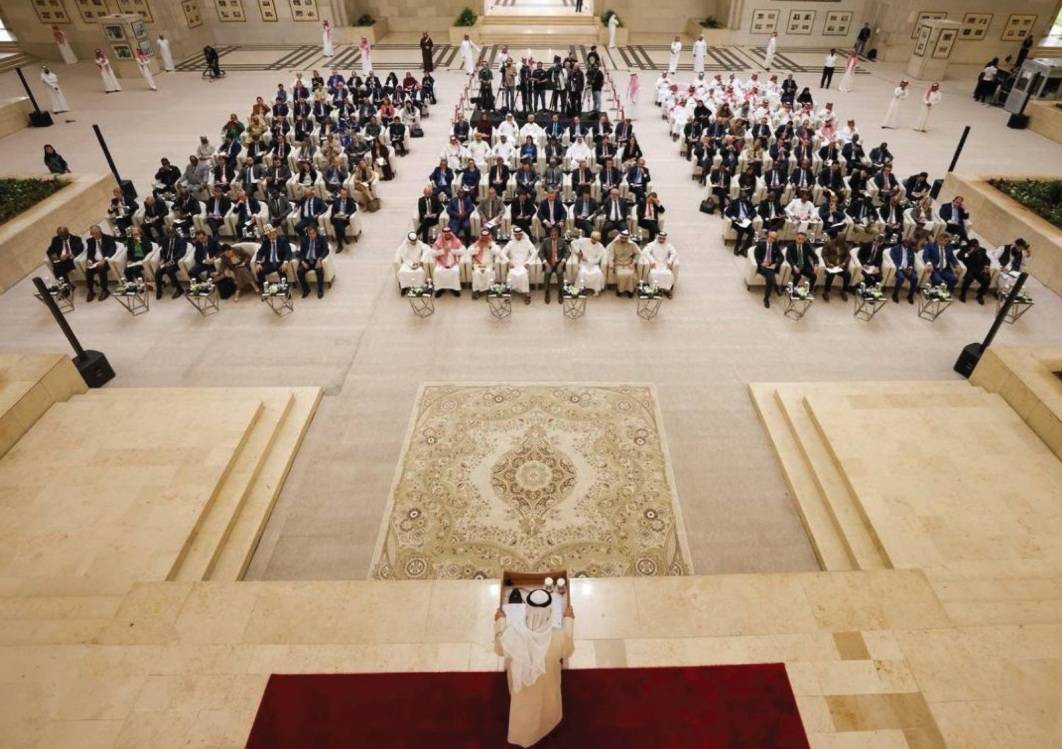
Prince Mohammed bin Salman bin Abdulaziz, Crown Prince and Prime Minister, chairs the cabinet meeting in Jeddah. (SPA)
TT
TT
Saudi Arabia Underscores its Continued Efforts to Support Palestinian Cause
Prince Mohammed bin Salman bin Abdulaziz, Crown Prince and Prime Minister, chairs the cabinet meeting in Jeddah. (SPA)
The Saudi government underlined on Tuesday its ongoing efforts with members of the international community to support the Palestinian cause, end the war on Gaza, allow the flow of humanitarian aid and cease the Israeli violations against international laws and norms.
Prince Mohammed bin Salman bin Abdulaziz, Crown Prince and Prime Minister, chaired the cabinet meeting that was held in Jeddah.
The ministers reviewed the latest regional and international developments and Saudi Arabia’s contacts and meetings with world countries over the past week that are aimed at bolstering cooperation and coordination on global affairs.
The cabinet was briefed on the Kingdom’s preparations to organize the Hajj pilgrimage, which begins next week. The pilgrimage will be held according to the highest standards and greatest levels of coordination and integration between the relevant entities to allow the pilgrims to perform the holy rituals with ease.
Saudi Arabia has dedicated mega development projects and infrastructure to serve pilgrims from across the globe.
The cabinet expressed the Saudi leadership and people’s honor in serving the visitors of the two holy mosques in Makkah and Madinah, in continuation of its pioneering role in the Islamic world.
It asked God Almighty that the pilgrims perform their rituals safely and at ease.
The cabinet reviewed Saudi Arabia’s participation at the ASEAN-Gulf Cooperation Council and Gulf-ASEAN-China meetings in Malaysia. The Kingdom stressed its support to international initiatives aimed at achieving sustainable development and regional stability and that will help build a prosperous future for the world.
The cabinet also highlighted Saudi Arabia and Kuwait’s new oil discovery in the Neutral Zone, saying it was a positive step that will bolster bilateral cooperation in the energy sector.
Gulf Cooperation Council countries, under sustained Iranian attack, are closely tracking indirect US-Iran talks that Pakistan said on Thursday it is facilitating by relaying messages between the two sides.
Data monitored by Asharq Al-Awsat showed that by Wednesday evening, about 83% of Iran’s missile and drone attacks since the war entered its fourth week had targeted Gulf Arab states, compared with 17% aimed at Israel.
The tally recorded 4,391 missiles and drones striking Gulf countries, hitting critical infrastructure and civilian sites, versus 930 launched at Israel, which is leading the war.
Shaping the next phase
Gulf states on Thursday began to outline their stance on any negotiations over the conflict’s future.
Jasem Albudaiwi, Secretary-General of the Gulf Cooperation Council, said the bloc must be included “in any talks or agreements to resolve this crisis,” to safeguard security and prevent further attacks.
He rejected any frameworks, initiatives, or regional arrangements aimed at reshaping the Middle East after this conflict ends, underscoring Gulf insistence on a role in defining the region’s next phase.
Diplomacy first
Albudaiwi said international law allows states multiple options under the UN Charter, but stressed that the most rational and effective option is the diplomatic and political one.
Ahmed Al-Ibrahim, a political analyst specializing in US affairs, said Gulf states view US-Iran talks with cautious realism.
They do not oppose negotiations, but want outcomes that address what they see as the core threat, not only Iran’s nuclear program, but also its ballistic missiles and regional influence in Yemen, Lebanon, and Iraq.
A joint statement by five Gulf states and Jordan on Wednesday condemned attacks by Iran-aligned factions in Iraq on regional countries and infrastructure. It urged Baghdad to act immediately to halt such attacks launched from its territory and avoid further escalation.
Trust frays
Al-Ibrahim said Gulf confidence in both sides is limited. That view was reinforced by remarks from the Saudi foreign minister last week that “trust in Iran has been shattered.”
Al-Budaiwi said GCC states were surprised by US-Israeli strikes on Iran and had made clear they would not take part in military action or allow their territory to be used against Iran.
Despite that, Tehran still carried out what he described as a “treacherous attack” on GCC states.
He expects Gulf countries to pursue a dual track, backing de-escalation while strengthening defenses and expanding security partnerships. The Gulf, he said, rejects “incomplete deals” that fail to change Iran’s behavior or ensure regional security.
Seat at the table
Gulf security specialist Dhafer Al-Ajmi said GCC participation in any US-Iran talks on regional security is a “sovereign right,” not a request.
“We will not accept having our future shaped in our absence. Our seat at the table is the only guarantee for real and lasting peace,” he said.
Al-Ajmi said Gulf states have borne the brunt of the war’s costs and tensions. Their participation, he said, aims to secure binding guarantees to protect livelihoods and stability.
Any deal that ignores sovereignty and non-interference would be “incomplete and doomed to fail.”
Political analyst Ibrahim Raihan said Gulf states, while showing “wisdom” in handling the crisis, support de-escalation in principle. But he said the root problem remains Iran’s conduct, particularly violations of Gulf sovereignty, despite efforts before the war to avert conflict.
Three demands
Raihan said both Iran and Israel are seeking to widen the war. He outlined three priorities for any negotiations: de-escalation, guarantees to protect shipping routes, and a clear Iranian apology to neighboring Arab states for violations of their sovereignty.
Separately, the United Nations Human Rights Council on Wednesday condemned Iranian attacks on Gulf states as “egregious” and called on Tehran to provide swift compensation to those affected.
Albudaiwi: Regional Arrangements Excluding Gulf States Are Rejectedhttps://english.aawsat.com/gulf/5255637-albudaiwi-regional-arrangements-excluding-gulf-states-are-rejected
Albudaiwi: Regional Arrangements Excluding Gulf States Are Rejected
Albudaiwi affirmed that Gulf states had long been a pillar of regional and global stability (GCC)
Secretary-General of the Gulf Cooperation Council (GCC) Jasem Albudaiwi on Thursday called for Gulf states to be included in talks or agreements to resolve the crisis between Iran and the US and Israel.
“We stress the importance of involving GCC countries in any talks or agreements to resolve this crisis, in a way that contributes to strengthening their security and stability,” said Albudaiwi.
He added that the bloc rejected “any arrangements intended to redraw the map of the Middle East after the conflict ends.”
He said the GCC’s first choice was a diplomatic and political solution, describing it as “the wisest and most successful option,” while noting that Gulf states were reviewing all options in line with international law and the UN Charter.
Speaking in Riyadh to Arab and foreign ambassadors, Albudaiwi urged partners to send a unified international message to Iran demanding an immediate and unconditional halt to attacks on GCC states.
He said the Gulf’s goal “has never been to destroy Iran or weaken it, but to reach a normal relationship based on mutual respect, non-interference and non-aggression.”
He rejected framing the situation as part of “Middle East complexities,” calling it “a blatant violation of international law” and “a systematic targeting” of states not involved in any conflict.
Albudaiwi said Gulf states would not accept becoming targets of aggression (GCC)
Albudaiwi said GCC states had long been a pillar of regional and global stability, a reliable energy source, and a responsible economic partner. But he said they would not accept becoming targets of aggression, arenas for regional rivalries, or seeing their citizens killed without accountability.
He said Iranian attacks over 25 days had exceeded 5,000 ballistic missiles and drones targeting GCC states.
Albudaiwi revealed that 85% of Iranian missiles launched in the war were aimed at Gulf states.
He praised Gulf air defenses for limiting the impact of the attacks, but said that this does not diminish the scale of the aggression or absolve Iran of full responsibility.
He said Iran had “crossed every line” by closing the Strait of Hormuz, blocking commercial ships and oil tankers, and imposing transit fees, in violation of international law.
He also cited repeated ship hijackings and attacks carried out through Iran’s regional proxies.
He warned that disruption to shipping would hit not only Gulf states but the global economy, especially as some countries face oil and gas shortages.
Albudaiwi explained that maritime passages are governed by international agreements, and no party can obstruct them or impose conditions.
The impact of closing the Strait of Hormuz may begin with higher energy prices, but its cumulative repercussions on the global economy, energy markets, marine insurance, and civil aviation would be catastrophic.
“What happens in the Strait of Hormuz does not stay in the Strait of Hormuz,” he added.
Albudaiwi said Gulf states were surprised by US and Israeli strikes on Iran, stressing they had made clear they would not take part in military action or allow their territory to be used against Iran, and had informed Tehran of that.
“Yet this position did not prevent it from attacking GCC states,” he said.
He said GCC states had shown restraint and chosen not to respond to avoid widening the conflict, and in the hope that Iran would come to its senses and stop these attacks.
He said Gulf states produce about 16 million barrels per day of crude oil, or 22% of global output, and account for 27% of global oil exports, or 11.5 million barrels per day.
They also hold 33% of global oil reserves and 21% of natural gas reserves.
These figures make the Gulf an indispensable pillar of the global economy, Albudaiwi affirmed, warning that any disruption would directly affect energy security and global economic stability.
Zelenskyy Arrives in Jeddahhttps://english.aawsat.com/gulf/5255557-zelenskyy-arrives-jeddah
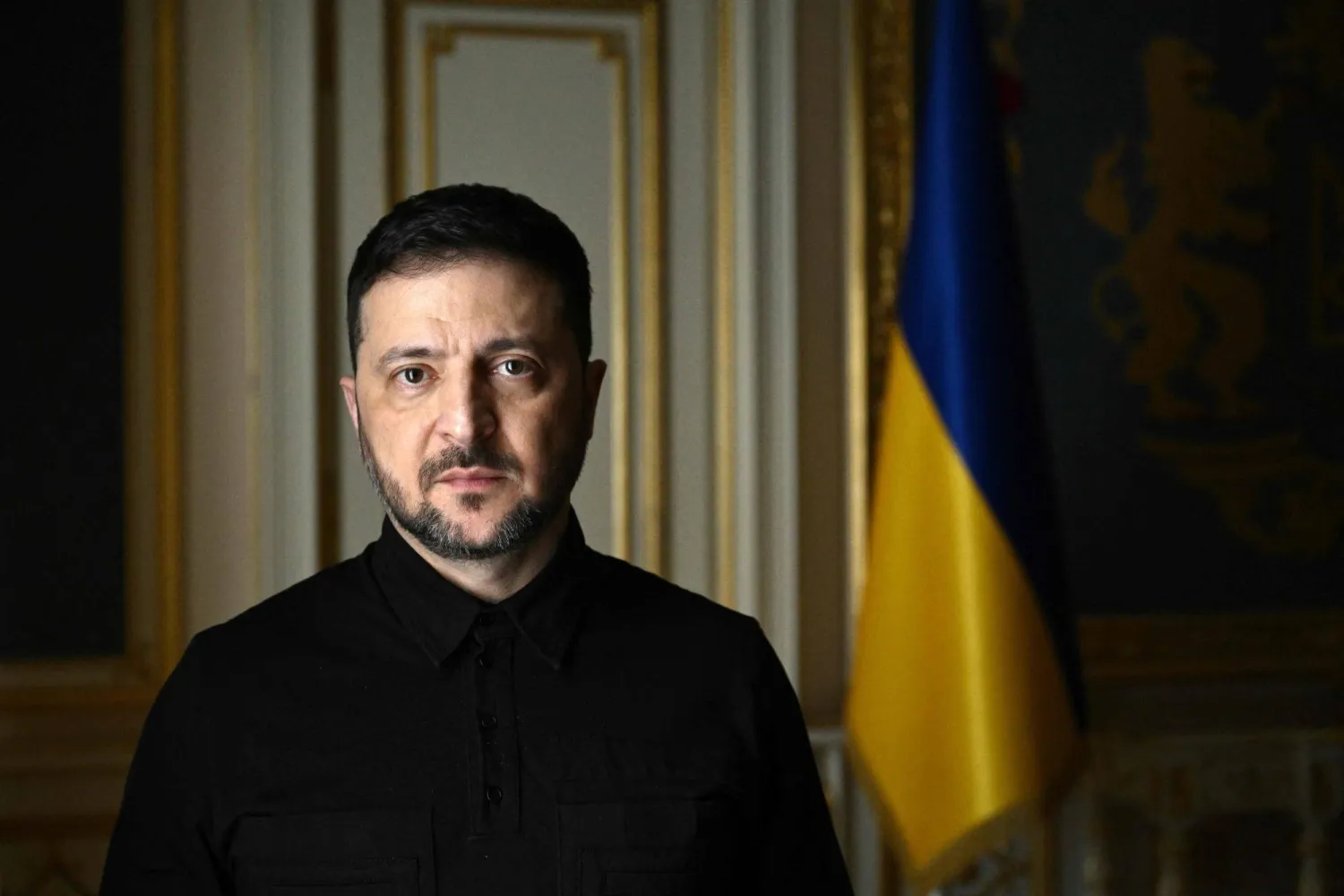
Ukrainian President Volodymyr Zelenskyy in Kyiv (AFP)
President Volodymyr Zelenskyy of Ukraine arrived in Jeddah Thursday. At King Abdulaziz International Airport, he was welcomed by Deputy Governor of Makkah Region Prince Saud bin Mishaal bin Abdulaziz and several other officials.
Zelenskiy said he would hold "important meetings" in the Kingdom as part of an effort to bolster ties with Middle East countries amid the Iran war.
"Arrived in Saudi Arabia. Important meetings are scheduled. We appreciate the support and support those who are ready to work with us to ensure security," Zelenskyy wrote on X.
Rustem Umerov, the head of Ukraine's National Security and Defense Council, accompanied Zelenskiy on the visit.
لم تشترك بعد
انشئ حساباً خاصاً بك لتحصل على أخبار مخصصة لك ولتتمتع بخاصية حفظ المقالات وتتلقى نشراتنا البريدية المتنوعة