


Houthis Reject Vaccines as Covid Cases Surge in Yemen’s Sanaa, Hodeidah

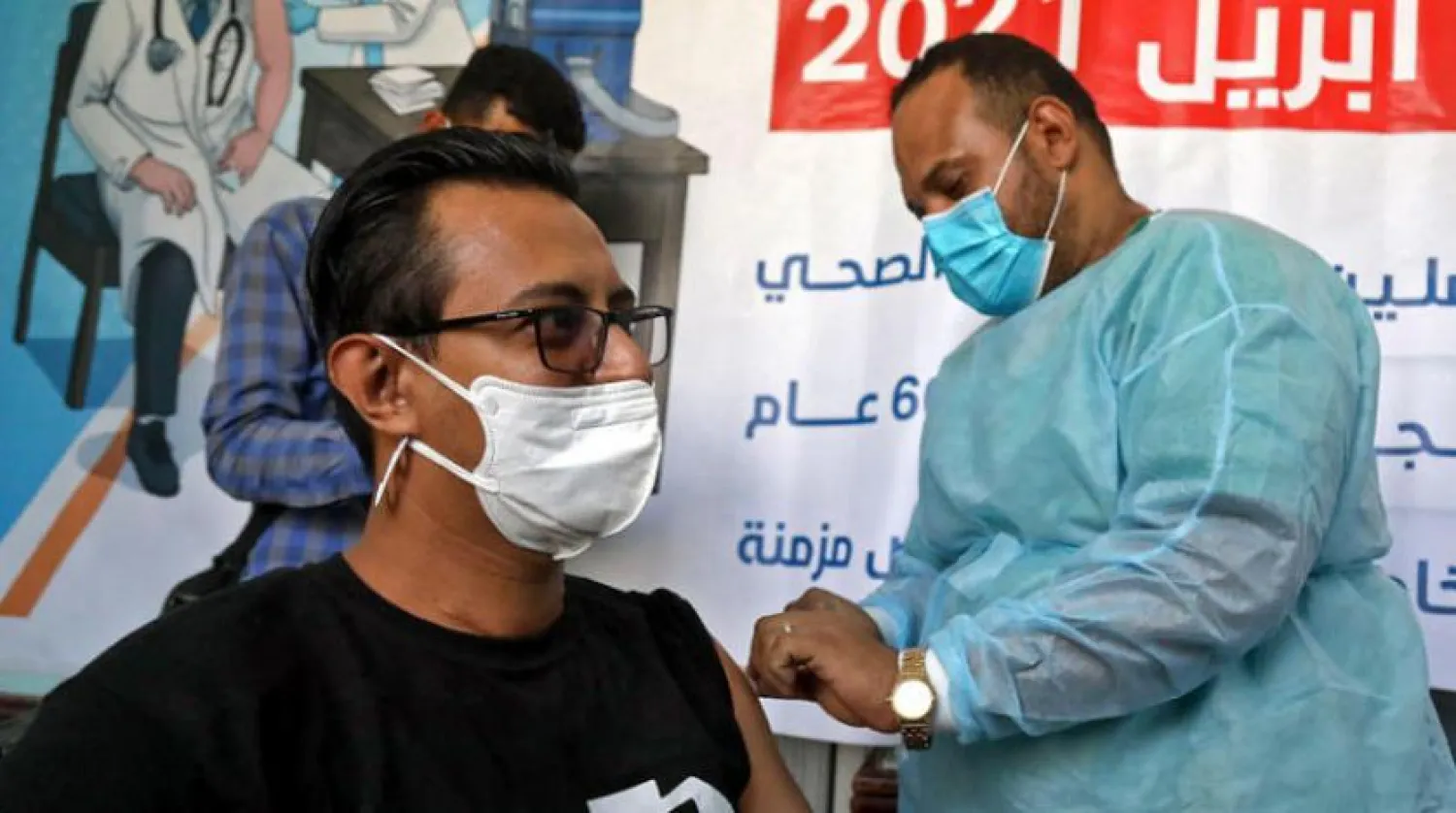
A Yemeni man receives a vaccine shot in Taiz. (AFP)
TT

Houthis Reject Vaccines as Covid Cases Surge in Yemen’s Sanaa, Hodeidah

A Yemeni man receives a vaccine shot in Taiz. (AFP)

Even as hundreds of coronavirus cases are being registered on a daily basis in Sanaa and Hodeidah, the Iran-backed Houthi militias have only requested 10,000 doses of the 360,000 shots that Yemen has received from COVAX.

Half of the COVAX shipment was expected to be sent to regions controlled by the militias.

The virus has surged in Houthi areas given the lack of any preventive measures or awareness among the people.

The health minister in the legitimate government confirmed that the Houthis have only requested 10,000 jabs. The remaining shots that should have gone to the militias will be distributed in government-held regions.

Two doctors in Sanaa revealed to Asharq Al-Awsat that hundreds of new virus cases and dozens of fatalities are being registered on a daily basis in the Houthi-held capital.

The health authorities continue to avoid imposing any preventive measures to combat the pandemic, they revealed.

Sanaa’s largest treatment facility has also been shut and infected people can no longer find medical care.

The capital’s busy markets have also remained open and they become especially crowded in the evenings amid an absence of health precautions.

The militias are heedless of the virus and have continued their sectarian activities at mosques and gatherings to recruit fighters to their war effort.

A family in Sanaa told Asharq Al-Awsat that three of its members have succumbed to the virus in one week. Another family said that dozens of people are being buried at local cemeteries on a daily basis. No one heads to public hospitals because they are shut by the Houthis and the people cannot afford treatment at private facilities.

In the coastal city of Hodeidah, public hospitals allegedly refuse to admit virus patients because they no longer have room for them or due to a lack of supplies.

Health sector workers confirmed that the militias have actually taken over these hospitals so that they can treat their fighters. They refuted claims that the facilities have reached their capacity, saying the city’s largest hospital has only received 16 virus cases and another has only received four.



Hezbollah Leader Rejects Lebanon-Israel Direct Talks, Vows to Confront Israel

 People hold up portraits of Hezbollah leader, Naim Qassem, top, and slain Hezbollah leader Hassan Nasrallah as displaced residents drive back to their villages, in Jiyyeh, near Sidon, southern Lebanon, Friday, April 17, 2026, following a ceasefire between Israel and Hezbollah. (AP)
People hold up portraits of Hezbollah leader, Naim Qassem, top, and slain Hezbollah leader Hassan Nasrallah as displaced residents drive back to their villages, in Jiyyeh, near Sidon, southern Lebanon, Friday, April 17, 2026, following a ceasefire between Israel and Hezbollah. (AP)
TT

Hezbollah Leader Rejects Lebanon-Israel Direct Talks, Vows to Confront Israel

 People hold up portraits of Hezbollah leader, Naim Qassem, top, and slain Hezbollah leader Hassan Nasrallah as displaced residents drive back to their villages, in Jiyyeh, near Sidon, southern Lebanon, Friday, April 17, 2026, following a ceasefire between Israel and Hezbollah. (AP)
People hold up portraits of Hezbollah leader, Naim Qassem, top, and slain Hezbollah leader Hassan Nasrallah as displaced residents drive back to their villages, in Jiyyeh, near Sidon, southern Lebanon, Friday, April 17, 2026, following a ceasefire between Israel and Hezbollah. (AP)

Hezbollah leader Naim Qassem on Monday rejected Lebanon's planned direct talks with Israel, calling them a "grave sin" that will destabilize Lebanon.

"We categorically reject direct negotiations with Israel, and those in power should know that their actions will not benefit Lebanon or themselves," Qassem said in a statement, calling on authorities to "back down from their grave sin that is putting Lebanon in a spiral of instability".

"These direct negotiations and their outcomes are as if they do not exist for us, and they do not concern us in the slightest," he added, saying "we will continue our defensive resistance for Lebanon and its people".

"No matter how much the enemy threatens, we will not back down, we will not bow down, and we will not be defeated."


Did Israel’s War on Lebanon Drive Syrian Refugees Back Home?

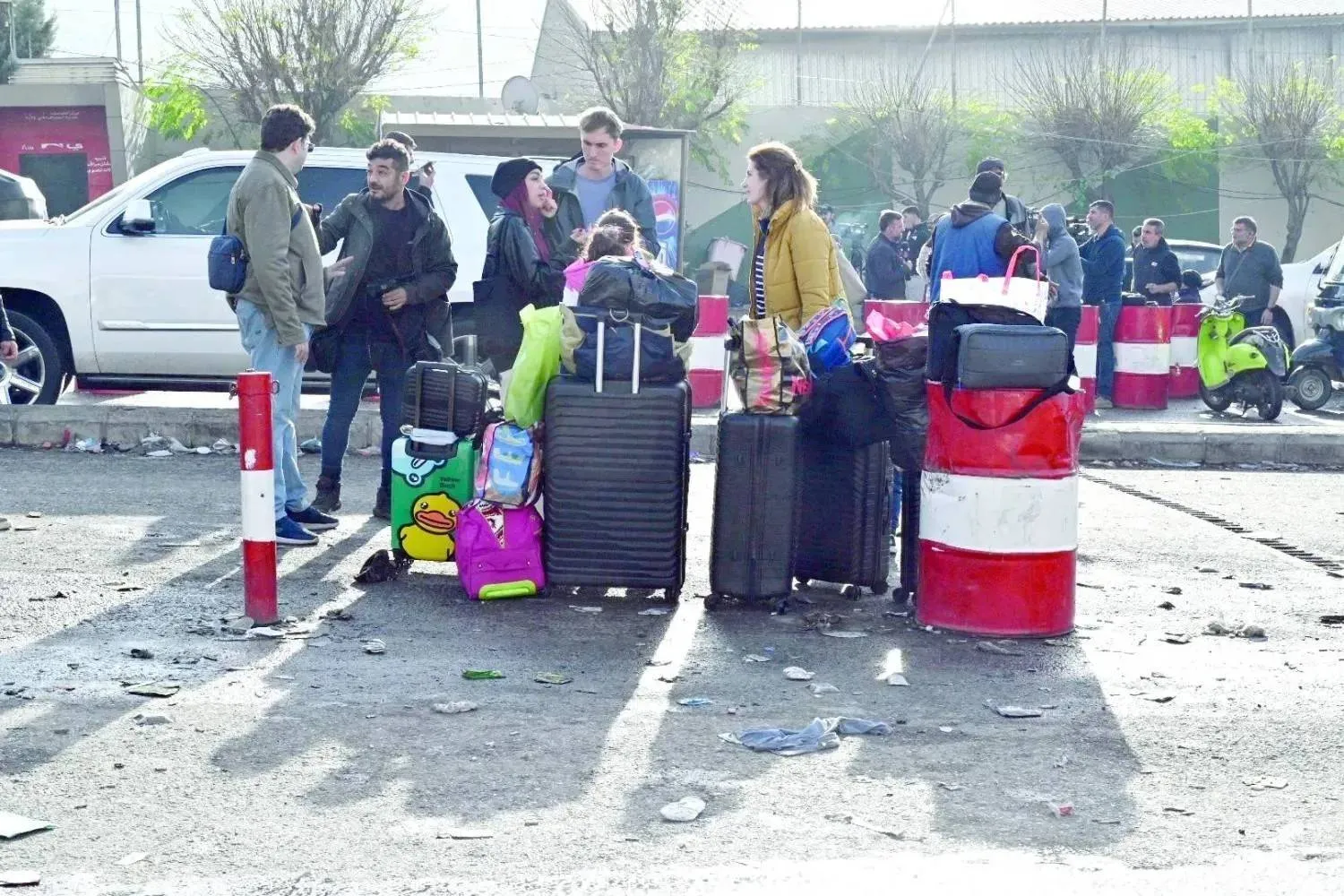
Syrian refugees in Lebanon return to their country through the Masnaa crossing after the fall of the Syrian regime in December 2024. (EPA)
TT

Did Israel’s War on Lebanon Drive Syrian Refugees Back Home?

Syrian refugees in Lebanon return to their country through the Masnaa crossing after the fall of the Syrian regime in December 2024. (EPA)

Israel’s war on Lebanon has accelerated the return of Syrian refugees, but officials and aid agencies say it has not by itself resolved, or fundamentally transformed, the displacement crisis.

Nearly one million Syrians remain in Lebanon despite Israel’s wars on Lebanon when Hezbollah opened a “support front” in solidarity with Hamas in 2023. Many refugees, meanwhile, still view remaining in Lebanon as preferable to returning to a country where homes and jobs may no longer exist.

Others have left. According to the UN refugee agency (UNHCR), more than 593,000 Syrian refugees have returned from Lebanon since January 2025, while Syrian authorities estimate around 260,000 crossed back between March 2 and April 20, 2026 as hostilities intensified.

Official figures show 95 Syrians were killed and 130 wounded in the latest round of fighting between March 2 and April 17.

For some, however, war has not changed the situation.

Faisal, a 41-year-old construction worker from Deir Ezzor living in Mount Lebanon for a decade, said returning to Syria remains too uncertain.

“Going back now means returning to the unknown,” he told Asharq Al-Awsat. “Here, despite the risks, I can still support my family.”

Lebanese Social Affairs Minister Haneen Sayed argued the rise in returns cannot be attributed mainly to war.

She told Asharq Al-Awsat that a government return plan adopted in June 2025 marked the real turning point, supported by administrative facilitations, financial incentives and coordination between Lebanese General Security and the UN refugee agency.

According to Sayed, 581,107 Syrians had returned before the latest conflict erupted in early March, while another 198,404 left during the war.

“That shows return was already under way before the fighting,” she stated, noting that many refugees could have moved to safer parts of Lebanon but instead chose Syria, suggesting the government’s strategy was gaining traction.

She said Syrian authorities had also contributed through policies intended to facilitate return and reintegration. Still, she stopped short of calling it a lasting solution.

“The displacement crisis is on its way to being resolved, but it has not reached a final settlement,” she underlined, noting Lebanon was preparing a review of the return plan later this year.

At the same time, she warned the war had created a new Lebanese internal displacement crisis, adding another humanitarian burden.

Lisa Abou Khaled, spokeswoman for the UNHCR in Lebanon, said decisions to return still depend less on war than on conditions inside Syria, including shelter, healthcare, education and livelihoods.

The current hostilities may have hastened returns for some, she told Asharq Al-Awsat, but often as a forced response rather than a voluntary shift.

“When refugees feel they have no alternative but to return, our role is to reduce risks and support them through the process,” she remarked.

UNHCR provides returnees with information, transport support and a $100 grant per person to help cover immediate needs.


Syria’s Sharaa, Lebanon’s Jumblatt Discuss Sweida Fallout, Reject ‘Alliance of Minorities’

Syrian President Ahmed al-Sharaa and Lebanese Druze leader Walid Jumblatt meet in Damascus on Saturday. (SANA)
TT

Syria’s Sharaa, Lebanon’s Jumblatt Discuss Sweida Fallout, Reject ‘Alliance of Minorities’

Syrian President Ahmed al-Sharaa and Lebanese Druze leader Walid Jumblatt meet in Damascus on Saturday. (SANA)

A meeting in Damascus on Saturday between Syrian President Ahmed al-Sharaa and Lebanese Druze leader Walid Jumblatt focused on containing the fallout from violence in Syria’s Sweida province, strengthening Lebanese-Syrian ties and rejecting what both sides described as an “alliance of minorities.”

Jumblatt, former head of Lebanon’s Progressive Socialist Party, met Sharaa at the People’s Palace in Damascus amid heightened regional tensions and strains along the Lebanese-Syrian border.

A statement from the PSP said the talks stressed improving Lebanese-Syrian relations in a way that serves the common interests of both countries, while rejecting the “alliance of minorities” theory and emphasizing the social and geographic ties linking the two neighbors.

The statement reaffirmed Syria’s unity and called for addressing the aftermath of the deadly unrest in Sweida, the predominantly Druze province in southern Syria.

A brief Syrian presidency statement said the two sides reviewed recent regional developments.

Accompanying Jumblatt to Damascus, Lebanese MP Hadi Abou Al-Hassan said the talks focused on deepening bilateral ties based on respecting the sovereignty and independence of each country, while recognizing longstanding historical and social links.

He told Asharq Al-Awsat Syria’s new leadership was seeking to redefine relations with Lebanon after what he called the end of Syrian tutelage following the fall of Bashar al-Assad.

Abou Al-Hassan said “some actors in Syria and Israel were trying to revive the idea of an ‘alliance of minorities’, but that Damascus no longer viewed the concept as relevant and was instead focused on its strategic Arab ties.”

Saturday's talks also touched on what he described as shared concerns over Israeli escalation against both countries, including fears of a proposed “yellow line” security belt stretching across southern Lebanon from Naqoura to Mount Hermon and potentially into southern Syria.

He noted that such concerns reflected worries over “a dangerous Israeli plan that required coordination and joint efforts to confront.”

Developments in Sweida took up much of the discussions, particularly given Jumblatt’s role in containing the repercussions and his rejection of calls to attach the province to Israel or seek Israeli protection for the region.

Abou Al-Hassan said the talks stressed addressing the fallout from the violence and building on a meeting in Amman involving Syria, Jordan and the United States.

Jumblatt also underscored “support for Syria’s unity and for a strong central state guaranteeing equal rights for all citizens, while preventing any forces from challenging state sovereignty,” he said.

The meeting comes as Lebanese-Syrian ties have improved through border coordination and anti-smuggling efforts, despite Syrian concerns over reported weapons-smuggling tunnels and reports of a security cell in Damascus allegedly linked to Hezbollah, an ally of the ousted regime.

Abou Al-Hassan said both countries needed to dispel mutual concerns and build trust.