Scientists Pry a Secret from the ‘Mona Lisa’ about How Leonardo Painted the Masterpiece

The Mona Lisa by Leornado da Vinci is pictured at the Louvre museum Wednesday, June 7, 2023 in Paris. (AP)
TT

Scientists Pry a Secret from the ‘Mona Lisa’ about How Leonardo Painted the Masterpiece

The Mona Lisa by Leornado da Vinci is pictured at the Louvre museum Wednesday, June 7, 2023 in Paris. (AP)

The "Mona Lisa" has given up another secret.

Using X-rays to peer into the chemical structure of a tiny speck of the celebrated work of art, scientists have gained new insight into the techniques that Leonardo da Vinci used to paint his groundbreaking portrait of the woman with the exquisitely enigmatic smile.

The research, published Wednesday in the Journal of the American Chemical Society, suggests that the famously curious, learned and inventive Italian Renaissance master may have been in a particularly experimental mood when he set to work on the "Mona Lisa" early in the 16th century.

The oil-paint recipe that Leonardo used as his base layer to prepare the panel of poplar wood appears to have been different for the "Mona Lisa," with its own distinctive chemical signature, the team of scientists and art historians in France and Britain discovered.

"He was someone who loved to experiment, and each of his paintings is completely different technically," said Victor Gonzalez, the study's lead author and a chemist at France’s top research body, the CNRS. Gonzalez has studied the chemical compositions of dozens of works by Leonardo, Rembrandt and other artists.

"In this case, it’s interesting to see that indeed there is a specific technique for the ground layer of ‘Mona Lisa,’" he said in an interview with The Associated Press.

Specifically, the researchers found a rare compound, plumbonacrite, in Leonardo's first layer of paint. The discovery, Gonzalez said, confirmed for the first time what art historians had previously only hypothesized: that Leonardo most likely used lead oxide powder to thicken and help dry his paint as he began working on the portrait that now stares out from behind protective glass in the Louvre Museum in Paris.

Carmen Bambach, a specialist in Italian art and curator at New York's Metropolitan Museum of Art, who was not involved in the study, called the research "very exciting" and said any scientifically proven new insights into Leonardo's painting techniques are "extremely important news for the art world and our larger global society."

Finding plumbonacrite in the "Mona Lisa" attests "to Leonardo’s spirit of passionate and constant experimentation as a painter – it is what renders him timeless and modern," Bambach said by email.

The paint fragment from the base layer of the "Mona Lisa" that was analyzed was barely visible to the naked eye, no larger than the diameter of a human hair, and came from the top right-hand edge of the painting.

The scientists peered into its atomic structure using X-rays in a synchrotron, a large machine that accelerates particles to almost the speed of light. That allowed them to unravel the speck’s chemical make-up. Plumbonacrite is a byproduct of lead oxide, allowing the researchers to say with more certainty that Leonardo likely used the powder in his paint recipe.

"Plumbonacrite is really a fingerprint of his recipe," Gonzalez said. "It's the first time we can actually chemically confirm it."

After Leonardo, Dutch master Rembrandt may have used a similar recipe when he was painting in the 17th century; Gonzalez and other researchers have previously found plumbonacrite in his work, too.

"It tells us also that those recipes were passed on for centuries," Gonzalez said. "It was a very good recipe."

Leonardo is thought to have dissolved lead oxide powder, which has an orange color, in linseed or walnut oil by heating the mixture to make a thicker, faster-drying paste.

"What you will obtain is an oil that has a very nice golden color," Gonzalez said. "It flows more like honey."

But the "Mona Lisa" — said by the Louvre to be a portrait of Lisa Gherardini, the wife of a Florentine silk merchant — and other works by Leonardo still have other secrets to tell.

"There are plenty, plenty more things to discover, for sure. We are barely scratching the surface," Gonzalez said. "What we are saying is just a little brick more in the knowledge."

AlUla Revives Tantora Ceremony as Annual Cultural Tradition

AlUla will celebrate the revival of the Tantora Ceremony on Monday in AlUla Old Town. (SPA)
TT

AlUla Revives Tantora Ceremony as Annual Cultural Tradition

AlUla will celebrate the revival of the Tantora Ceremony on Monday in AlUla Old Town. (SPA)

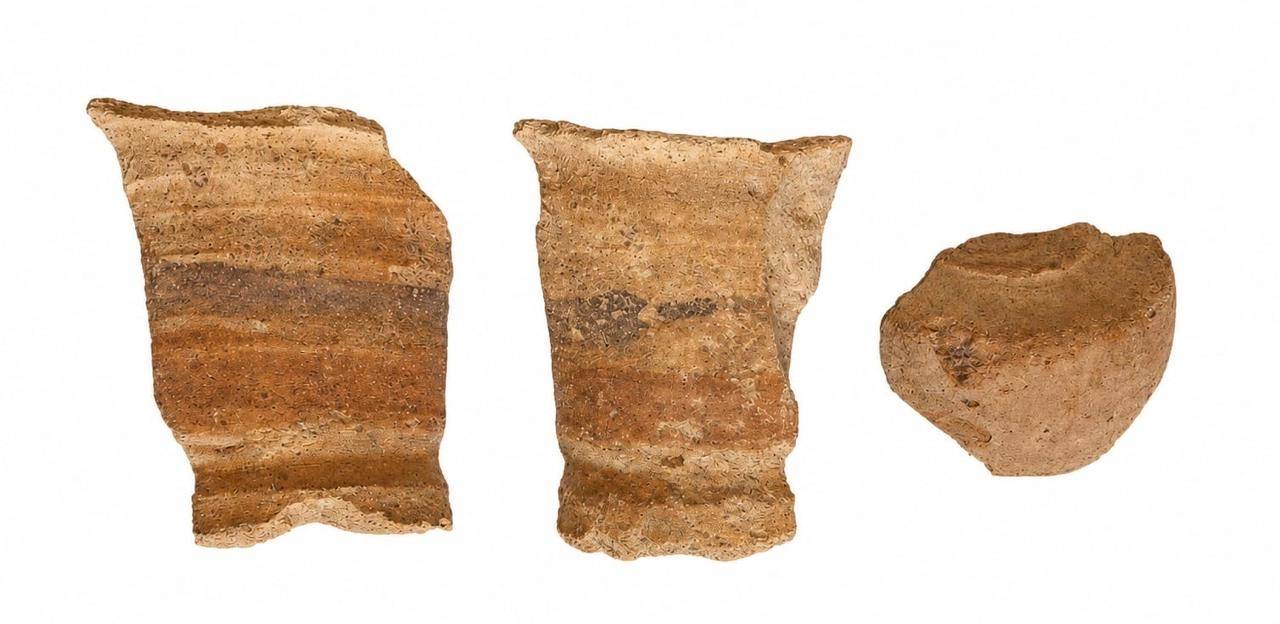
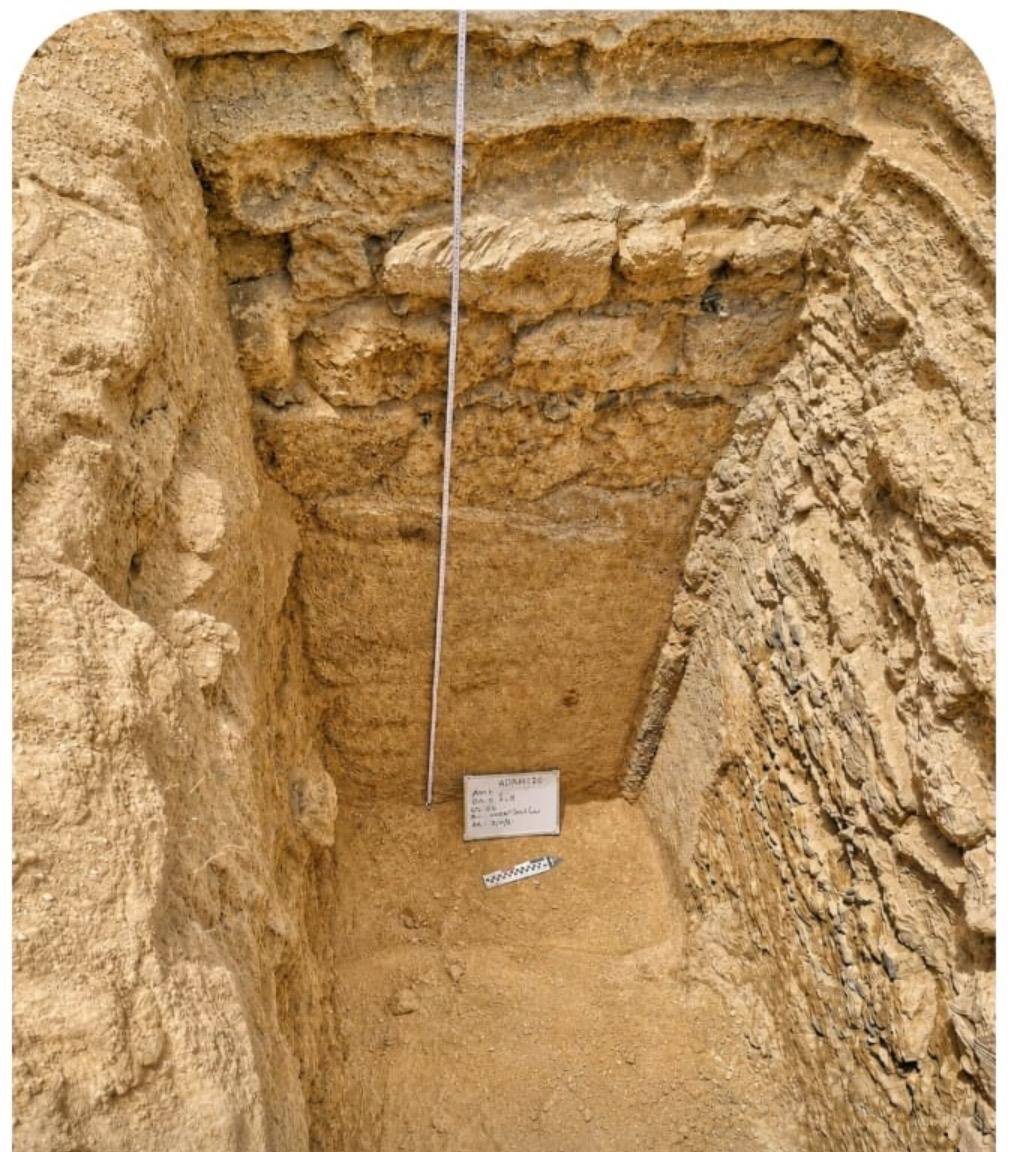
AlUla will celebrate the revival of the Tantora Ceremony on Monday in AlUla Old Town, one of the region’s most distinctive heritage markers and a defining element of its intangible cultural legacy.

The Tantora is a historic solar timekeeping device that generations of AlUla’s residents relied upon to mark the beginning of the agricultural season and the arrival of Al-Marba’aniyah, becoming an essential guide for daily life and seasonal farming cycles, said The Saudi Press Agency.

This year’s ceremony is part of the Royal Commission for AlUla's (RCU) ongoing efforts to elevate cultural heritage and strengthen its presence in the public realm. The program includes a rich array of cultural and heritage activities that highlight the historical significance of Tantora and its role in shaping the community's relationship with its oasis environment.

Visitors will enjoy traditional performances, artisan showcases, and interpretive sessions on the history and uses of the Tantora, alongside demonstrations that evoke aspects of AlUla’s past.

The ceremony reinforces awareness of this cultural marker as one of the region’s most notable expressions of intangible heritage. It also underscores its importance in understanding the seasonal practices that formed a central part of life in AlUla, particularly its connection to the onset of winter and the agricultural preparations associated with the peak of winter.

Reviving the Tantora Ceremony reflects RCU’s commitment to conserving heritage and reactivating it through contemporary approaches that strengthen cultural identity, foster community belonging, and connect new generations with AlUla’s historic legacy.

The event also enriches AlUla’s cultural and tourism offering by providing experiences that deepen visitor appreciation of Saudi Arabia’s cultural heritage.

The RCU affirmed that celebrating this tradition demonstrates AlUla’s dedication to protecting its cultural and natural treasures and enhancing their role in sustainable development, fully aligned with AlUla’s long-term vision and the goals of Saudi Vision 2030, which positions culture as a core pillar of quality of life and balanced national growth.


Rome to Charge Tourists to Get Close to the Famed Trevi Fountain

 A visitor takes a photo of Rome's Trevi Fountain, Friday, Dec. 19, 2025, as the city municipality announced that, starting on Feb. 1, it will impose a 2 euro fee for tourists to visit the recessed fountain edge. (AP)
A visitor takes a photo of Rome's Trevi Fountain, Friday, Dec. 19, 2025, as the city municipality announced that, starting on Feb. 1, it will impose a 2 euro fee for tourists to visit the recessed fountain edge. (AP)
TT

Rome to Charge Tourists to Get Close to the Famed Trevi Fountain

 A visitor takes a photo of Rome's Trevi Fountain, Friday, Dec. 19, 2025, as the city municipality announced that, starting on Feb. 1, it will impose a 2 euro fee for tourists to visit the recessed fountain edge. (AP)
A visitor takes a photo of Rome's Trevi Fountain, Friday, Dec. 19, 2025, as the city municipality announced that, starting on Feb. 1, it will impose a 2 euro fee for tourists to visit the recessed fountain edge. (AP)

Tourists who want to get close to Rome's Trevi Fountain will soon have to pay a two-euro ($2.34) fee, the city mayor said on Friday, as authorities look to profit more handsomely from Italy's many attractions.

Mayor Roberto Gualtieri told reporters the new payment system would start on February 1, adding that the measure was expected to raise 6.5 million euros a year.

"Two euros isn't very much ... and it will lead to less chaotic tourist flows," Gualtieri said, stressing that citizens of Rome will continue to have free access to the fountain.

Tourists will ‌have to ‌pay if they want to get ‌onto ⁠the stone steps ‌surrounding the fountain's basin, while the small surrounding square offering a view of the imposing monument will remain open for everyone.

The Trevi Fountain, where tradition dictates that visitors toss a coin into the water to guarantee their return to Rome, has long been a major tourist attraction, even for visiting world leaders.

Completed in 1762, the monument is ⁠a late Baroque masterpiece depicting Oceanus and symbolizing the varying ‌moods of the world's seas and ‍rivers.

It has received nine million ‍visitors so far this year, Gualtieri said, suggesting that he ‍expects many people will opt to view the fountain from afar in future, rather than pay to get near the water.

Visitors on Friday said they would be willing to pay if the money was put to good use.

"If it means that money is used to keep it maintained, then yeah, that's fine," said British ⁠tourist Yvonne Salustri.

Gualtieri said five other relatively unknown sites in Rome that are currently free will start charging five euros for access from February, continuing the recent trend aimed at squeezing profits from Italy's cultural heritage.

In 2023, a five-euro entrance fee was introduced for Rome's ancient Pantheon. As a result, the square outside is often crammed with people waiting for their turn to pay and enter.

Venice has introduced a tourist entry-fee system during the peak travel season, while Verona this month began charging for access to the balcony in ‌the northern Italian city that is associated with Shakespeare's "Romeo and Juliet".


ICAIRE Launches Data, AI Glossary to Mark World Arabic Language Day

The interactive edition enables users to easily browse AI- and data-related terminology in Arabic, English, and French
TT

ICAIRE Launches Data, AI Glossary to Mark World Arabic Language Day

The interactive edition enables users to easily browse AI- and data-related terminology in Arabic, English, and French

The International Center for Artificial Intelligence Research and Ethics (ICAIRE) announced the launch of an interactive edition of the Data and Artificial Intelligence Glossary, in cooperation with the Saudi Data and Artificial Intelligence Authority (SDAIA), the King Salman Global Academy for Arabic Language (KSGAAL), and the Islamic World Educational, Scientific and Cultural Organization (ICESCO).

The launch coincides with World Arabic Language Day, observed annually on December 18.

The dictionary aims to preserve the Arabic language, enrich Arabic digital content with technical terminology and concepts, raise awareness of modern concepts, and facilitate access to information for researchers and practitioners.

It seeks to unify technical terminology in support of the development of the digital economy and the building of a sustainable knowledge-based future.

The interactive edition enables users to easily browse AI- and data-related terminology in Arabic, English, and French, and allows users to interact with the dictionary by adding terms in various dialects.

These enhance knowledge exchange and help ensure the unification and integration of efforts among scientific and technical institutions both regionally and internationally. The dictionary includes more than 1,200 technical terms.