4th Riyadh International Humanitarian Forum Launches Under King Salman's Patronage

 The Fourth Riyadh International Humanitarian Forum kicked off Monday in Riyadh - SPA
The Fourth Riyadh International Humanitarian Forum kicked off Monday in Riyadh - SPA
TT

4th Riyadh International Humanitarian Forum Launches Under King Salman's Patronage

 The Fourth Riyadh International Humanitarian Forum kicked off Monday in Riyadh - SPA
The Fourth Riyadh International Humanitarian Forum kicked off Monday in Riyadh - SPA

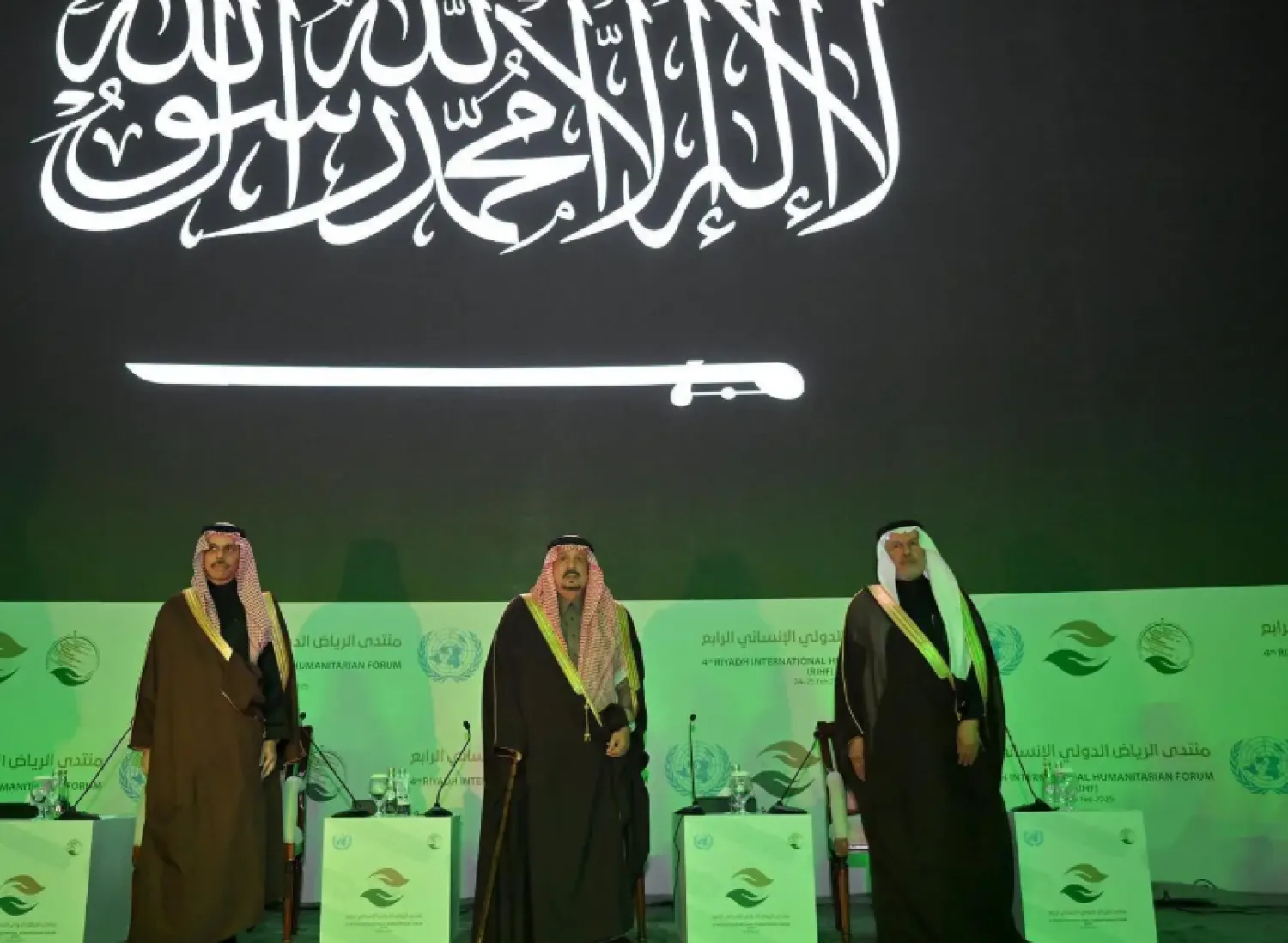
Under the patronage of Custodian of Two Holy Mosques King Salman bin Abdulaziz Al Saud, and on his behalf, Governor of Riyadh Region Prince Faisal bin Bandar bin Abdulaziz attended the Fourth Riyadh International Humanitarian Forum (RIHF), which kicked off Monday in Riyadh under the theme "Navigating the Future of Humanitarian Response."
Upon his arrival, the governor was greeted by Minister of Foreign Affairs Prince Faisal bin Farhan bin Abdullah, Supervisor General of the King Salman Humanitarian Aid and Relief Center (KSrelief) Dr. Abdullah Al Rabeeah, and several other officials from the center, SPA reported.
Welcoming attendees to Saudi Arabia, the Riyadh governor conveyed the Custodian of Two Holy Mosques' greetings and delivered his speech, emphasizing the forum's role in addressing the increasing global disasters and humanitarian challenges.
He said that this forum is being held to shed light on the groups most affected and impacted by these circumstances, and to provide a platform to discuss the most important challenges that hinder humanitarian work, which can only be overcome by the combined efforts of the international community.
He highlighted the Kingdom's ongoing contributions to humanitarian work, rooted in Islamic values and initiated by the founding King Abdulaziz bin Abdulrahman Al Saud.
Saudi Arabia's extensive humanitarian efforts include providing over $100 million in support to various nations and establishing KSrelief a decade ago. Since then, KSrelief has implemented over 3,000 projects in more than 100 countries, totaling over $7 billion in aid.
Al Rabeeah, in his address, lauded the establishment of KSrelief as a pivotal move in global humanitarian work. He highlighted the humanitarian efforts exerted by the Custodian of the Two Holy Mosques, "who presented the world with the most valuable gift ten years ago when he announced the establishment of KSrelief to be a leading center in providing Saudi humanitarian work to those in need all over the world according to a methodology that combines giving and planning, urgent relief intervention, and long-term humanitarian work."
He detailed the center's achievements, delivering aid worth over $7.3 billion through 3,355 projects and collaborating with 466 partners worldwide. Saudi Arabia's giving over the last five decades exceeds $133.8 billion, marking the center as a leader in international volunteer projects and global humanitarian initiatives aligning with the Sustainable Development Goals.
Al Rabeeah called upon the global donor community and partners to enhance support for humanitarian work, ensuring rapid and effective response.
In his speech, the minister of foreign affairs highlighted Saudi Arabia's historical dedication to assisting nations and individuals in need. Guided by its humanitarian principles and a commitment to moderation and responsibility, the Kingdom has emerged as a major international donor. Saudi Arabia's humanitarian and relief aid has surpassed $133 billion, reaching beneficiaries in more than 172 countries.
He stated that, under the leadership's directives, Saudi Arabia had launched numerous aid campaigns for affected nations—notably, a fundraising campaign generated over SAR700 million in donations for Palestinian relief. Additionally, the Masam project has cleared over 430,000 mines in Yemen since 2018, significantly reducing threats to civilian lives.
He emphasized that Saudi Arabia also took immediate action at the start of the Sudanese crisis, spearheading diplomatic initiatives that resulted in the Jeddah 1 and Jeddah 2 agreements, thereby enabling crucial humanitarian aid. Additionally, the Kingdom executed a pioneering sea evacuation, successfully rescuing more than 8,400 individuals from 110 countries trapped in Sudan.
The minister also stressed that, given the rising humanitarian crises, effective humanitarian diplomacy is crucial for coordinating efforts and strengthening responses. It supports diplomatic solutions by upholding international and humanitarian law, securing aid corridors, and fostering dialogue to ensure aid reaches conflict zones.
He further stated that current regional and global events reveal the critical need for united humanity to establish and respect human dignity, intensify efforts to prevent war, and collaborate on aid delivery according to international humanitarian law. He added that Saudi Arabia is committed to preventing the deterioration of conditions in affected countries and communities by pursuing practical solutions through regional and international cooperation.
The Riyadh governor attended the signing of four agreements by KSrelief with local, international, and UN organizations to support global humanitarian efforts. Al Rabeeah signed at the forum a $300 million agreement with World Health Organization Director-General Dr. Tedros Adhanom Ghebreyesus and a $200 million agreement with UNICEF's Executive Director, both for supporting the Global Polio Eradication Initiative.
Al Rabeeah also signed an agreement with Islamic Development Bank Group Chairman Dr. Muhammad Al-Jasser, committing $100 million to Phase II of the Lives and Livelihoods Fund, the Middle East's largest development initiative, and another agreement with World Food Program Executive Director Cindy McCain to distribute 100,000 tons of dates across 30 countries.
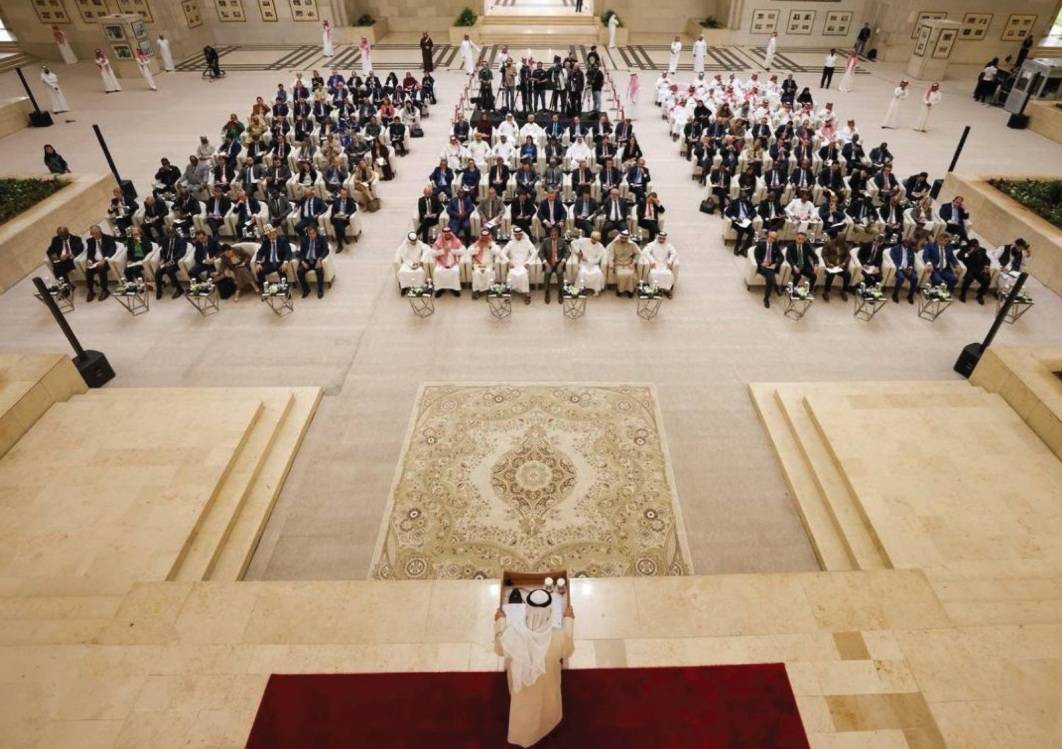
The event was attended by princes, ministers, diplomats, and leaders from local, Gulf, Arab, and international governmental and non-governmental organizations, as well as UN humanitarian experts.



How Gulf States View War Outlook, US-Iran Talks

Flags of Gulf Arab states at an event (AFP)
TT

How Gulf States View War Outlook, US-Iran Talks

Flags of Gulf Arab states at an event (AFP)

Gulf Cooperation Council countries, under sustained Iranian attack, are closely tracking indirect US-Iran talks that Pakistan said on Thursday it is facilitating by relaying messages between the two sides.

Data monitored by Asharq Al-Awsat showed that by Wednesday evening, about 83% of Iran’s missile and drone attacks since the war entered its fourth week had targeted Gulf Arab states, compared with 17% aimed at Israel.

The tally recorded 4,391 missiles and drones striking Gulf countries, hitting critical infrastructure and civilian sites, versus 930 launched at Israel, which is leading the war.

Shaping the next phase

Gulf states on Thursday began to outline their stance on any negotiations over the conflict’s future.

Jasem Albudaiwi, Secretary-General of the Gulf Cooperation Council, said the bloc must be included “in any talks or agreements to resolve this crisis,” to safeguard security and prevent further attacks.

He rejected any frameworks, initiatives, or regional arrangements aimed at reshaping the Middle East after this conflict ends, underscoring Gulf insistence on a role in defining the region’s next phase.

Diplomacy first

Albudaiwi said international law allows states multiple options under the UN Charter, but stressed that the most rational and effective option is the diplomatic and political one.

Ahmed Al-Ibrahim, a political analyst specializing in US affairs, said Gulf states view US-Iran talks with cautious realism.

They do not oppose negotiations, but want outcomes that address what they see as the core threat, not only Iran’s nuclear program, but also its ballistic missiles and regional influence in Yemen, Lebanon, and Iraq.

A joint statement by five Gulf states and Jordan on Wednesday condemned attacks by Iran-aligned factions in Iraq on regional countries and infrastructure. It urged Baghdad to act immediately to halt such attacks launched from its territory and avoid further escalation.

Trust frays

Al-Ibrahim said Gulf confidence in both sides is limited. That view was reinforced by remarks from the Saudi foreign minister last week that “trust in Iran has been shattered.”

Al-Budaiwi said GCC states were surprised by US-Israeli strikes on Iran and had made clear they would not take part in military action or allow their territory to be used against Iran.

Despite that, Tehran still carried out what he described as a “treacherous attack” on GCC states.

He expects Gulf countries to pursue a dual track, backing de-escalation while strengthening defenses and expanding security partnerships. The Gulf, he said, rejects “incomplete deals” that fail to change Iran’s behavior or ensure regional security.

Seat at the table

Gulf security specialist Dhafer Al-Ajmi said GCC participation in any US-Iran talks on regional security is a “sovereign right,” not a request.

“We will not accept having our future shaped in our absence. Our seat at the table is the only guarantee for real and lasting peace,” he said.

Al-Ajmi said Gulf states have borne the brunt of the war’s costs and tensions. Their participation, he said, aims to secure binding guarantees to protect livelihoods and stability.

Any deal that ignores sovereignty and non-interference would be “incomplete and doomed to fail.”

Political analyst Ibrahim Raihan said Gulf states, while showing “wisdom” in handling the crisis, support de-escalation in principle. But he said the root problem remains Iran’s conduct, particularly violations of Gulf sovereignty, despite efforts before the war to avert conflict.

Three demands

Raihan said both Iran and Israel are seeking to widen the war. He outlined three priorities for any negotiations: de-escalation, guarantees to protect shipping routes, and a clear Iranian apology to neighboring Arab states for violations of their sovereignty.

Separately, the United Nations Human Rights Council on Wednesday condemned Iranian attacks on Gulf states as “egregious” and called on Tehran to provide swift compensation to those affected.


Albudaiwi: Regional Arrangements Excluding Gulf States Are Rejected

Albudaiwi affirmed that Gulf states had long been a pillar of regional and global stability (GCC)
TT

Albudaiwi: Regional Arrangements Excluding Gulf States Are Rejected

Albudaiwi affirmed that Gulf states had long been a pillar of regional and global stability (GCC)

Secretary-General of the Gulf Cooperation Council (GCC) Jasem Albudaiwi on Thursday called for Gulf states to be included in talks or agreements to resolve the crisis between Iran and the US and Israel.

“We stress the importance of involving GCC countries in any talks or agreements to resolve this crisis, in a way that contributes to strengthening their security and stability,” said Albudaiwi.

He added that the bloc rejected “any arrangements intended to redraw the map of the Middle East after the conflict ends.”

He said the GCC’s first choice was a diplomatic and political solution, describing it as “the wisest and most successful option,” while noting that Gulf states were reviewing all options in line with international law and the UN Charter.

Speaking in Riyadh to Arab and foreign ambassadors, Albudaiwi urged partners to send a unified international message to Iran demanding an immediate and unconditional halt to attacks on GCC states.

He said the Gulf’s goal “has never been to destroy Iran or weaken it, but to reach a normal relationship based on mutual respect, non-interference and non-aggression.”

He rejected framing the situation as part of “Middle East complexities,” calling it “a blatant violation of international law” and “a systematic targeting” of states not involved in any conflict.

Albudaiwi said Gulf states would not accept becoming targets of aggression (GCC)

Albudaiwi said GCC states had long been a pillar of regional and global stability, a reliable energy source, and a responsible economic partner. But he said they would not accept becoming targets of aggression, arenas for regional rivalries, or seeing their citizens killed without accountability.

He said Iranian attacks over 25 days had exceeded 5,000 ballistic missiles and drones targeting GCC states.

Albudaiwi revealed that 85% of Iranian missiles launched in the war were aimed at Gulf states.

He praised Gulf air defenses for limiting the impact of the attacks, but said that this does not diminish the scale of the aggression or absolve Iran of full responsibility.

He said Iran had “crossed every line” by closing the Strait of Hormuz, blocking commercial ships and oil tankers, and imposing transit fees, in violation of international law.

He also cited repeated ship hijackings and attacks carried out through Iran’s regional proxies.

He warned that disruption to shipping would hit not only Gulf states but the global economy, especially as some countries face oil and gas shortages.

Albudaiwi explained that maritime passages are governed by international agreements, and no party can obstruct them or impose conditions.

The impact of closing the Strait of Hormuz may begin with higher energy prices, but its cumulative repercussions on the global economy, energy markets, marine insurance, and civil aviation would be catastrophic.

“What happens in the Strait of Hormuz does not stay in the Strait of Hormuz,” he added.

Albudaiwi said Gulf states were surprised by US and Israeli strikes on Iran, stressing they had made clear they would not take part in military action or allow their territory to be used against Iran, and had informed Tehran of that.

“Yet this position did not prevent it from attacking GCC states,” he said.

He said GCC states had shown restraint and chosen not to respond to avoid widening the conflict, and in the hope that Iran would come to its senses and stop these attacks.

He said Gulf states produce about 16 million barrels per day of crude oil, or 22% of global output, and account for 27% of global oil exports, or 11.5 million barrels per day.

They also hold 33% of global oil reserves and 21% of natural gas reserves.

These figures make the Gulf an indispensable pillar of the global economy, Albudaiwi affirmed, warning that any disruption would directly affect energy security and global economic stability.


Zelenskyy Arrives in Jeddah

Ukrainian President Volodymyr Zelenskyy in Kyiv (AFP)
TT

Zelenskyy Arrives in Jeddah

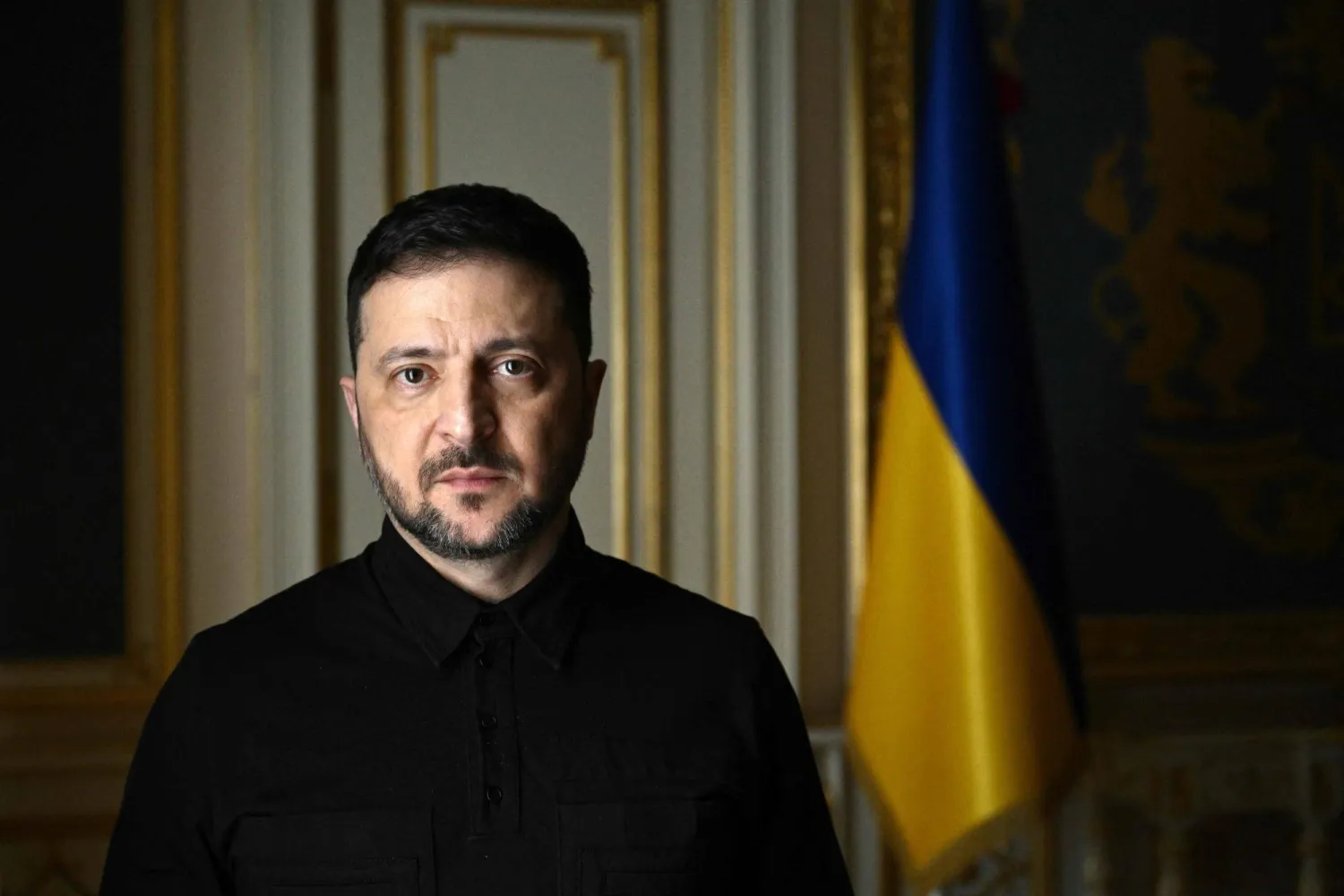
Ukrainian President Volodymyr Zelenskyy in Kyiv (AFP)

President Volodymyr Zelenskyy of Ukraine arrived in Jeddah Thursday. At King Abdulaziz International Airport, he was welcomed by Deputy Governor of Makkah Region Prince Saud bin Mishaal bin Abdulaziz and several other officials.

Zelenskiy said he would hold "important meetings" in the Kingdom as part of an effort to bolster ties with Middle East countries amid the Iran war.

"Arrived in Saudi Arabia. Important meetings are scheduled. We appreciate ⁠the support and support ‌those who ‌are ready to work ​with us ‌to ensure security," Zelenskyy wrote ‌on X.

Rustem Umerov, the head of Ukraine's National Security and Defense Council, accompanied Zelenskiy on the ‌visit.