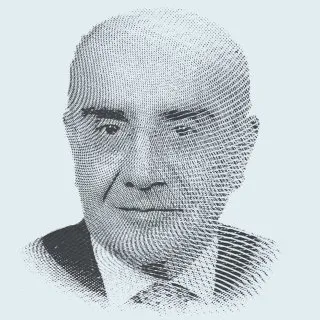
There is an immense moral and political gap between Israel’s blatant unhinged incitement on the life of the symbolic figurehead of the Islamic Republic of Iran (which the Americans eventually sympathized with after their initial opposition) and calm reflection on Iran’s fate after Supreme Leader Ali Khamenei.
Although the ongoing Israeli-Iranian conflict has put this question under the limelight, this conversation predates the conflict- even in the corridors of power in Iran, in think tanks inside and outside Iran, and among ordinary citizens who are mindful of their leader’s advanced age. There are real question marks around political continuity.
Those who know Iran understand that it is a nation (regardless of political affiliation) that is highly sensitive about the independence of the state, the security of society, and the integrity of the country’s resources and institutions, particularly in the face of foreign meddling. It is no coincidence that Iranians continue to speak of the coup against Mohammad Mosaddegh’s government, which has become a collective wound foundational for the national consciousness. The issue has never been about a single person, but rather an untouchable principle.
Within this framework, reflecting on Iran’s post-Khamenei future becomes a conversation not about safeguarding the state, not dismantling it; renewing the social contract, not tearing it up.
The key question emerges here: Can the Supreme Leader pave a path toward change? Can he lead Iran to reinvent itself through the framework of the current regime, rather than over its ruins?
What if Khamenei chose to follow Japanese Emperor Hirohito’s example? After the attack on Pearl Harbor, the emperor redefined himself and his country. He remained on the throne, not as a sacred leader of war but as a constitutional symbol of a nation that had chosen peace and democracy. He lost the war, but he saved the future.
Iran faces the same “challenge-opportunity.”
Of course, this comparison risks oversimplification. History doesn’t repeat itself verbatim, and the two men are hardly identical. Hirohito was a symbolic figure who denied any real power; supported by an ancient imperial institution, he was surrounded by occupying forces who rebuilt the state.
The Supreme Leader, on the other hand, has the final say in Iran, and he is the embodiment of its ideology. His state’s foundations are being fiercely attacked, and there is no clear roadmap for a post-revolutionary era.
Nonetheless, Khamenei possesses something no one else does: the legitimacy of endurance, if not a popular mandate. It is largely to the credit of his strikingly pragmatic flexibility that the regime has survived. He compromised with reformists when necessary, negotiated with the US when that was the only way to avoid isolation, and repeatedly changed his tune at critical junctures.
Each of these steps was necessary for survival. His agility could help him once again. He must present flexibility not as a betrayal of the revolution, but as a means for safeguarding it.
In 1988, Imam Khomeini likened his decision to end the Iran–Iraq war to “drinking the cup of poison.” It wasn’t a victory for his doctrine, but a strategic bow by Iran’s founding father that allowed the country and the revolution to survive.
The poison may have changed, but the goal remains the same: to save Iran.
Moreover, it is hard to think of anyone other than Khamenei who has the symbolic and institutional capital needed to manage this difficult transition without risking descent into chaos. It is almost as though only Khamenei can frame the steps needed as a sacrifice, not a defeat; as wisdom, not retreat.
There are subtle signals coming from within the regime itself. Its political fatigue is evident. The largely silent technocrats and reformists now see the failure of perpetual confrontation as a strategic investment.
Decades of quiet change have given rise to a new class within the regime. This class thinks in terms of state survival, not exporting the revolution. Even Mahmoud Ahmadinejad, once the very symbol of hardline ideology, now focuses on economic dignity and national sovereignty: “Iran First.”
Ideology hasn’t disappeared, but it has fragmented, planting the seeds of a potential shift.
Even the severity of foreign pressure, especially since the US entered the war, offers Khamenei a dignified exit. He could claim that God has entrusted him with saving Iran from a “world war,” not just a conflict against Israel, but against a silent and expanding international coalition.
He could frame Iran’s resilience as the ultimate victory: the Islamic Republic endured until the world’s major powers were forced to unite against it.
From an abstract theoretical standpoint, the comparison with Emperor Hirohito is highly flawed. From a political perspective, it opens a realistic- albeit narrow- window of opportunity. A window that some may believe is not likely to be used, but it is possible.
In our region, it is precisely within that margin (between the unlikely and the not impossible) that we find historical shifts, provided the presence of exceptional leaders.