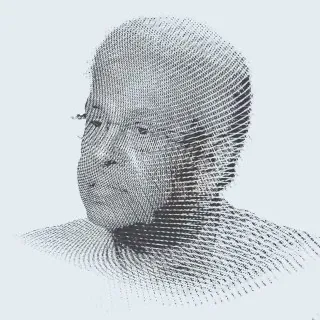
Syria has been struggling to transition phase under Ahmad al-Sharaa. This phase was supposed to pave the way for rebuilding the state and its shattered institutions and society, but events on the ground points to a completely different dynamic. Sectarian and regional collectives are transforming into what resemble political tribes caught in a desperate struggle over, with no comprehensive national project.
Recent literature on the political economy of conflict suggests that civil wars are not fueled by ideology or grievances alone. Rather, they are often defined by the pursuit of gains, with their violence becoming means to this end rather than liberation. Three hypotheses have been put forward to explain this shift: the first is the grievance hypothesis, the 5dea that political, economic, and social marginalization pushes certain groups to violence. Second, there is the greed hypothesis: actors are not drive solely by rage, and that weighing gains and losses significantly impacts their decisions. Third, there is the mobilization hypothesis, which explains violent activity through groups' ability to organize, secure funding, and determine the odds of victory and failure.
The events in Syria today seem to offer palpable examples of these theories. After the collapse of traditional security institutions, armed groups linked to sectarian, tribal, and regional affiliations emerged over the wrekage. These groups later engaged in "security hybridization" by formally joining the new state apparatus without actually submitting to it. Each of these groups now acts like a political tribe seeking to consolidate its control over a portion Syria, governing it through the distrubtion of spoils. State bodies have been transformed into spheres of influence divided among these tribes through ad-hoc arrangements rather than a constitution or national social contract.
In this context, violence is no longer merely a tool for achieving political goals; it has become an ongoing project that generates spoils. Some groups receive salaries from the state or regional sponsors, while others rely on alternative sources of income through smuggling, kidnapping, extortion, and control of border crossings and resources. These groups compete to plunder public and private property, occupy government headquarters, confiscate the property of displaced persons, monopolize subsidized goods, and trade fuel and wheat as if they were resources for tribes in an open desert.
Gradually, what resembled a symbolic economy of spoils began to take shape, whereby the goal of attaining power became not governance or reform, but the accumulation of influence and wealth. Without a deterrent central authority, the state lost its ability to monopolize legitimate the tools of coercion, and its sovereignty eroded in favor of these tribal formations, which are now imposing parallel local regimes and ruling over societies by force of arms, not legitimacy.
The most dangerous aspect of this shit is that spoils have become an alternative to politics, plunder an alternative to representation, and appropriation an alternative to negotiation. It should be no wonder, then, that every reconciliation initiative has failed. Indeed, the cost of peace, to these forces, is higher than that of conflict, and the potential returns of war far outweigh those of a settlement. The gray area Syria is finds itself in today merely reflects this equilibrium: neither all-out war nor real peace, but rather conflict management that creates balance between the warring tribes and ensures that the spoils continue to flow.
In light of this state of affairs, we cannot talk about a national project before the new spoil-sharing regime is dismantled, nor can we talk about stability without rebuilding the state on the foundations of sovereignty, institutions, and citizenship. If the logic of spoils remains in force, these armed maintain their income flows, and the state fails to restore its monopoly over violence, administration, and wealth, Syria will remain hostage to political tribalism, with its territory divided among militias.
Restoring balance in Syria requires not only political reforms, but also tackeling the spoils system head on, ensuring that it no longer fuels chaos and prevents the emergence of a state. The forces that want the best for a unified Syria, led by Saudi Arabia, must intervene to push in that direction, with the support of moderate countries, the international community, and everyone concerned about chaos and keen on depriving Israel any pretexts.