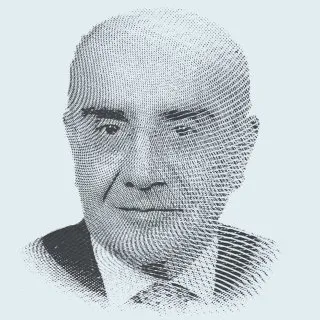
He rubbed his eyes, as if doubting what he saw. The scene was unbelievable—stunning, unexpected. Luck had never been this generous to him. He asked the guard for a big amount of ice and a bottle worthy of an unprecedented celebration. The guard hesitated—his master was not one to drink. He was an athlete who never compromised his fitness. But orders were orders.
He poured himself a drink, listening to the ice crack as if it, too, were celebrating. He played the tape again—believe it or not. He closed his eyes. How fortunate that he had not killed Volodymyr Zelensky in a barrage of missiles, as Benjamin Netanyahu had done to Hassan Nasrallah. Or assassinated him in another capital, as Netanyahu had done to Hamas leader Ismail Haniyeh in Tehran. Had he done so, Zelensky would have become a martyr, a hero, with statues erected in his honor across the West, and history reserving him a place on its balcony.
What could be sweeter than seeing your enemy wounded and bleeding? Even better, the wound had come from within his own house—from the leader of the very country that had flooded Ukraine with weapons and billions. And now, that leader questioned Zelensky’s cause, his integrity, demanding he return the generous gifts, sign away Ukraine’s rare minerals, and prepare to cede parts of his inherited homeland. How delightful when an adversary, rather than you, delivers the earthquake that shakes your enemy! And how satisfying when the world watches, while the visitor is portrayed as if he provoked you and invaded your country.
The taste of revenge is intoxicating, especially when the fatal blow does not bear your fingerprints. It washes away the old wounds—the humiliation of the Red Army’s retreat from Afghanistan, that painful night in Dresden when he burned secret documents, the fall of the Berlin Wall, which felt as though it had collapsed onto his very soul. The betrayal of former Soviet republics, scrambling to abandon the sinking ship of the USSR, still stung.
Another sip. He imagined the shock on the man sitting in Charles de Gaulle’s office, the disbelief in Margaret Thatcher’s old chair, the sorrow of Angela Merkel’s successor. He pictured the tense atmosphere in Taiwan, Japan, and South Korea. How would NATO’s generals react when America itself recognized Putin’s right to carve off a piece of Ukraine? And in Beijing, despite concerns over a rekindled US-Russia “tango,” Xi Jinping must be quietly pleased.
A fleeting thought—what if he were in Zelensky’s place, and Donald Trump had spoken to him with the same tone he had used with his Ukrainian guest? The world would have been on the brink of nuclear war. He chuckled. Impossible. Russia is not Ukraine, and Vladimir Putin is not Zelensky. Fortunately, the man in the White House was a friend—one might even say, their man.
The ice cracked again, much like Zelensky’s dreams and those of his Western backers.
The past three years had been difficult. Kyiv’s leader had not fallen when Russian tanks advanced into Ukraine—territory the West had stolen from Russia. Western aid poured in, and Russian soldiers returned home in coffins. The losses were painful, forcing him to rely on North Korean reinforcements. NATO generals had gloated: If Russia couldn’t crush Ukraine’s army, how would it fare against NATO’s forces, let alone the world’s most formidable military—the United States?
He had waited impatiently for Trump, and the latter had not disappointed, despite European meddling. He had been generous to America, to Israel—never blocking its strikes against Iranian military sites in Syria, nor trying to save Bashar al-Assad as he had in the past. He had merely granted him “humanitarian asylum.” He had not interfered with the great transformation sweeping the Middle East.
He knew what the Europeans were saying—that a Russian victory in Ukraine would whet his appetite for reclaiming more former Soviet lands. Macron warned that Putin would “certainly move on to Moldova, perhaps even Romania.” He also argued that if a ceasefire were declared without security guarantees for Ukraine, America’s “geostrategic deterrence against Russia, China, and beyond” would collapse overnight.
But Europe was old, weary, lacking the will to fight. Whatever aid it could muster for Zelensky would not be enough to mend the deep wound inflicted by Trump’s betrayal. Without America’s overwhelming power, the West could not turn back time—not in Ukraine, not anywhere else.
Trump had executed his mission with masterful precision. Perhaps he deserved a Nobel Prize—or even a Lenin Medal. A man worthy of recognition. James Bond himself could not have done better. The young KGB recruit who had once knocked on the agency’s door had admired 007. But tonight, he would dance with Trump, especially when the man behaved like a wounded tiger.
This was the Tsar’s night—a night worth celebrating. When Donald Trump occupies the Oval Office, the world had better fasten its seatbelts.