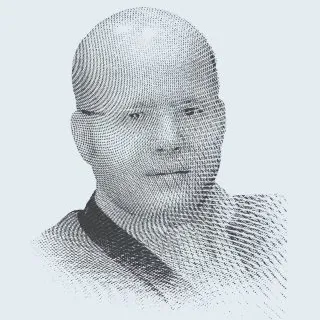
Canada’s Prime Minister, Mark Carney, has spoken candidly about the crisis of his country’s relationship with its “great neighbor,” the United States.
US President Donald Trump, an ardent enthusiast of “tariff wars,” waging them against all kinds of major global economic powers, decided to end trade negotiations between his country and Canada. He explained his decision as a response to “fake” content released by the government of Ontario, which contrasted his view of tariffs with those of former US President Ronald Reagan.
In reality, “protectionist” measures have been imposed on all major global economies, be they US allies or competitors, under the pretext of addressing the deep structural crises of the American economy. The underlying aim is to use America’s “political muscle” to compensate for its economic defects.
World leaders have all come to this realization.
They have collectively formed an accurate image of Trump’s personality. Most of them are now doing their best to deal with realities they cannot change, however much they might want to. Indeed, the power to make such changes ultimately lies with American citizens: they elect, punish, and reward the authorities.
Accordingly, world leaders currently believe that the best way to deal with Trump is to take a calm approach and minimize friction to the greatest extent possible.
Trump’s policies in the “European theater,” for example, have worried many Western countries. His view of the Russian leadership, particularly with regard to Ukraine, and his stance on the “transatlantic relationship,” are particularly worrying.
Latin America is also worried. Washington is threatening Venezuela and Colombia, even as it allocates $40 billion to rescue the right-wing Argentine president Javier Milei’s experiment amid the continuing US government shutdown.
In East Asia, tensions are similarly high. The Trump administration has no clear policy for engaging with China. Some point out, however, that confrontation between Washington and Beijing over Taiwan does not appear imminent, as the two giants remain busy competing over technological and cyber dominance, as well as influence in all corners of the globe.
Why forget the continent’s south and west? Cross-border military clashes between Pakistan and Afghanistan reminded us that there is “fire beneath the ashes”? What about the ticking nuclear timebomb between India and Pakistan, and the role of the powerful far-right forces within the two rival nuclear states since 1947, including India’s billionaire oligarchs who support Prime Minister Narendra Modi? Moreover, what repercussions will Trump’s erratic trade policies and tariffs have for the Indo-Chinese race to access Western markets?
As for us, the people of West Asia, I would argue that Washington’s caprice has gone far too far. The regional picture is obscure, with the US blurring the line between strategic vision (even in the absence of principle or lessons from history) and the tactical agreements President Trump enjoys calling “deals.”
Today, no genuine strategic vision for the future of our region (from Iran to Libya and Sudan) can be seen on the horizon. There seems to be no serious deterrence obstructing the ambitions of Israel’s messianic far right, even as the wounds of fragile Arab countries are being “stitched up” prematurely, before healing or even receiving proper treatment.
Iraq’s elections will not hold promise so long as US-Iranian relations remain in a state of “neither war nor peace.”
Syria has yet to catch its breath or retrieve its self-awareness, its sense of identity or its regional role. Lebanon, too, is in no condition to yield to the dictates of Washington’s envoys without war- or several, ruinous civil wars.
And last but not least, in Palestine (both in Gaza and the West Bank) there are serious doubts as to whether Washington has any real desire to rebuild. The vast destruction, it is said, was “intentional,” even “planned” before October 7, 2023.
This is the world as it is today.
As he began his Asian tour that includes attendance at two summits, Prime Minister Carney told reporters that the “special relationship” between his country and the United States has gone from being an alliance into a burden. He candidly added that Canada is ready to resume trade negotiations with Washington but only when the latter “is ready and willing.”
He added that Canada cannot control its trade policy with its mighty neighbor while the latter imposes tariffs on everyone. He then (strongly) hinted at alternative options, stressing that Canada can manage new partnerships and opportunities, including with the “economic giants of Asia.” Moreover, Carney had said in March, when the outlines of Washington’s economic policy became apparent, that the traditional relationship of deep economic integration between Canada and the US “has ended” and that his country must radically reshape its economic model.
Finally, we should remember that Carney is no “Third Worldist” hostile to Washington, nor a revolutionary radical. He is technocrat, professional businessman, and banker: a white Christian of Irish descent, educated at Harvard (B.A.) and Oxford (M.A. and Ph.D.) and a former governor of the Bank of England.