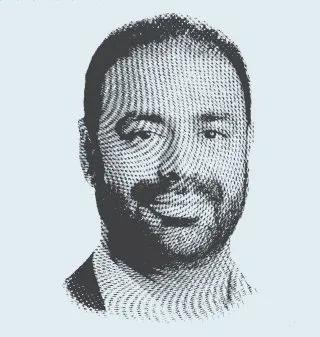
Venezuela’s two “former” leaders, the late Chávez and his successor Maduro, somehow resemble figures from the Middle East, Saddam, Khomeini, and Gaddafi. They were famous for bombastic speeches, populist slogans, and zero achievements.
Who can forget Chávez’s words from the UN podium about US President George W. Bush Jr.: “The smell of sulfur still lingers here... the devil was here.” Like the others, he waged quixotic battles, yet in reality spent his years in power besieged—only to end in defeat.
After the eloquent Chávez came Maduro, a simple man, a former bus driver and trade unionist.
He followed in his predecessor’s footsteps, making mockery of the US his favorite topic.
He failed to grasp the character of the new caesar in the White House. He assumed Trump would never get him. Instead of negotiations he barricaded himself in his quarters and transformed the presidential palace into a heavily armed fortress.
What followed was inevitable, echoing the fate of Saddam Hussein in 2003. He watched in disbelief as American columns advanced along the Tigris through the heart of Baghdad. Saddam fled in haste to Tikrit, hid in a pit on a friend’s farm, and was soon betrayed by one of his own, handed over to the Americans, and led away under guard.
The Venezuelan president, likewise, was taken in his pajamas to New York. Trump was blunt: Maduro’s fate is a lesson for other leaders, warning the presidents of Cuba and Colombia and Mexico, against allowing drug-trafficking.
Latin Americans are like us Arabs, many of them burdened by narcissistic populist leaders.
I visited Caracas in 2007. It appeared then a beautiful, clean capital, at least in the Altamira neighborhood where we stayed, and also in the area we visited on the city’s edge at Mount Ávila. The slums were encircling the city. Our guide moaned that they were migrants arrived by the millions in search of a better life in this supposedly wealthy country.
Living conditions deteriorated under the revolutionary government’s policies, and armed men became a common sight in the city. They were not police, but hired civilians guarding some buildings; some were at the entrance to our hotel’s parking garage. At the time, the exchange rate stood at two bolívars to the dollar. Under Chávez and later Maduro the economy was wrecked, the currency collapsed to 500 bolívars to the dollar, and poverty forced more than five million Venezuelans to emigrate.
Why would an oil-rich country like Venezuela throw itself into continental conflicts, with its president clinging to revolutionary posturing long after the age of revolutions ended with the Cold War? The scene was strikingly familiar reminiscent of Libya, a country rich in resources yet poor in reality.
Maduro, now in detention, was long haunted by Chávez. He ruled for more than a decade trying to imitate him. Yet while Maduro is a simple man, Chávez was driven by a deep and radical ideology.
He legitimized revolutionary rhetoric in an oil-rich country, expelled American companies, and nationalized major investments. An eloquent orator, Chávez knew how to turn ideas into populist spectacle.
He styled himself an intellectual, surrounded by poets and writers, counted the novelist García Márquez among his friends, and cast himself in the lineage of Venezuela’s historic symbol, Simón Bolívar. Even as president, Chávez hosted a weekly television program, speaking nonstop for eight hours.
Of course, there was a vast gap between chatter and facts on the ground, as poverty, unemployment, and arrests increased.
Chávez died at 58 in a clinic in Cuba, ill with cancer some believe he was poisoned. He was succeeded by Maduro, a bus driver, an uneducated figure with wooden language, who continued to imitate Chávez politically without Chávez’s rhetorical talents.
Trump, whom we know now, a leader unlike those who had preceded him in the White House. He was briefed bluntly: Venezuela, long a friend of the United States, had become a thorn in its side for more than two decades. It had aligned itself with America’s adversaries, Iran, Russia, and China, and had emerged as a major hub for drug financing.
His predecessors, he was told, had relied on economic sanctions and political isolation. Trump chose a different path. He moved to shorten the timeline and resolve the issue in a single stroke. He did not seek regime change; instead, he targeted Maduro and agreed to work with his deputy. Defiant leaders would do well to learn from what happened in Caracas, be careful Trump is in search of victories.