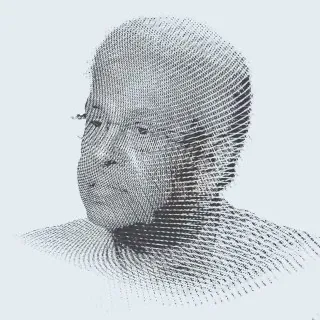
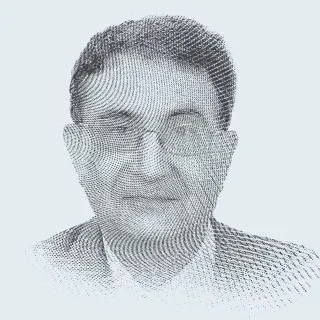
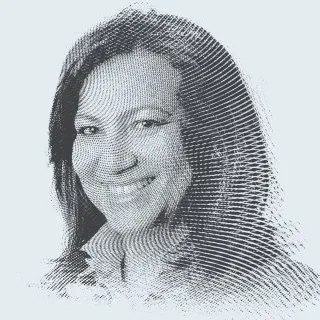
As might have been expected the decision by the Nobel committee in Oslo to grant this year’s Peace Prize to Venezuelan opposition activist Maria Corina Machado has raised a storm of controversy about an annual ritual that has been losing luster for years.
Critics say the committee chose Ms. Machado, a staunch Trumpist, because it didn’t want to anoint her idol. At the same time choosing another “globalist left-winger” would have given some credibility to the charge that most Nobel prizes have become political trophies.
One example: French President Emmanuel Macron’s economic advisor was named a winner in economics.
Even in science categories prizes are distributed in a way to reflect geopolitics. In literature, the winner, at least for the past 30 years, has been a writer or poet with left-wing credentials and few readers outside the European champagne and caviar liberal elites.
While that criticism may or may not be worth consideration, I think that the attacks launched on Ms. Machado, precisely from the same elites, are unfair.
To be sure Ms. Machado hasn’t done anything for peace in the way understood so far.
As the architect of several shaky ceasefires, between Israel and Hamas, between India and Pakistan, between Congo-Kinshasa and Rwanda, and between Iran and Israel, Trump would have made a more credible peace prize laureate.
One way out of the impasse created by ideology may be to rename the prize as Nobel Prize for Campaigner of the Year for political freedom and human rights. I know, such a long phrase may trigger even more controversy about what is meant by freedom and human rights.
In the case of Machado, however, a case could be made to support her brave campaign to force an authoritarian regime to respect its own constitution by allowing free and fair elections according to the law of the land.
Ms. Machado isn’t calling for revolution or then violent overthrow of President Nicolas Maduro’s “Bolivarian” regime.” All she is asking for is elections in the presence of international observers and a commitment by all contesting parties to accept the outcome.
I first visited Venezuela in 1972 at a time it was ruled by an ersatz aristocratic elite that claimed imperial Spanish ancestry and regarded the “native” population as extras in a Cecil B DeMille extravaganza.
So, when Hugo Chavez appeared on the scene to give a voice to those “extras,” I was among many who welcomed the change.
It was after one of his earlier trips to Iran that I first met the flamboyant Hugo Chavez. With a few colleagues, we had invited him to dinner at an Italian restaurant in Paris, and the conversation that ensued touched on a range of topics.
However, two themes dominated.
The first was his “determination” to end poverty in Venezuela.
“There is no need for anyone to be poor in a country as rich as ours,” he asserted. “Give me four years, just give me four years!”
The second theme was Chavez’s claim that the Catholic Church, prompted by “wealthy oligarchs,” was trying to sabotage his social revolution.
Well, Chavez had three times as many years and left Venezuela as poor if not poorer and certainly more divided than ever to Maduro whom he called “my bus driver.”
Under Chavez and Maduro, Venezuela which has the world’s largest oil reserves, earned more than $1.5 trillion from oil exports. And yet it fell in a maze of budget deficit, public borrowing and hyper-inflation combined with corruption that seems to have become a way of life rather than an anomaly.
What happened? What did Chavez and Maduro do with the unprecedented wealth that came to Venezuela under their stewardship?
Part of the answer may lie in the fact that Venezuela has headed the list of Latin American nations as far as flight of capital is concerned. Over the years, something like $170 billion was transferred by Venezuelans to foreign, mostly American banks. The Bolivarians also spent billions helping Cuba and distributing free or cut-price oil in several countries, including some areas of the United States.
Venezuela ended up with a shortage of gasoline, seeking emergency imports from far away Iran.
Somewhere along his trajectory, Chavez decided to cast himself as a “fighter against Yankee Imperialism.” Once that decision was made, all other considerations became secondary. The elimination of poverty could wait for another day. As for Bolivar’s philosophy, it could be twisted to suit the new “heroic discourse.”
Under Maduro anti-Americanism morphed into a neo-Bolivarian gospel that justified any excess in the “struggle against Yankee Imperialism,” including turning a blind eye to drug traffickers from the whole region to flood US markets in what Trump sees as “aggression by drugs” to justify military action against Venezuelan shipping.
Chavez and Maduro set up something called the Bolivarian Alliance in Latin America. But the regimes he managed to attract, that is to say Cuba, Nicaragua and Bolivia, are more of anachronistic Communist setups than Bolivarian constructs.
Bolivar insisted on the separation of religion and state. Bolivar was on the side of the poor people. Bolivar wanted Latin America to seek allies among Western democracies, not the potentates of the Orient.
Bolivar wanted Latin America to compete with the United States by enhancing its own freedoms, improving its educational system, achieving economic growth, and developing its culture. Bolivar did not believe that seeking the destruction of the United States was a worthy goal for any sane person let alone a nation.
Ms. Machado is campaigning for a return of sanity to Venezuela’s politics, a nation that by the 1980s had embarked on the bumpy road to democracy, something that included Chavez’s election as the first “native” to become President of Venezuela and Maduro’s initial smooth and legal succession.
Bolivar died and is buried in Colombia next door but never forgot Venezuela as the “jewel” in the crown of his long campaign for liberation. Had he been here today he would have sent a bouquet of roses to Ms. Machado for her non-violent but no less courageous fight for freedom.